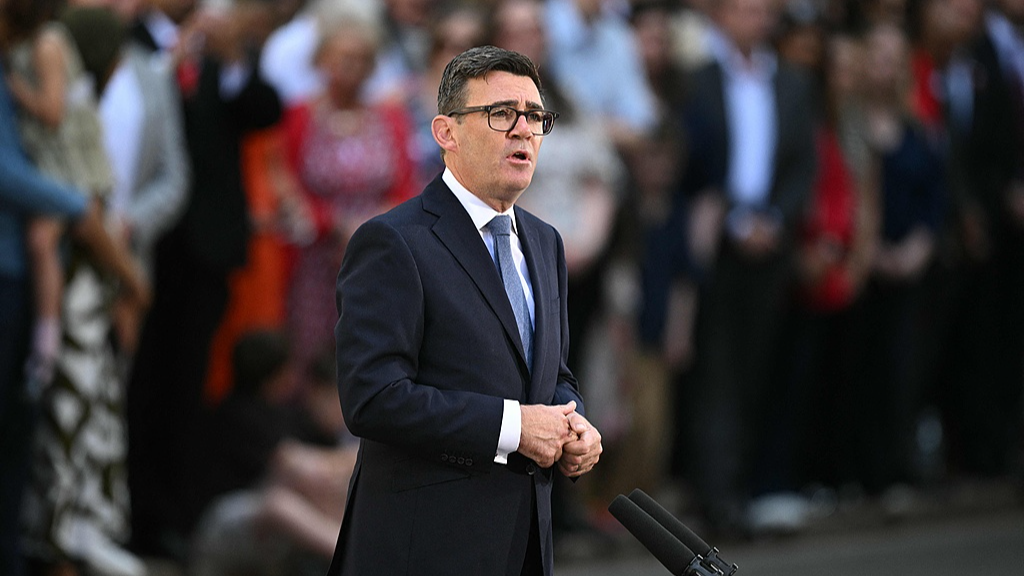
UK Prime Minister Andy Burnham gives his first speech in front of No. 10 Downing Street in central London, after being asked by the king to form the next government, July 20, 2026. /VCG
Britain's new Prime Minister Andy Burnham said on Monday the country needs to regain stability and pledged to set out new measures this week to help tackle the cost of living before setting out a new 10-year plan for the country later this year.
"Britain needs to show the world that we can regain our stability once again," Burnham said during his speech outside No. 10 Downing Street after he was officially appointed as prime minister.
"We have not been good enough, and we need to be better," he said. Promising Britons "some breathing space now," he said the government would set out some measures to tackle the high cost of living and how it plans to fund them.
"We will help more young people into work by changing the education system and giving them more support, more mental health support, and we will build more council homes," he said.
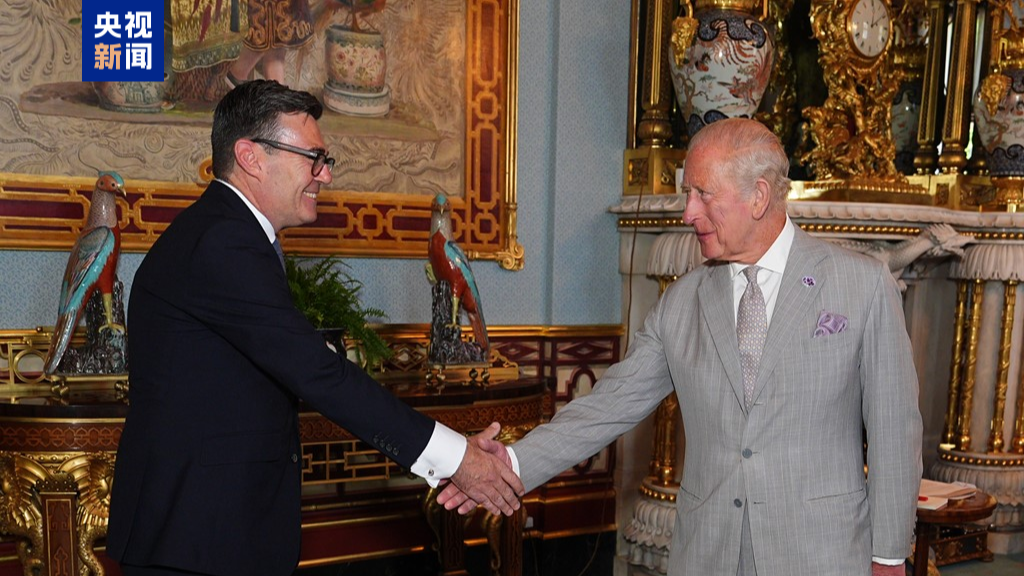
Andy Burnham meets with King Charles III at Buckingham Palace, July 20, 2026. /VCG
Burnham officially became Britain's new prime minister on Monday after a meeting with King Charles III at Buckingham Palace, who invited him to form a government.
Burnham pledged to use his premiership as a "circuit-breaker for Britain," arguing that a new model was needed to rebuild the country, which has been in political turmoil since voting in 2016 to leave the European Union.
Burnham promises 10-year plan, but not for several months
Just over an hour after his predecessor and Labor colleague Keir Starmer made his farewell speech to say "My work is done," the 56-year-old former Greater Manchester mayor entered Downing Street, where he said his team would tackle his first priority: to end rough sleeping.
The major challenges will then lie ahead.
After unveiling his cabinet, which had become the subject of much debate in the Labor Party, he must then tackle a long list of problems, ranging from high levels of illegal immigration to underperforming utility firms.
A key first decision was Burnham's choice of John Healey as finance minister after Rachel Reeves became one of several Starmer allies to leave the cabinet. Friction in this axis of government has brought down previous administrations.
Healey, 66, resigned from Starmer's government last month after accusing him of failing to invest enough money in its military and leaving the country "well short" of what it needed to protect itself in a dangerous world.
Labor lawmakers welcomed the move, saying it would signal to US President Donald Trump and NATO that Britain was serious about funding defense, and that keeping Home Secretary Shabana Mahmood in her role would mean she could press on with her reforms to try to control illegal immigration.
Energy secretary and former Labor leader Ed Miliband, who had once been considered a front-runner to become finance minister, was appointed foreign secretary.
Breaking with politics of the past
The departures of several Starmer allies signaled Burnham's intent to break with what he describes as the politics of the past, and usher in a new more agile cabinet to deliver on policy more quickly and more boldly.
After being ousted by his own lawmakers a month ago, Starmer stepped aside earlier in the day saying his work as prime minister was "the privilege of my life" and that he wished Burnham every success, with "my full support."
Burnham did not refer to Starmer in his speech, instead focusing on how he will bring change. But he acknowledged that some of his program would take time.
In his short address, thin on policy detail, Burnham said he would release a long-term plan for the next decade within months and repeated his pledge to build more public housing and to help bring down welfare spending to fund higher defense investment. Opposition parties suggested he would need to win a national election to get a mandate to implement it.
But he promised to unveil more immediate measures on Tuesday to ease everyday pressures on Britons, and explain how he will pay for them.
Speaking to reporters later on Monday, Burnham said he was finalizing the details of those measures which he described as "things that people will feel and feel quite quickly."
Underlining the sensitivity of Burnham's plans to the financial markets, sterling slipped and British borrowing costs rose on his comment that he would stick to the previous government's fiscal rules although he would look to use any flexibility within them.
'King of the north'
Dubbed 'King of the North' for his dogged defense of the Manchester region's interests, Burnham received messages of congratulation from foreign leaders, including European leaders who called for closer ties.
His first phone call was with Trump, when Burnham suggested a visit to Manchester.
"The prime minister also underlined his commitment to defense and security," a Downing Street spokesperson said in a statement, adding that Burnham had outlined Britain's commitment to securing the movement of shipping in the Strait of Hormuz.
Yet initially, Burnham's focus is very much on domestic issues.
Labor lawmakers see Burnham as one of the few figures capable of tackling the threat from veteran Brexit campaigner Nigel Farage's populist Reform UK – something they doubted the unpopular Starmer could do.
"Let us make this the moment when Britain starts to believe again," he said. "The moment we bring back hope."
(With input from Reuters)