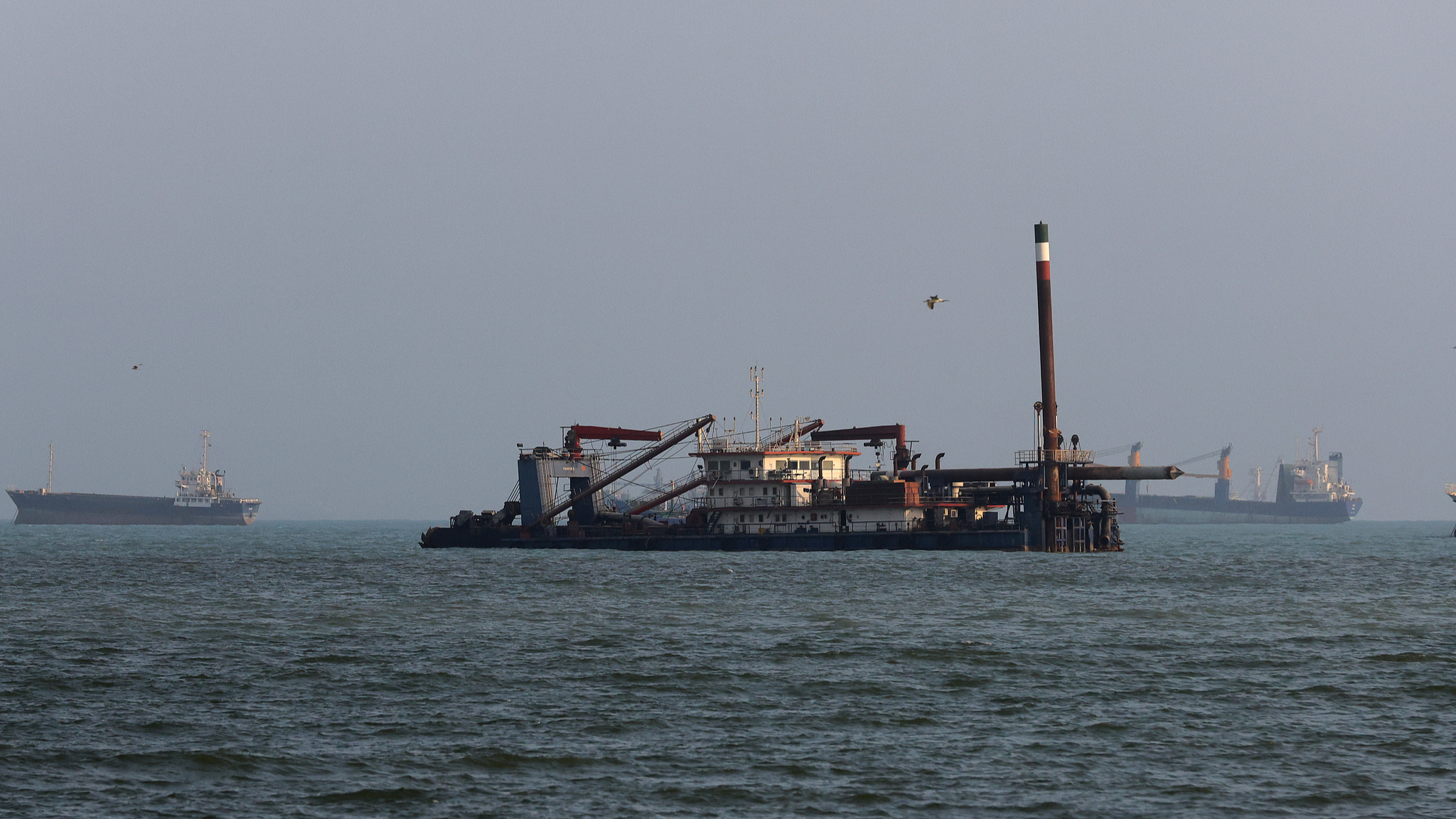
Ships are anchored in the Strait of Hormuz off the coast of Bandar Abbas, Iran, August 10, 2026. /VCG
Tensions between Iran and the United States remained high on Saturday as Tehran responded to Washington's latest economic pressure while continuing diplomatic contacts with neighboring countries over regional security and the Strait of Hormuz.
US President Donald Trump said on Wednesday that Washington would launch "the most crushing economic operation ever" against Iran, while Treasury Secretary Scott Bessent said the United States would impose what he called the "toughest sanctions in history" on Tehran. Iran has condemned the planned measures and warned countries against joining the US economic pressure campaign.
Against this backdrop, Iranian Parliament Speaker Mohammad Baqer Qalibaf said Iran had received "numerous" messages from neighboring countries about "shaping new security arrangements and economic cooperation" in the region. In a post on social media platform X, Qalibaf said the United States had put the security of its allies at risk through what he described as "bullying and pure disregard for their interests for the sake of Israel." He said a "homegrown, independent (regional) order" was needed to deliver peace and security.
Qalibaf made the remarks in a post on X on Saturday, following his visit to Iraq, where he met senior Iraqi officials to discuss bilateral ties and regional tensions. During the visit, Iraq also called on Iran to grant special arrangements for its oil exports transiting the Strait of Hormuz. The request had been raised previously through different channels, and Iran has allowed some Iraqi oil tankers to pass through the waterway.
Meanwhile, Mohsen Rezaei, secretary of Iran's Supreme National Security Council, warned that any country participating in economic restrictions against Iran would be considered an "enemy" by Tehran. Speaking to Iranian state television, Rezaei said Iran would first negotiate with such countries and ask them to stay out of the conflict, but warned that Tehran would respond if they refused.
Rezaei also said Iran had learned over the years how to bypass US sanctions and continue selling oil. On the Strait of Hormuz, he said Iran and Oman were continuing consultations on shipping arrangements and navigation. Omani Foreign Minister Sayyid Badr bin Hamad Al Busaidi and Iranian Foreign Minister Seyed Abbas Araghchi discussed conditions for resuming dialogue and negotiations, as well as developments concerning navigation in the Strait of Hormuz, in a phone call on Friday.
At the same time, three US officials said around 40 oil tankers transited the southern channel of the Strait of Hormuz on Friday night, carrying about 16 million barrels of crude oil. The reported movement came as maritime traffic through the strategic waterway remained sharply disrupted.
(With input from agencies)