
By continuing to browse our site you agree to our use of cookies, revised Privacy Policy and Terms of Use. You can change your cookie settings through your browser.
PBOC: China remains committed to letting market play decisive role in determining exchange rate

Share







Copied
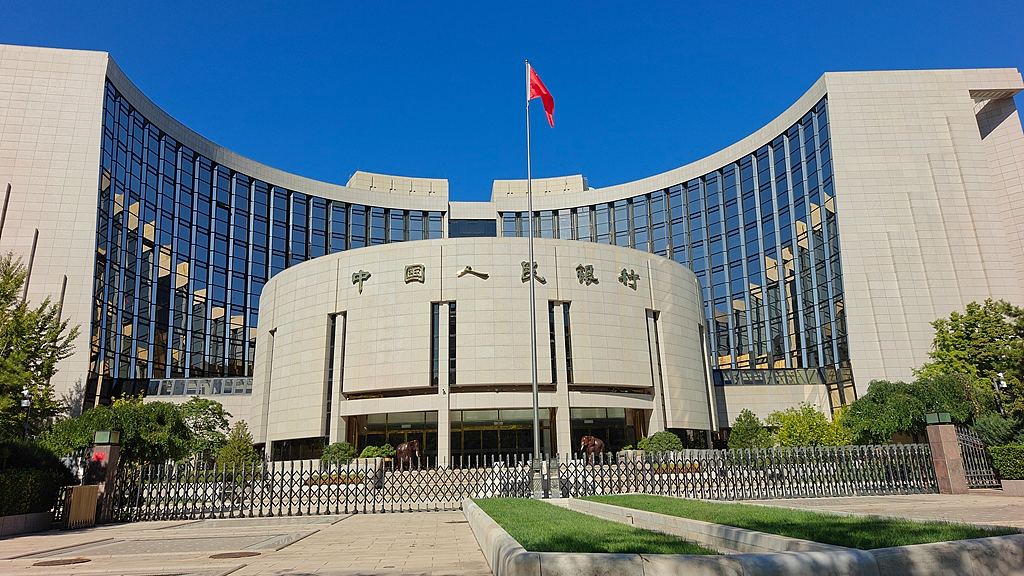
The headquarters of the People's Bank of China in Beijing, China, November 6, 2026. /VCG
China remains committed to letting market forces play a decisive role in determining the RMB exchange rate, the country's central bank said on Thursday.
The People Bank of China (PBOC) said in a statement that China adopts a managed floating exchange rate regime based on market supply and demand with reference to a basket of currencies. Market forces play a decisive role in determining the RMB exchange rate.
The RMB exchange rate has floated in both directions over the past two decades. It has experienced several cycles of appreciation and depreciation since 2010, with more pronounced two-way floating and greater flexibility, according to the statement.
China's trade growth is driven by its growing industrial competitiveness in the global market. China has no need or intent to gain competitive advantages through currency devaluation, nor has it ever resorted to competitive devaluation, the PBOC said, adding that exchange rate dynamics are driven by a number of factors including economic growth, monetary policy, financial market, geopolitics and sudden shocks. There is no straightforward relationship between exchange rate and current account.
There is no well-established methodology for evaluating the equilibrium level of exchange rates internationally. Therefore, citing idiosyncratic assessment findings as "official evidence" for RMB undervaluation is a misinterpretation and misuse of those findings, the central bank stressed.
Global economic imbalances are deeply intertwined with shifting global division of labor, inherent flaws in the international monetary system, and persistently high fiscal deficit and high consumption in some countries. Addressing global imbalances requires collective actions from all stakeholders. Attributing one's decline in industrial competitiveness, weakened fiscal discipline, and complicated structural issues simply to others' exchange rates is nothing but shifting the responsibility for adjustment onto others and dodging accountability.
China has long been a contributor to global economic rebalancing. During the 15th Five-Year Plan (2026-30) period, China will stay the course in transforming its economic growth model, expand domestic demand, improve business environment, deepen the high-standard opening up, and pursue a more open, inclusive and balanced global economy.
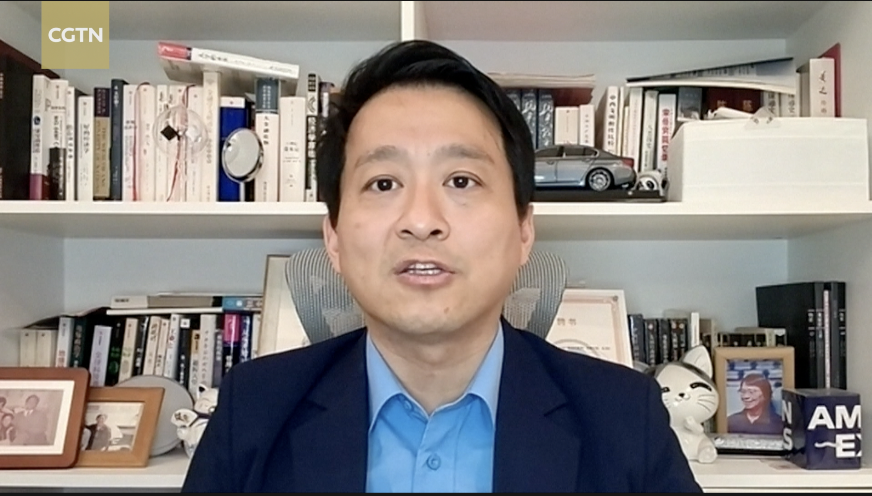
The RMB exchange rate has been largely market-driven, with no fixed USD exchange target, said Qu Qiang, a fellow of Belt & Road Research Center, who spoke to CGTN about the PBOC's position on exchange rate. Qu attributed the recent RMB appreciation to market forces. He further explained that the central bank only intervenes in times of panic or vicious market spirals and uses a basket of currencies to moderate volatility.
In September, PBOC Deputy Governor Lu Lei had emphasized that China operates a managed floating exchange rate regime, allowing market forces to play a decisive role in exchange rate determination while guarding against herd behavior and the self-reinforcing effects of irrational expectations.
In recent years, as China's export structure has undergone transformation and upgrading, companies have strengthened their pricing power and foreign exchange risk management capabilities, significantly reducing the sensitivity of China's trade to exchange rate movements, Lu had added, emphasizing that foreign trade enterprises have increasingly used foreign exchange hedging instruments, while the RMB's share of trade settlement has continued to rise, further reducing the sensitivity of trade to exchange rate fluctuations.
Assessing the RMB exchange rate, Guan Tao, chief economist at Huafu Securities, said that factors supporting both appreciation and depreciation of the RMB are currently at play. In the short term, factors favoring a stronger RMB have the upper hand. Over the longer term, two-way fluctuations in the RMB exchange rate remain the norm, Guan noted.
(With input from Xinhua.)
Search Trends
