
17:02, 27-May-2019
Highlight – Italy's MOU with China can revive the Italian economy

Share






Copied
Italian Prime Minister Giuseppe Conte said that the agreement will "build a better relationship" between China and Italy.
However, Italy's traditional allies consider Italy's move in signing the BRI memorandum as harmful to their broader interests.
When Italy endorsed China's Belt and Road infrastructure plan, it became the first in the Group of Seven (G7) nations to back the initiative.
As a result of Italy joining China's Belt and Road Initiative, concerns have been raising about how Italy will deal with its traditional allies. Robert Lawrence Kuhn discussed this matter with Michelle Geraci, Undersecretary of State at the Italian Ministry of Economic Development.
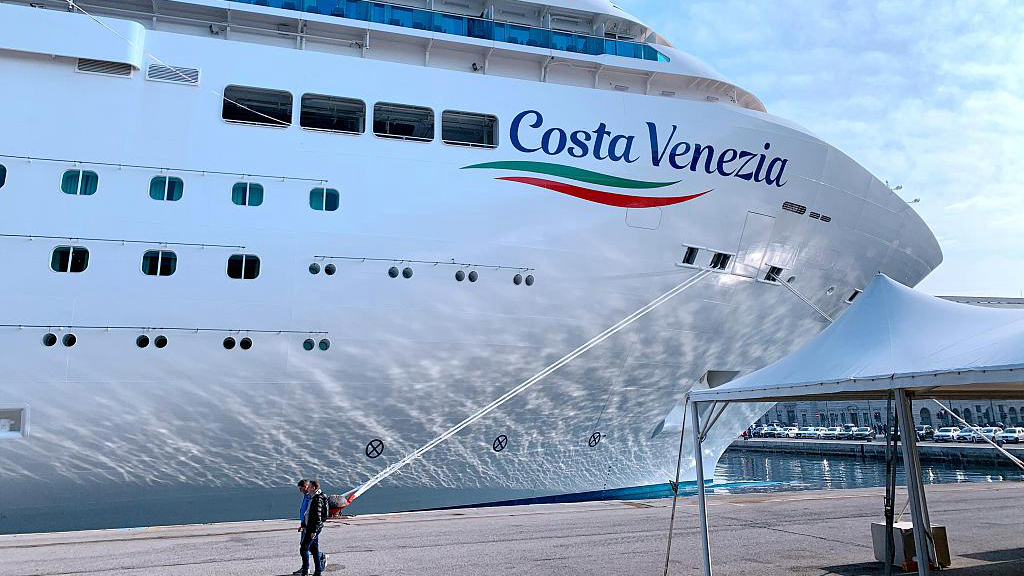
The cruise ship, Costa Venezia, made by the world's largest shipbuilding company Fincantieri, was at Fincantieri’s shipyard in Italy. It is specially built for the Chinese market and departed for China on March 8, 2019. / VCG·Photo
The cruise ship, Costa Venezia, made by the world's largest shipbuilding company Fincantieri, was at Fincantieri’s shipyard in Italy. It is specially built for the Chinese market and departed for China on March 8, 2019. / VCG·Photo
Geraci considers it quite natural that there are differences of views. Every country in the European Union tries to compete with other countries in the EU in terms of trade, even while they are political allies at the same time.
For example, Germany has the largest net surplus with China in Europe. Moreover, the MOU Italy signed with China is not a treaty; rather, it is just a way to revive the flagging Italian economy.
Italy has explained to its EU partners the reason why it would seek to join the Belt and Road Initiative.