
13:56, 22-Jan-2019
Combating Marine Pollution: Chinese company develops ballast water management tech
Updated
13:50, 24-Jan-2019
 []
[]
Share







Copied
04:00
South Korea is certainly a powerhouse in ballast water management, but China is making strides in the industry too. One company in the coastal Chinese city of Qingdao has developed its own technology for treating ballast water. And as my colleague Michael Wang explains sales of the units are booming.
This is marine environmental engineering company SunRui's factory in Qingdao, China. Asia's most advanced ballast water management system was first developed and produced right here.
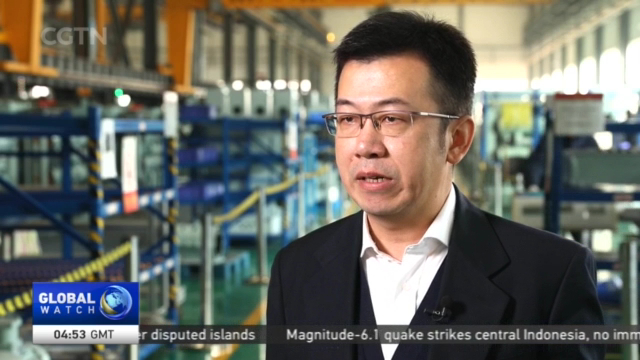
GUO YU, GENERAL MANAGER SUNRUI MARINE ENVIRONMENT ENGINEERING "We received approval for our ballast water management system from the U.S. Coast Guard in 2017, making us the first in Asia and fourth in the world. Our cutting-edge technology and recognition of the market at an early stage allowed us to be a leader in the field."
The ballast water requirements set by the U.S. Coast Guard – or USCG – is the strictest in the world.
For SunRui, meeting USCG standards is a testament to its innovation capabilities, especially given China's ballast water R&D capabilities began from a blank slate. The company sailed past this roadblock by drawing on its past experience.
DIANE HU, REGIONAL MANAGER SUNRUI MARINE ENVIRONMENT ENGINEERING "This is a technology we have been applied for land based uses for over 30 years, so the technology for us is very stable and it's a very mature technology for us and we use it for marine for vessels."
For policymakers though, China has been involved in the ballast water management convention since its adoption in 2004.
The China Classification Society – which sets and approves engineering standards for ships played a key role in the guideline-setting for the convention by providing China's unique angle to the treaty's deliberations.
WANG HUIFANG, SENIOR ENGINEER CHINA CLASSIFICATION SOCIETY "There are some special waters in China like the Yangtze River estuary and Yangshan deep water port, which has a lot amount of suspended sediments in these waters. This brings more challenge to the performance of ballast water management system on board. So CCS proposed to IMO that this challenging water need more attention during the research and development of ballast water management system and ships operation."
China's ballast water management industry is not without its challenges though. For Chinese brands such as SunRui, even after achieving the highest standards in the industry, it still faced uphill battles such as brand recognition abroad.
GUO YU, GENERAL MANAGER SUNRUI MARINE ENVIRONMENT ENGINEERING 'Sometimes the "'Made in China' brand faces discrimination on the global stage. We've encountered situations where even after arriving at the offices of a shipping company, they would say 'sorry, but we don't have the time.'"
MICHAEL WANG QINGDAO "But despite the initial uncertainties of the BWMC – ranging from global companies doubting Chinese brands to the ballast water management industry starting from scratch here in China, companies like SunRui decided to press on and develop its own proprietary technology as it saw more opportunity rather than challenges."
GUO YU, GENERAL MANAGER SUNRUI MARINE ENVIRONMENT ENGINEERING "So in 2018, Japan's NYK Shipping gave us 89 of their ships in one order for installation of our systems. The total deal is worth 500 million rmb."
China's participation in the ballast water management convention and its development of eco-friendly marine technologies are the latest steps in preserving the oceans for posterity. In 2018, China signed a landmark partnership with the EU setting clear commitments in safeguarding marine ecosystems.
As a key stakeholder in the UN's Sustainable Development Goal on oceans and as China continues to reform by emphasizing environmental protection, the country's commitment and impact on keeping the oceans blue will only grow. MW, CGTN.