
19:26, 07-Jan-2019
No.2A Dayabao Hutong: How residence influenced Chinese contemporary art
Updated
19:14, 10-Jan-2019
 []
[]
Share







Copied
02:53
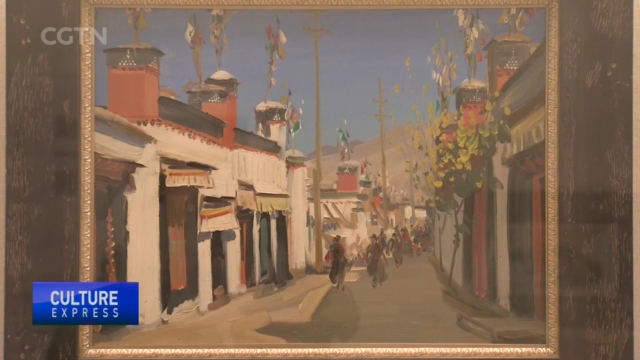
Museums are not the only place to see art. When it comes to Chinese contemporary art, perhaps one residence stands out more than others -- Beijing's No. 2A Dayabao Hutong. It has been the residence of numerous well-known 20th century artists. And now a special exhibition in the Chinese capital is showcasing their art works and their connection with the courtyard. Li Qiong tell us more.
These paintings belong to some of China's most renowned contemporary artists, like Li Kuchan, Li Keran and Zhang Ding.
But they have a much more subtle connection than just their creative artistic flair. They all once resided at Beijing's No. 2A Dayabao Hutong.
It's quite amazing that one courtyard could play host to so many influential artists at different times. The anomaly is credited to one important figure in Chinese art history.
WU HONGLIANG CURATOR "In 1946, Xu Beihong reorganized National Beiping Art School and purchased a staff quarter at No. 2A Dayabao Hutong. Since then, it became an important historical site witnessing the development of Chinese art in the 20th century."
The residence was essentially a dormitory for these art enthusiasts. More than 30 teachers and students from the Central Academy of Fine Arts lived there, many of them going on to become artists of their time.
And having lived in the same neighborhood, they are also thought to have shared a quite important common cause.
WU HONGLIANG CURATOR "The most important generality of these 20th-century artists is that they all had a sense of responsibility towards the development of the country. So in this exhibition, we have a special segment displaying some of their most important contributions, like the design of the Monument to the People's Heroes, the National flag and the national emblem."
These designs, which emerged after the founding of the People's Republic of China, have since been considered national symbols. The No.2A Dayabao Hutong exhibition runs until January 23rd at Beijing's Guardian Art Center. LQ, CGTN, BJ.