
World
15:22, 20-Apr-2018
Will #MeToo movement hit Japan after sexual harassment row?
 ["china"]
Share







Copied
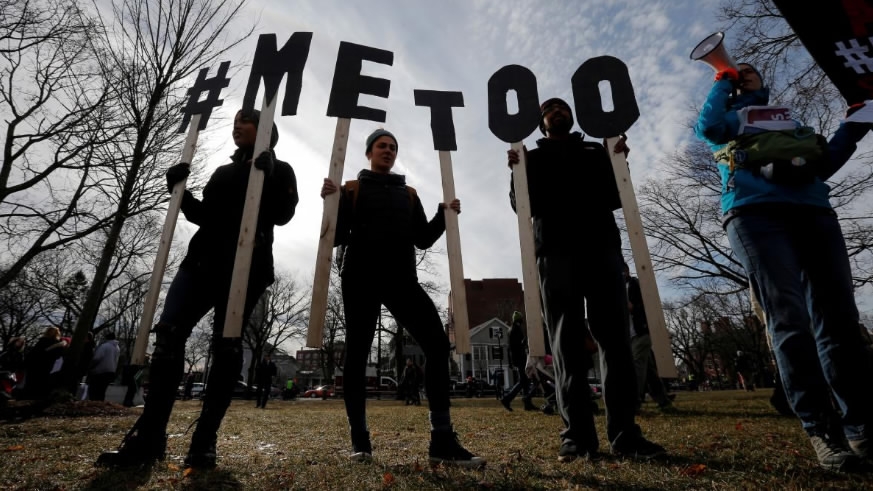
A vice minister for finance in Japan has quit amid sexual misconduct allegations that suggest the country is having its own #MeToo movement.
Junichi Fukuda fiercely denies that he sexually harassed female reporters, allegations first reported last week by a magazine that has released audio of what it says was one of the encounters.
He stepped down Wednesday, saying the scandal had left him unable to do his job, and has threatened to sue the magazine.
The story has dominated headlines domestically, a development some experts said was a sign the #MeToo movement might finally be taking hold.
The international movement against sexual assault and harassment has brought down movie moguls, media stars and political figures across the world, even in patriarchal East Asia.
In China, the education ministry has declared a "zero tolerance" policy on harassment, and in S. Korea a former presidential contender now faces rape charges.
But in Japan, with its deeply entrenched gender attitudes and one of the world's worst records on female political representation, #MeToo's impact has been limited - until now.
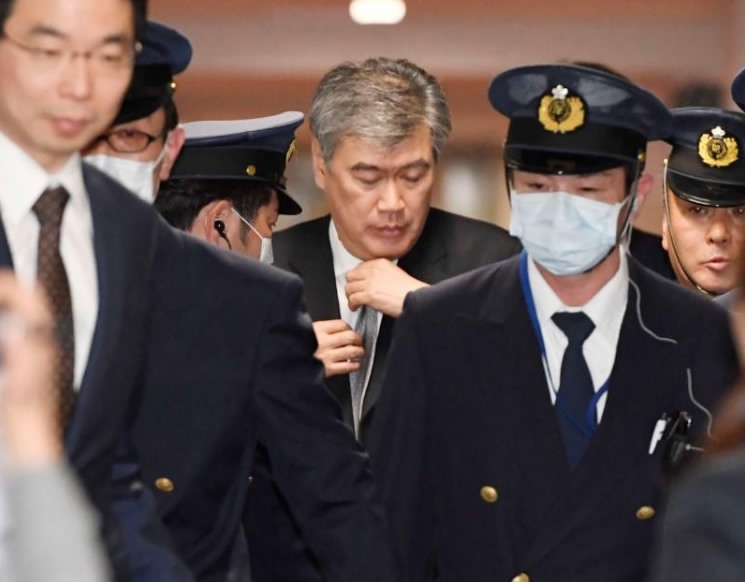
Japan's Vice Finance Minister Junichi Fukuda leaves the ministry building in Tokyo in this photo taken by Kyodo April 13, 2018. Mandatory credit Kyodo/via Reuters
Japan's Vice Finance Minister Junichi Fukuda leaves the ministry building in Tokyo in this photo taken by Kyodo April 13, 2018. Mandatory credit Kyodo/via Reuters
"The global #MeToo movement probably encouraged women who had been suffering harassment to speak up, giving them a sense of assurance that they don't have to tolerate it," said Sumire Hamada of the Asia-Japan Women's Resource Centre, a rights group.
But the episode has also laid bare how difficult it remains to report sexual harassment in Japan, and despite the apparent shift in mood, there is little immediate sign of tangible change.
One of the journalists who alleges Fukuda harassed her reported him to her boss at the local TV Asahi station but was told that going public would be too damaging because her identity would be revealed.
And when the allegations against Fukuda first emerged, Finance Minister Taro Aso reacted dismissively, saying he had no plans to investigate.
He had verbally admonished Fukuda, he said, and considered him to be "sufficiently remorseful."
‘Critical case’
Aso later reversed course, saying Fukuda would be fired if the claims were proven, and the ministry is now investigating.
But critics have questioned whether the ministry can investigate fairly, even though it has hired outside lawyers, and it has come under fire for asking reporters who have been harassed to come forward publicly.
"I hope that this case will not create bad pressure on victimized women to come out to the public with their identity being disclosed," said Chizuko Ueno, a feminist sociologist and professor emeritus at the University of Tokyo.
More than 25,000 people have signed a petition demanding the ministry protect the rights of victims.
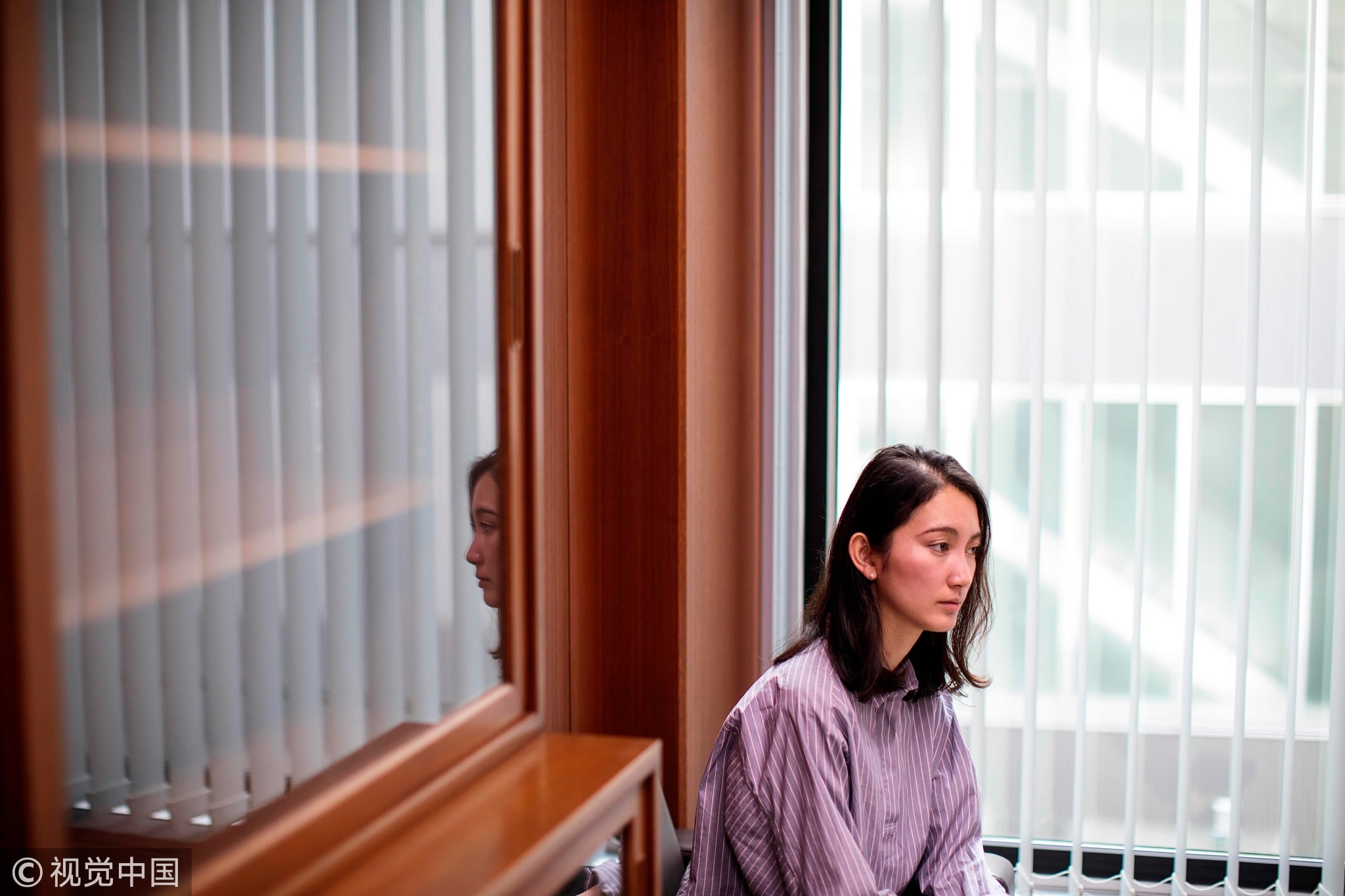
Japanese journalist Shiori Ito, who accused a TV newsman of raping her in 2015, posing for a photo January 30, 2018, in Tokyo. / VCG Photo
Japanese journalist Shiori Ito, who accused a TV newsman of raping her in 2015, posing for a photo January 30, 2018, in Tokyo. / VCG Photo
"This is a very critical case," said Mari Miura, a professor of political science at Tokyo's Sophia University and a specialist on gender issues.
"Many people have criticized the way in which the finance ministry intended to handle the situation ... that's why this incident might have a huge impact or the potential to change Japanese society."
Activists say the country is ripe for change, with just 2.8 percent of rape victims reporting their assault to police, and society expecting "harassment victims to bear it silently," said Hamada.
Last year, Japanese journalist Shiori Ito made headlines after publicly accusing a prominent television journalist of raping her in 2015.
She was savaged online and even received death threats, and her experience with authorities was not much better, she told AFP earlier this year.
Male police officers ordered her to re-enact her rape with a life-size doll, an experience she described as "like a second rape."
‘Shameful’
Elsewhere in Asia, things have been different.
This month, former South Korean presidential contender Ahn Hee-Jung was indicted for raping his aide, and women have come forward to accuse artists, writers and athletes of sexual abuse.
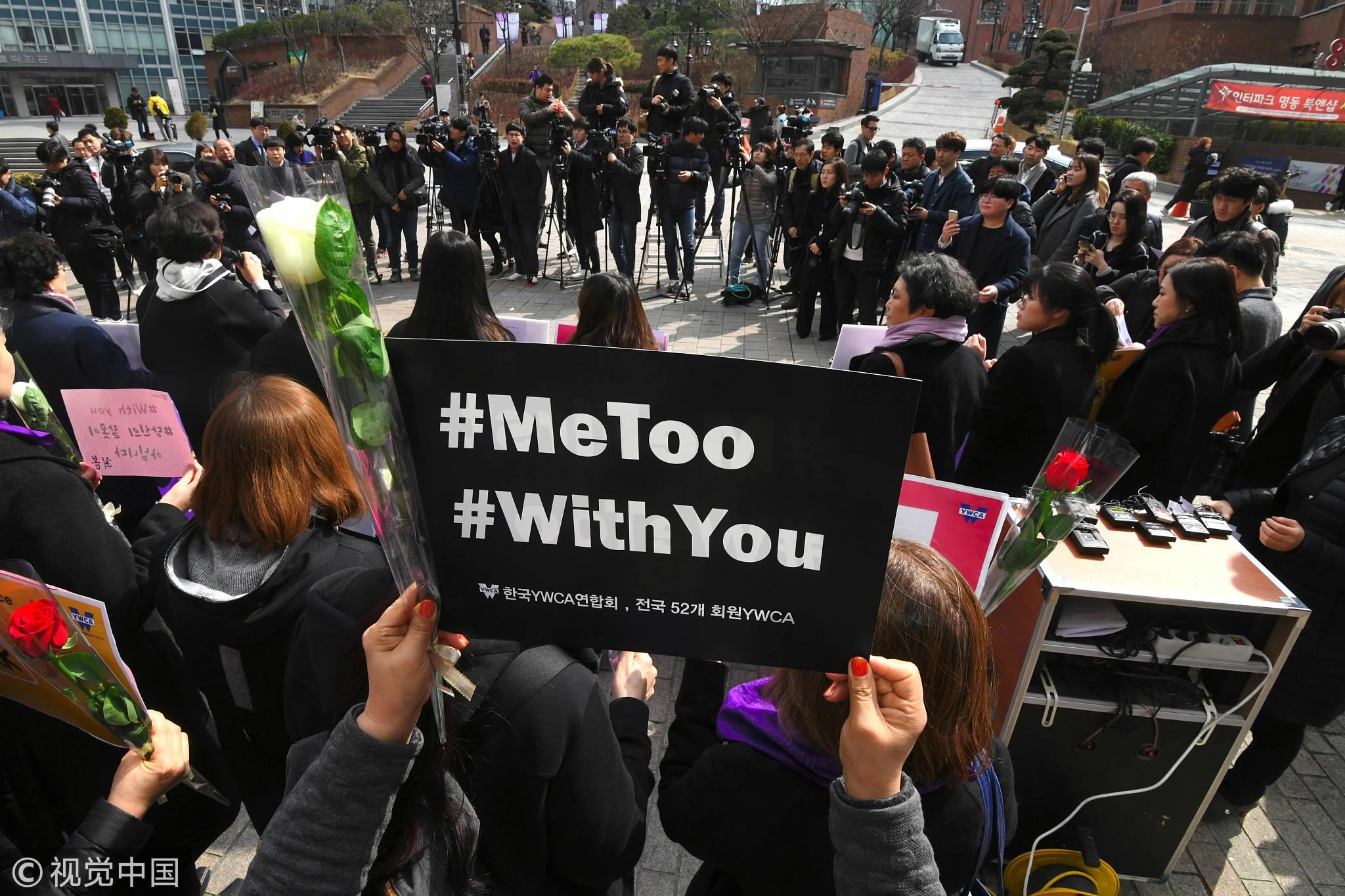
South Korean demonstrators holding banners during a rally to mark International Women's Day as part of the country's #MeToo movement in Seoul March 8, 2018. /VCG Photo
South Korean demonstrators holding banners during a rally to mark International Women's Day as part of the country's #MeToo movement in Seoul March 8, 2018. /VCG Photo
And China's education ministry announced a "zero tolerance" policy after a professor was found to have harassed multiple students.
The relative silence in Japan is all the more striking given Prime Minister Shinzo Abe's stated commitment to increasing women's participation in the workforce.
His sole comment on the issue came Thursday when he described the circumstances of Fukuda's resignation as "regrettable" and pledged to restore trust in his government.
"It's shameful that the two top leaders in Japan, the prime minister and the finance minister, do not understand the significance of sexual harassment cases," said Miura.
She said she hoped local media would avoid "victim blaming", noting that although TV Asahi now planned to complain to the finance ministry over the sexual harassment of its reporter, it had initially criticized her for going to the weekly magazine.
And she said other women might now feel empowered to share their experiences, as Seiko Noda, one of only two female cabinet ministers, did on Wednesday.
"When I was in my twenties, I experienced sexual harassment from some men while I was doing political activities," Noda told a parliament session.
"It is so hard that you can't easily tell your family or friends, not to mention your boss."
Source(s): AFP