
13:45, 28-Feb-2019
Saving the Beavers: One girl's effort to bring back an endangered species
Updated
13:40, 03-Mar-2019
 []
[]
Share







Copied
04:10
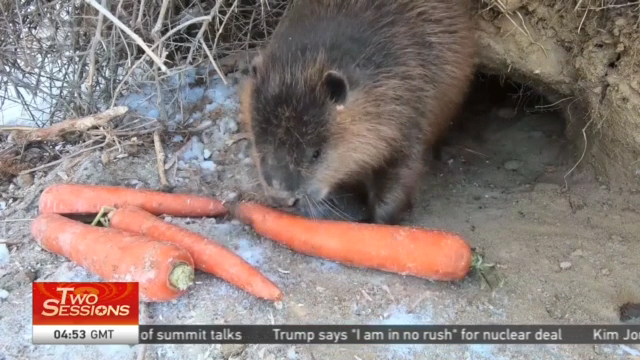
China enacted its Wildlife Protection Law in the late 1980s, and over the decades and several revisions later, the Law has helped China's forestry officials and non-government groups, protect endangered species and their habitats. Today, Tao Yuan takes us to meet a girl from remote northwestern China whose life is about saving beavers.
Chu Wenwen watches as her team digs out the bodies of two beavers. They had come out of their underwater winter lodge in search of food for their baby.
But the river was running dry. The ice cover thickened, the pair got stuck between the ice and the riverbed.
They froze to death. Altay on China's northwestern tip is the only habitat for beavers in the country.
Now, there are only about five hundred of them left. These two are the latest victims of changes in the environment.
CHU WENWEN, FOUNDER TRUE NATURE CONSERVATION ASSOCIATION "We are going to melt the ice from their bodies and send them to a taxidermist. I want to recreate how they died, in their homeland, just for a little bite to eat."
Wenwen is a protector of these beavers. She runs a non-government organization called True Nature Conservation Association.
Love for nature runs in her family. Her father moved to Altay as a young forestry official. Wenwen grew up here. Even as a little girl, she spent all her holidays and vacations in the wild with her father.
Back then, wildlife protection in China was only in its infancy.
CHU WENWEN, FOUNDER TRUE NATURE CONSERVATION ASSOCIATION "Back during my father's time, wildlife protection was much more of a government effort. Now, China's Wildlife Protection Law wants more civilians to participate. So now, we can enlist the help of more non-government entities to join in the effort together."
TAO YUAN ALTAY "China adopted its Wildlife Protection Law in 1989. Following revisions to it, more emphasis has shifted to the protection of wildlife habitats, as the nation now realizes it's not just about protecting the animals, but about preserving the ecosystem as a whole."
Wenwen isn't altogether happy with the state of the habitat of her beloved beavers.
CHU WENWEN, FOUNDER TRUE NATURE CONSERVATION ASSOCIATION "The habitat can only shelter so many beavers, just like when a home can only shelter three people, it'd be difficult for a fourth one to live there. The only way is to buy more food, more beds, or to expand the home to accommodate more people."
Wenwen now has the help of local villagers. Cutting tree branches to feed the beavers, Talihati is a retired soldier.
TALIHATI "It's an honor, an honor for everyone, whether you're young or old, everyone should protect wildlife."
Village official Reyizha is the only deputy from Altay to this year's National People's Congress, China's top legislative body.
REYIZHA NPC DEPUTY "We promote awareness on wildlife protection in the villages, encouraging civilians to pitch in. We can see the changes since the Wildlife Protection Law was promulgated."
Talihati is now helping Wenwen take care of a beaver trapped in an irrigation canal. The cruel winter in Altay could mean death for this young rodent.
CHU WENWEN, FOUNDER TRUE NATURE CONSERVATION ASSOCIATION "If we didn't take action, such as feeding it carrots and tree branches, if we didn't build this fence, it might have died already, of hunger or of coldness, or at the hands of a predator."
It's only one beaver. But for Wenwen, every one of them matters. TY, CGTN, Altay, northwestern China.