
17:51, 19-Mar-2019
Economic Stimulation: Peking University Economists evaluate new policies
Updated
17:50, 22-Mar-2019
 []
[]
Share







Copied
02:20
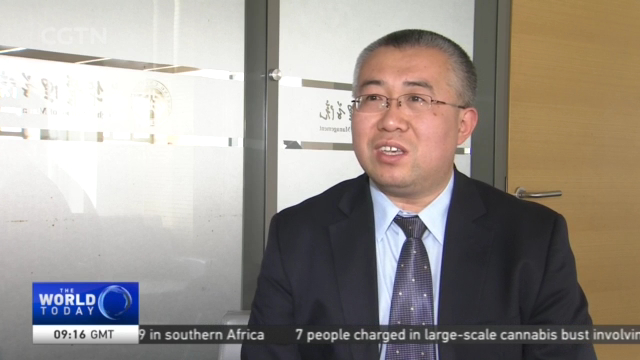
A group of renowned economists at China's Peking University shed light on the nation's latest tax cuts. They say the newest measures of counter-cyclical adjustment, including tax cuts and adding liquidity, will be effective in stimulating the growth of China's economy. CGTN's Cui Hui'ao reports.
From hefty tax cuts to higher infrastructure spending, from employment-first to boosting consumption, how will these fiscal measures announced by Chinese Premier Li Keqiang at the Two Sessions pull up China's economy? Economists at Peking University share their perspectives.
JIN LI, ASSOCIATE DEAN GUANGHUA SCHOOL OF MANAGEMENT, PEKING UNIVERSITY "Some startup businesses, they all really cheer the decision of the central government to reduce taxes and fees to make their businesses more profitable and viable in the long run."
While businesses certainly welcome the two trillion yuan cut in taxes and fees, some worry that this measure will add to China's high levels of debt. Jin says given that the economy experienced its slowest growth in three decades last year, these stimulative policies carry much higher propriety compared to reducing fiscal deficit. Meanwhile, Professor Yan Se says the government is right about stabilizing its monetary policy.
YAN SE, DIRECTOR INSTITUTE OF ECONOMIC AND POLICY RESEARCH, PEKING UNIVERSITY "For example, the targeted medium lending facilities did suggest the policies are more expansionary now, but on the other side, we do not want to go back to the old story, flooding the economy with liquidity."
Yan says too much liquidity could see banks fail if leverage ratios continue to rise. Therefore, a more structural monetary policy could balance the targets of maintaining economic growth and containing systematic risks. However, both Professors Jin and Yan point out that in order to further drive the economy, these short-run measures should be accompanied by deeper structural reforms.
CUI HUI'AO PEKING UNIVERSITY, BEIJING "Economists at Peking University say in the coming decades, China should move from an investment-growth model to an efficiency-driven model. Governments should play the role of ensuring a level playing field and financial reform should be further enhanced. These must-does will ensure a more robust Chinese economy in the long run. Cui Hui'ao, CGTN, Beijing."