
16:12, 12-Apr-2019
Highlight - How China's policies are rooted in China's culture
Updated
16:24, 12-Apr-2019

Share






Copied
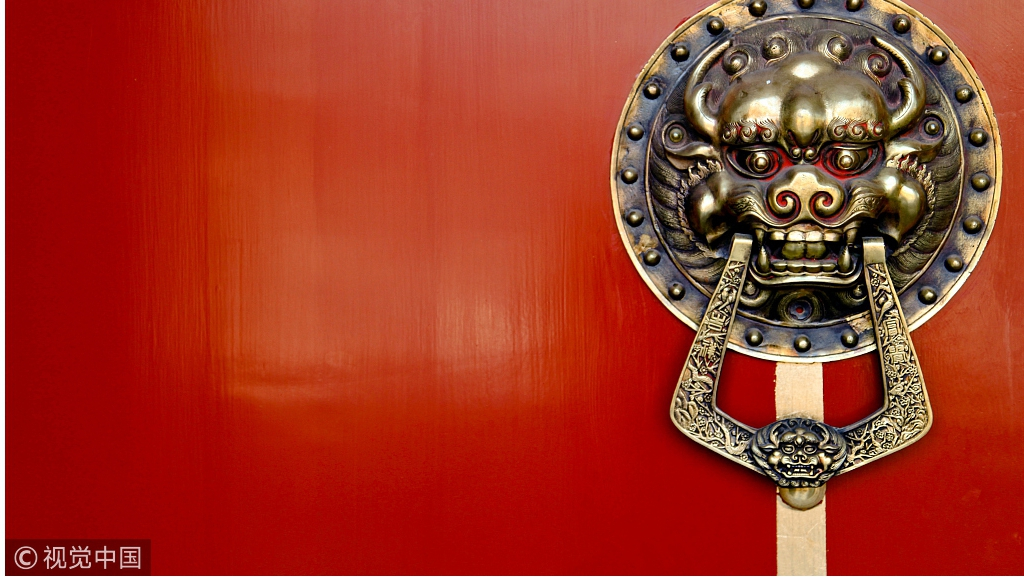
Is "和合" (Héhé) freshly coined political jargon or a philosophical tradition? What cultural wisdom do the two Chinese characters embody? How do they reflect China's vision? Are China's policies rooted in Chinese culture?
The first character "和"(pinyin: hé) means harmony. From its structure, we can see that its left part is like a sapling, while the right part is like a people's mouth.
That structure symbolizes that for Chinese forefathers, harmony equals people can feed themselves by farming.
So, tracing back to thousands of years, "和" (hé) is an emblem of harmony between human and nature.
Chinese scholars state that its meaning is richer than it was in ancient times.
As a prime example, President Xi Jinping put forward the vision of building community with a shared future for humanity.
In such a community, all people share weal and woe together, thus expressing the essence of harmony or "和”(hé).
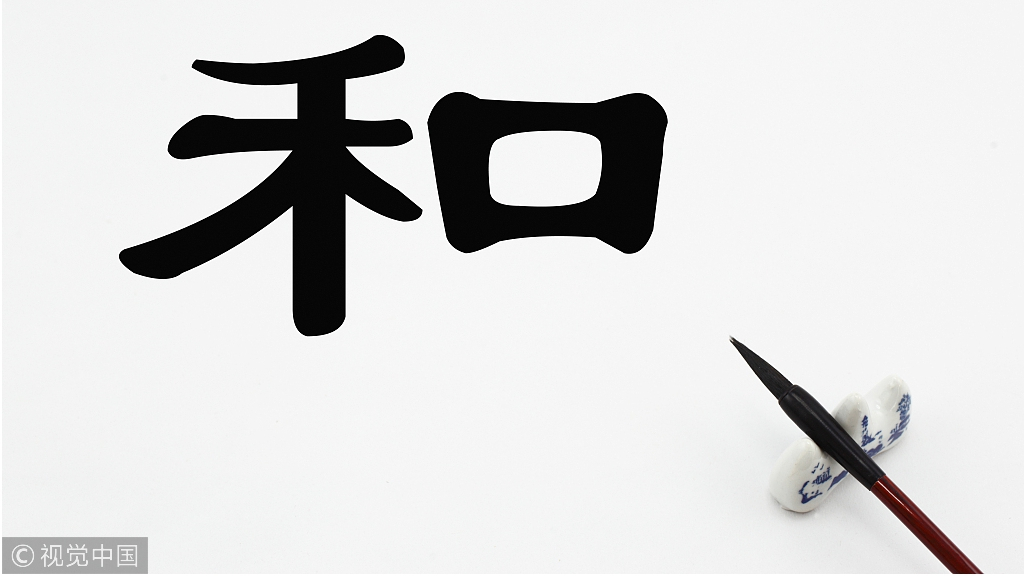
A Chinese character, "和" (He), harmony. / VCG Photo
A Chinese character, "和" (He), harmony. / VCG Photo
The second character is "合"(pinyin: hé). Its upper part is like a roof and the whole pictogram looks a like a house, reflecting the idea that ancient Chinese philosophy held that people should cooperate as a family does.
China states that the country still retains the time-honored vision, as evidenced in the Belt and Road initiative which pursues win-win progress through inclusive cooperation and mutual learning. Hence, this is what "和合", héhé really represents. It does not stand for political pursuit, but an eternal spirit rooted in China's culture and engraved in Chinese people's mind.
Generations of Chinese leaders, certainly including President Xi Jinping, like to refer to their policies, domestically and internationally, as being rooted in Chinese culture, civilization, history and philosophy.
But how are contemporary Chinese policies rooted in Chinese culture?
Professor Daniel Bell, Dean of the School of Political Science and Public Administration at Shandong University and professor at Tsinghua University, said that the basic Confucian view about international relations is that there should be a global order which is peaceful and also respectful of diversity.
It is said that Confucian thoughts, to a certain extent, inform China's foreign policy. Professor Bell notes that China hasn't gone to war since 1979. He attributes this to China's culture and philosophy on harmony and cooperation.
In fact, he said, Chinese culture informs every respect of Chinese people’s lives. Learning more about Chinese culture provides better understanding of Chinese policies.