
14:46, 27-Mar-2019
Tibet: 60 Years of Change: Local Tibetan reflects on 6 decades of reforms & development
Updated
14:40, 30-Mar-2019
 []
[]
Share







Copied
03:29
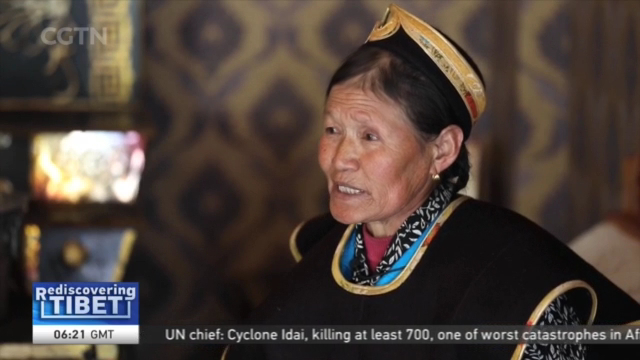
The continuing transformation of Tibet is an important part of the new-democratic reforms led by the Communist Party of China. Government's measures in the Tibet Autonomous Region have led to the liberation of millions of serfs. CGTN's Omar Khan has the story.
Over the past 60 years, Tibet's landscape, mountains and environment have seen little change, thus retaining their natural beauty.
OMAR KHAN LHASA, TIBET AUTONOMOUS REGION "But when it comes to cities, villages and people's livelihood, the same cannot be said. We sat down with one local Tibetan and heard her story on the changes she's witnessed over the past 6 decades."
From above, GongBuJiangDa looks like a quaint and quiet county. At first glance, its empty streets and rustic look give off a sense of emptiness. But that's truly not the case here, as this village is in fact filled with history. For the past 70 years, Ciren Qunzong has called this her home. She's witnessed the transformation Tibet has undergone during her entire lifetime and remembers what life was like before 1959.
CIREN QUNZONG TIBETAN VILLAGER "In the past, we lived a life of cattle and horses. We were serfs and had no personal freedom. My father passed away when I was 2 years old, and my mother had to take care of four children. We didn't have our own land, and we didn't even have a place to make a fire."
But all of that changed in 1959 when democratic reforms were introduced, and feudal serfdom was abolished. Many local Tibetans view this time period as turning a new page in the region's social progress.
CIREN QUNZONG TIBETAN VILLAGER "After Tibet's democratic reforms in 1959, life became so good. Livestock, housing and farmland were all distributed. Life got better and better. Life is good under the right leadership of the Communist Party of China."
When asked about the future and possible concerns surrounding Tibet's younger generation, the 70-year-old mother of one seems unphased. And like any good mother, she sees education as the key to the future.
CIREN QUNZONG TIBETAN VILLAGER "Nowadays kids begin their education at the age of 5. The nation has a good policy on education, and students can study all the way up to university. They can be fully educated. You don't need to pay for education, as the government provides subsidies."
60 years is undoubtedly a significant period of reform. When asked if she feels anything could have been done better, Ciren provides a humble and grateful reflection on the past.
CIREN QUNZONG TIBETAN VILLAGER "There's nothing that makes me feel unsatisfied. We don't pay rent for growing crops anymore, and we're even provided with funding. There are subsidies for farming and subsidies for protecting the environment. There are now many beneficial policies for us farmers. There is no greater favor than that."
For Tibet and the Tibetan people, the past and the region's liberation are parts of history that will never be forgotten. Looking forward, hopes remain high for even a brighter future. Whether it's in the plateau's most remote areas, or in the region's bustling and growing cities. People here all smiles, and have a lot to celebrate this anniversary.