
13:29, 29-Mar-2019
Brexit Deadlock: What would UK economy look like without a deal?
Updated
13:20, 01-Apr-2019
 []
[]
Share







Copied
03:25
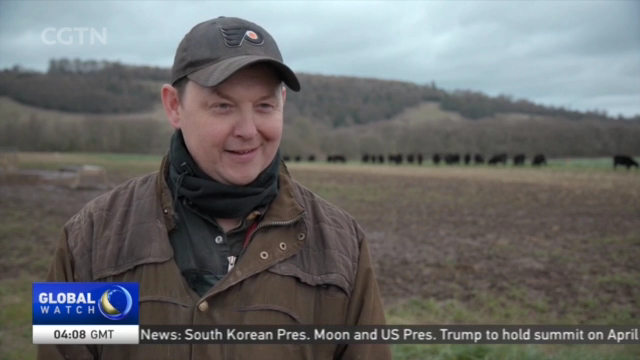
And what will Britain's ECONOMY look like in a no-deal situation? Kitty Logan spoke with farmers and traders to find out how they are doing and what their concerns are.
The daily morning cattle feed is routine for farmer Hugh Broomb. His family has farmed these fields beneath the Surrey Hills for generations. But now as Britain prepares to break EU trading ties, the framework of the country's farming business is shifting.
HUGH BROOM NATIONAL UNION OF FARMERS "Whether you were for or against Brexit, the uncertainty that's over our farm business, or indeed any other business, is really unhelpful. What we'd like to see is a quick resolution as possible with the best deal possible."
These cows are mainly raised for British beef consumers. But UK farmers also export around a third of their lamb to France.
HUGH BROOM NATIONAL UNION OF FARMERS "If we crash out tomorrow with no deal, if we're outside the EU Customs Union, on lamb, for example, there would be a tariff of 48%. That would price us out of the market."
This vast storage barn is usually full of wheat at this time of year. Now there's just a handful left.
LAURENCE MATTHEWS FARMER "The pricing is up and down all the time. So, we've already sold all our grain from last year, because we weren't going to be left with holding it with no certainty of price."
Import prices could be affected by a no-deal Brexit too. Britain depends on Spain for much of its fresh produce. But if there's no customs deal after Brexit, that produce could get held up at key ports, such as here in Calais. This was a simulated exercise, staged by French officials earlier this month. But fears are that scenes like this could become a reality.
Produce from the EU first arrives here at this London wholesale market, where it's unpacked before being passed on to consumers. Analysts are warning that if there is a no-deal Brexit, customs delays and new tariffs could push prices up. But traders here are confident that business will continue whatever the outcome.
Trader Paul Smith works through the night selling on imported produce. He says a no-deal Brexit will create opportunities to trade with non-EU countries. He also believes British growers will benefit.
PAUL SMITH WESTERN INTERNATIONAL TRADERS ASSOCIATION "It's economically sound and it's better for everyone. For local communities, everything. If there is a price increase on goods or a slow up on supply, then certainly that should promote some local business in the UK."
But European companies trading with their British counterparts are anticipating transport problems and price rises.
PATRICK KONINGS DUTCH IMPORTER "I think it will be 10 to 15 percent. But it will increase. Also, I think more smaller companies don't survive in England."
And British farmers are already paying the price for the current Brexit chaos.
LAURENCE MATTHEWS FARMER "I have rotations in my farm of wheat and grain crops and grass rotations as well. We have the plan going forward years ahead. I can't plan if I don't know where my market is going to be."
And now it's unclear how long Brexit could be delayed.