
07:09, 09-Aug-2017
Paris Climate Agreement: Nicaragua moves toward renewable power, opposes international accord
 []
[]
Share







Copied
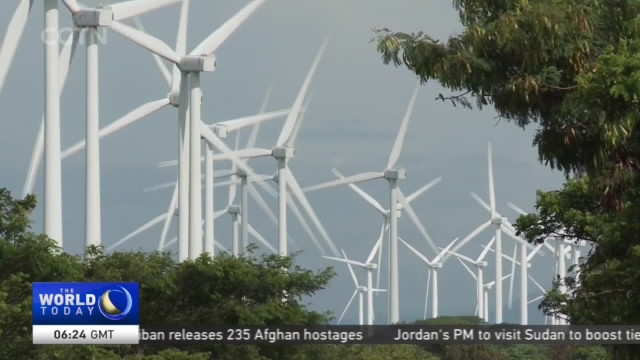
The United States was among the nearly 200 nations that originally signed the landmark Paris Climate Agreement. The international agreement is designed to put limits on carbon emissions. Two months ago, President Donald Trump announced the US was pulling out of the climate deal. Two other countries are on the short list of nations that did not sign it. One is Syria. The other, Nicaragua. CGTN's Franc Contreras travelled to that Central American nation to find out why.
Nicaragua's capital city, Managua is dotted with these metal sculptures that cost more than 30-thousand dollars apiece. The government has been criticized for installing these so-called "trees of life" in a country with few resources. Revolutionary leader Daniel Ortega led this nation from 1979 to 1990. He's been Nicaragua's president for the past 10 years. In 2015, Ortega's government opposed the Paris Climate Agreement, saying it does not hold signatory nations responsible for meeting carbon emissions goals.
CGTN requested an interview with the Nicaraguan government, but our requests were not granted. Nicaragua has made great strides toward fighting climate change. Fifty percent of the country's electricity now comes from renewable resources- like geothermal energy from volcanoes. Lake Nicaragua, Central America's largest body of fresh water, is also part of this country's move toward increasing its use of renewable energy.
FRANC CONTRERAS RIVAS STATE, NICARAGUA Strong steady gusts coming off the lake help make this part of Nicaragua one of the world's best locations for wind generated electricity production.
Scientists here and abroad agree- Nicaragua and much of Central America are among the most vulnerable regions on the planet to temperature changes because of the geographic location and the intensity of extreme climate events. The director of Managua's Humboldt Center, an environmental think tank, urges the Nicaraguan government to join the Paris agreement and state its own policy toward fighting climate change.
VICTOR CAMPOS DIRECTOR, HUMBOLDT CENTER (MALE, ENGLISH) "The government should publicly announce a national plan for adapting to climate change and state its goals and objectives for the period of time from now to 2020."
Nicaragua will have a chance to do just that in 2020, when nations will gather again, this time with the objective of setting clearly stated goals aimed at curbing carbon emissions. FC, CGTN, Managua, Nicaragua.