
Culture & Sports
10:40, 19-Nov-2016
Peru: home of alpacas
Updated
10:23, 28-Jun-2018
 []
[]
Share







Copied

Known as "sheep-like camels" (羊驼) in Chinese, alpacas have become an Internet meme in China, as their Chinese nickname sounds a bit like a swearword. Yet many netizens amused by the bizarre-looking creatures may not know where they originated. Peru is the main habitat for alpacas.
Varied landscape and varied people

The Republic of Peru, located towards the northern end of the South American west coast, occupies about 1.3 million square kilometers of land. Though not huge compared to countries like Russia and China, Peru is extremely biodiverse, with habitats ranging from rainforest to desert. The land is home to about 31 million people, around 45 percent of them Amerindians, 37 percent Mestizos, 15 percent white, and 2 percent other ethnicities. Most of them are Christian and speak Spanish.
Politics: Asians involved

The two candidates of 2016’s Peruvian presidential election, Pedro Pablo Kuczynski (L) and Keiko Fujimori (R), shake hands.
The two candidates of 2016’s Peruvian presidential election, Pedro Pablo Kuczynski (L) and Keiko Fujimori (R), shake hands.
The country got its independence from Spain in 1821, and its current Constitution took effect in 1993. From 1990 to 2000, Peru's government was led by a politician with a Japanese surname, Alberto Fujimori. He resigned in 2000 amid a major scandal, but his daughter Keiko Fujimori (藤森 恵子 in Japanese) is still active in politics, as the leader of the country's largest political party in National Congress, the right-wing Popular Force (Fuerza Popular in Spanish). She was also the presidential candidate in 2016, defeated by Pedro Pablo Kuczynski, who founded the center-right party Peruvians for Change in 2014. Kuczynski assumed office in July 2016.
Economy: mines and farms

The economy of Peru is classified by the World Bank as "upper middle income," with rapid growth of 3.9 percent during the first four months of 2016. The country mainly relies on farming and mining, as one third of its people are farmers, and it sits on a vast amount of minerals. The currency used in Peru is called the Nuevo Sol, one of which is worth roughly 30 US cents.
Culture: more than Machu Picchu
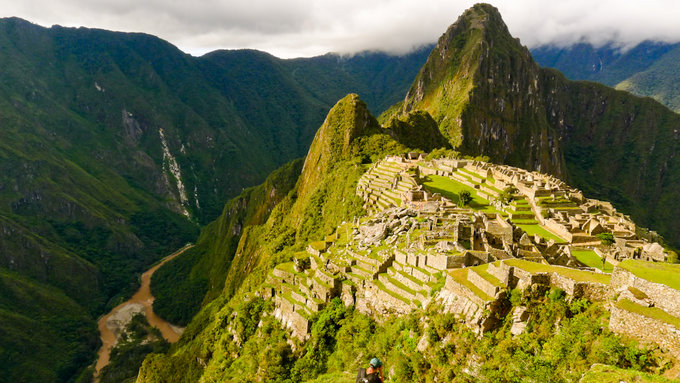
Machu Picchu
Machu Picchu
Peruvian culture is mainly a mixture of Amerindian and Spanish traditions. With that said, the culture has been influenced by factors from all over the globe: you can find European Romanticism in the novels, Chinese tastes in the cuisine, and African rhythms in the drum beats heard by folk dancers.
Peru’s ties with China
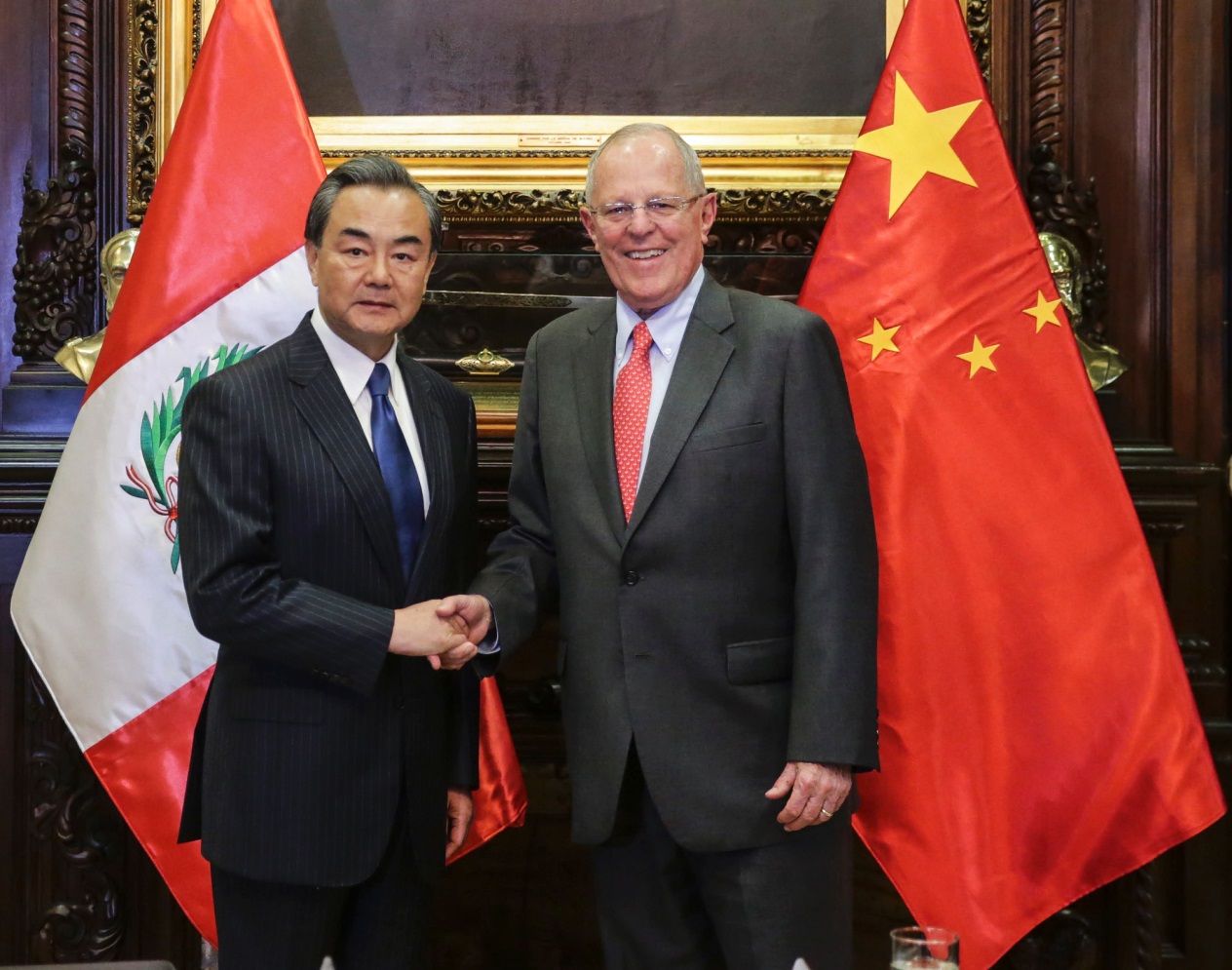
Chinese Foreign Minister Wang Yi (L) met with Peruvian President Pedro Pablo Kuczynski (R) during a visit to the country.
Chinese Foreign Minister Wang Yi (L) met with Peruvian President Pedro Pablo Kuczynski (R) during a visit to the country.
Ollanta Humala, Peruvian president from 2011 to 2016, visited China in 2013, strengthening the relationship between the two countries and inking various economic and cultural agreements. China is now Peru’s second-largest trading partner. It was also the first foreign destination of Peru's current President Pedro Pablo Kuczynski after he assumed office. China's Foreign Minister Wang Yi visited Peru in October 2016, in an effort to further the implementation of the agreements mentioned above.
Source: China's Ministry of Foreign Affairs, updated in November, 2016
(Written by Gong Zhe)