
Politics
22:23, 02-Mar-2018
May admits neither side can have 'exactly what we want' in Brexit
 ["china"]
Share







Copied
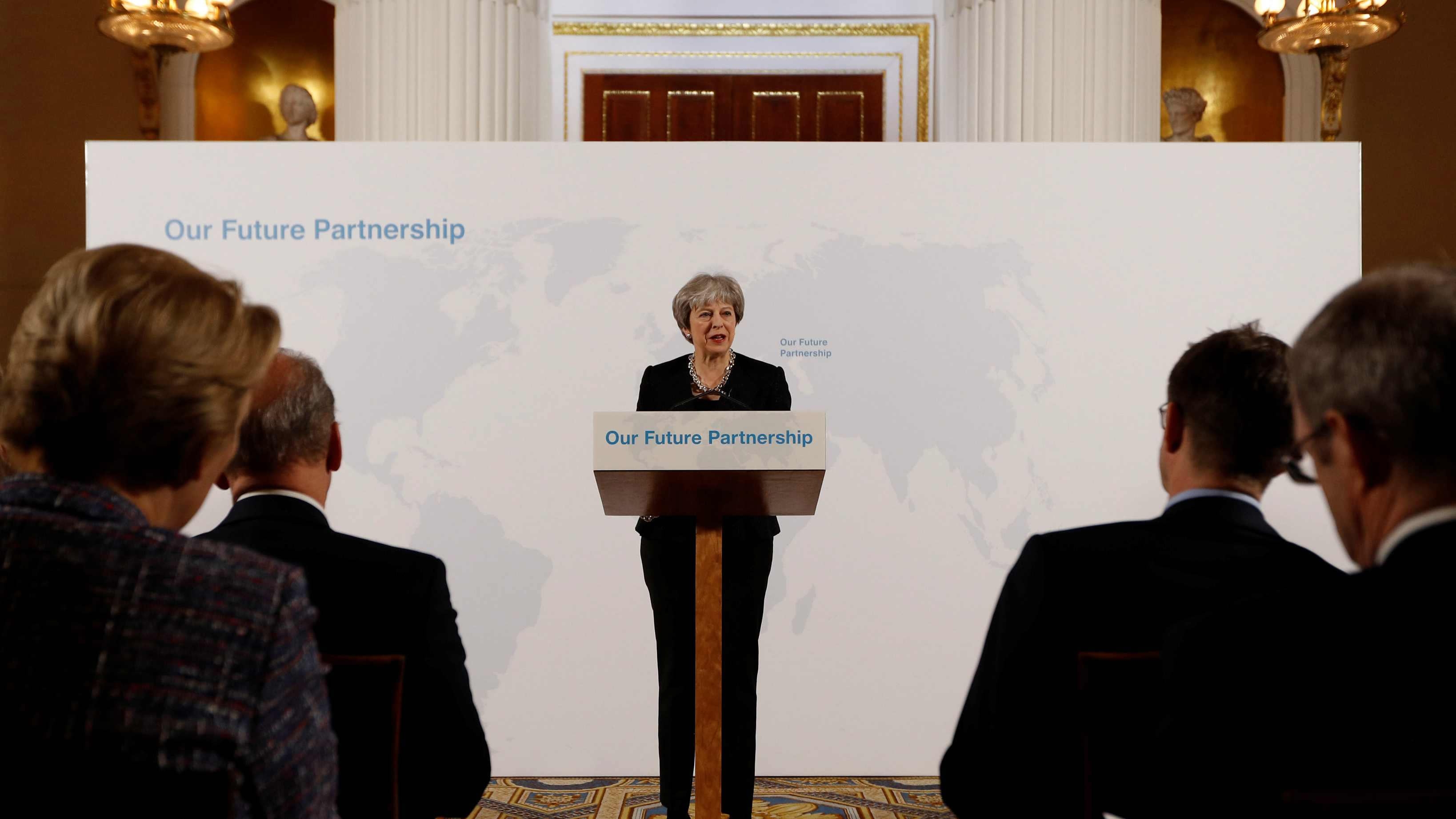
British Prime Minister Theresa May stressed on Friday that both London and Brussels will have to make concessions in Brexit negotiations while delivering a major speech in London.
"We both need to face the fact that this is a negotiation and neither of us can have exactly what we want," she said.
It was, she added, time to be "straight" with people over what was achievable, some 20 months after Britain voted to leave the European Union (EU) and her government began to try to unravel more than 40 years of integration. Britain is due to leave on March 29, 2019.
Appealing to EU to show flexibility
May urged the EU to show more flexibility in talks on a future relationship after Brexit, saying Britain realized it could not get all it wanted but believed an ambitious trade deal was still possible.
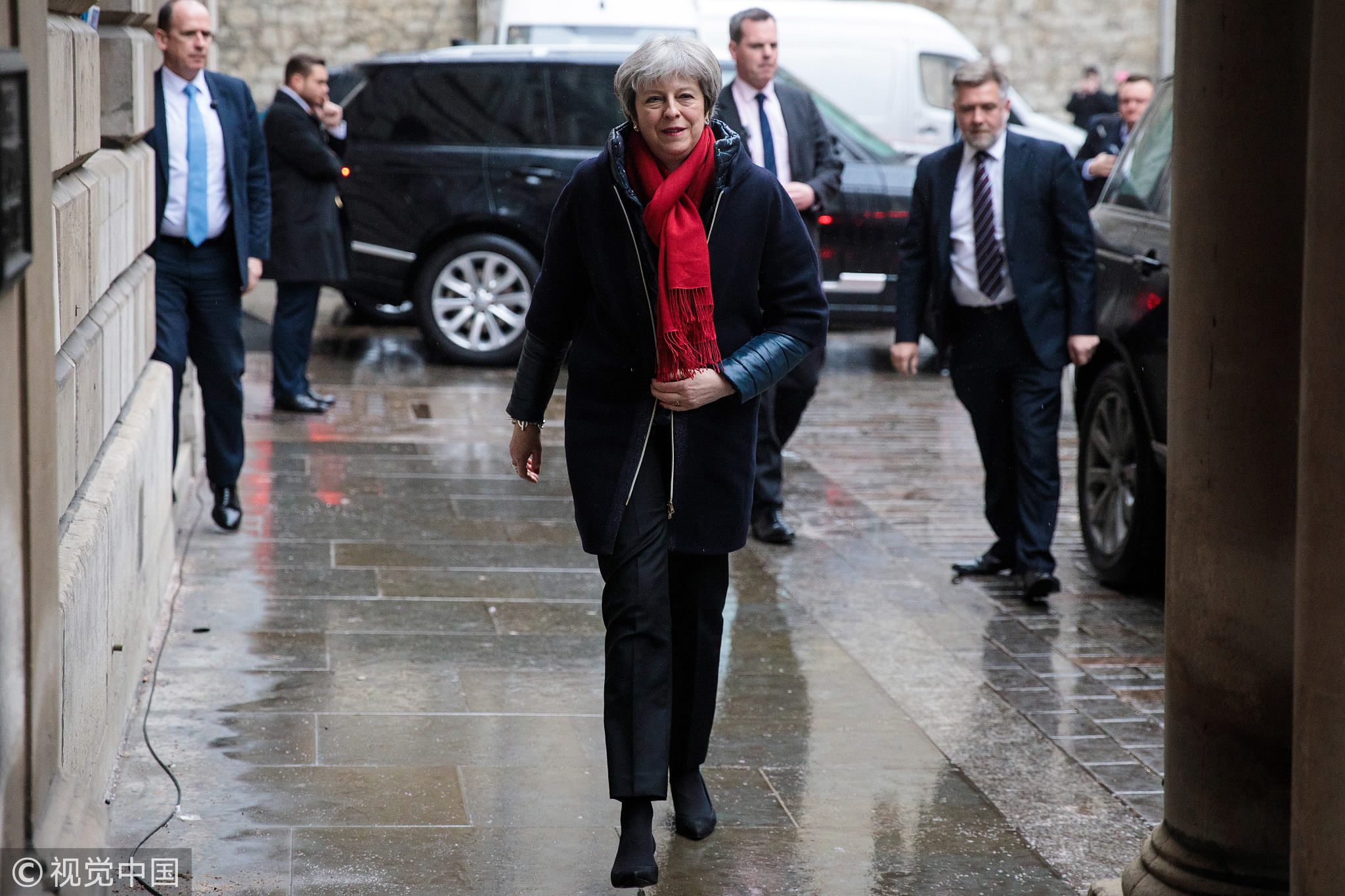
British Prime Minister Theresa May arrives to give a speech on Brexit at Mansion House, March 2, 2018, in London, England. /VCG Photo
British Prime Minister Theresa May arrives to give a speech on Brexit at Mansion House, March 2, 2018, in London, England. /VCG Photo
May set out ambitions for a tailor-made free trade deal that would include financial services and said Britain would aim for associate membership of EU regulators covering chemicals, medicines and aerospace.
Jettisoning an earlier strident view that Britain could walk away from the talks, May appealed to the EU to work together to solve some of the more difficult Brexit problems, including those related to Ireland, where some fear the return of a "hard border" with the British province of Northern Ireland after Brexit.
The prime minister still expressed confidence in being able to reach a deal with the EU, while admitting the UK needed to "resolve the tension between some of our key objectives."
May added that Britain was close to agreeing with Brussels on the terms of an implementation period that will help smooth the country's exit from the EU.
"I want to be straight with people because the reality is we all need to face up to some hard facts.
"We are leaving the single market, life is going to be different. In certain ways our access to each other's markets will be different," she said.
She also told audience that she wants an agreement to cover "more sectors and co-operating more fully than any Free Trade Agreement anywhere in the world today."
During her speech, May outlined five principles for a future economic relationship with the EU and said they will be the foundations underpinning this new partnership.
The five principles include ensuring fair and open competition, establishing an independent arbitration mechanism, having ongoing dialogue, protecting data and maintaining links between their peoples.
Reactions
The EU's main negotiator, Michel Barnier, welcomed the "clarity" May offered and her recognition that Britain faces "trade-offs." Big business echoed his words and even some Brexit campaigners praised the prime minister for her pragmatism.
But some EU officials were more skeptical. Manfred Weber, a close ally of German Chancellor Angela Merkel in the European Parliament, said May had her "head in the sand," while the assembly's Brexit point man Guy Verhofstadt called the speech a "few extra cherries on the cake."
8150km