
Business
16:24, 26-Jan-2018
China’s jobless rate hits 15-year low despite capacity cuts
 ["china"]
Share







Copied

Unemployment fell to 3.9 percent in China last year with a record number of new jobs created, despite concerns over how cuts of excessive production capacity and the country’s ongoing economic transition would affect the workforce.
A survey conducted by the Ministry of Human Resources and Social Security saw the jobless rate fall from 3.95 percent in 2016, the lowest unemployment levels seen since 2002.
A press conference held by the ministry on Friday said 13.51 million new jobs were created, a record-high and well beyond the official target of 11 million.
Lu Aihong, spokesperson for the ministry, told media that while “China's job market remained stable and achieved progress in 2017 with core indicators beating expectations,” 2018 would likely be a tougher year for employment.
Lu pointed to a “structural conflict” between the low-skill labor supply and demand for high-end employment, with more rural-to-urban migration and an estimated 8.2 million college graduates – a record number – set to apply more pressure on jobs across the country.

A record number of graduates are expected to join the job hunt in 2018. /VCG Photo
A record number of graduates are expected to join the job hunt in 2018. /VCG Photo
However, one of the biggest labor challenges for authorities in recent years appears to have been handled smoothly.
Official moves to cut excessive production capacity in the steel and coal industries could have potentially left hundreds of thousands of workers unemployed, but the ministry confirmed on Friday that 2017 saw 380,000 laid-off workers reallocated to new positions.

380,000 workers laid off due to overcapacity cuts were found new jobs in 2017, according to the Ministry of Human Resources and Social Security. /VCG Photo
380,000 workers laid off due to overcapacity cuts were found new jobs in 2017, according to the Ministry of Human Resources and Social Security. /VCG Photo
China’s unemployment rate is calculated based on the number of people registering with human resources and employment authorities.
It has been criticized for not providing an accurate picture of employment across the country, as it largely doesn’t take into account undocumented migrant workers and rural employment.
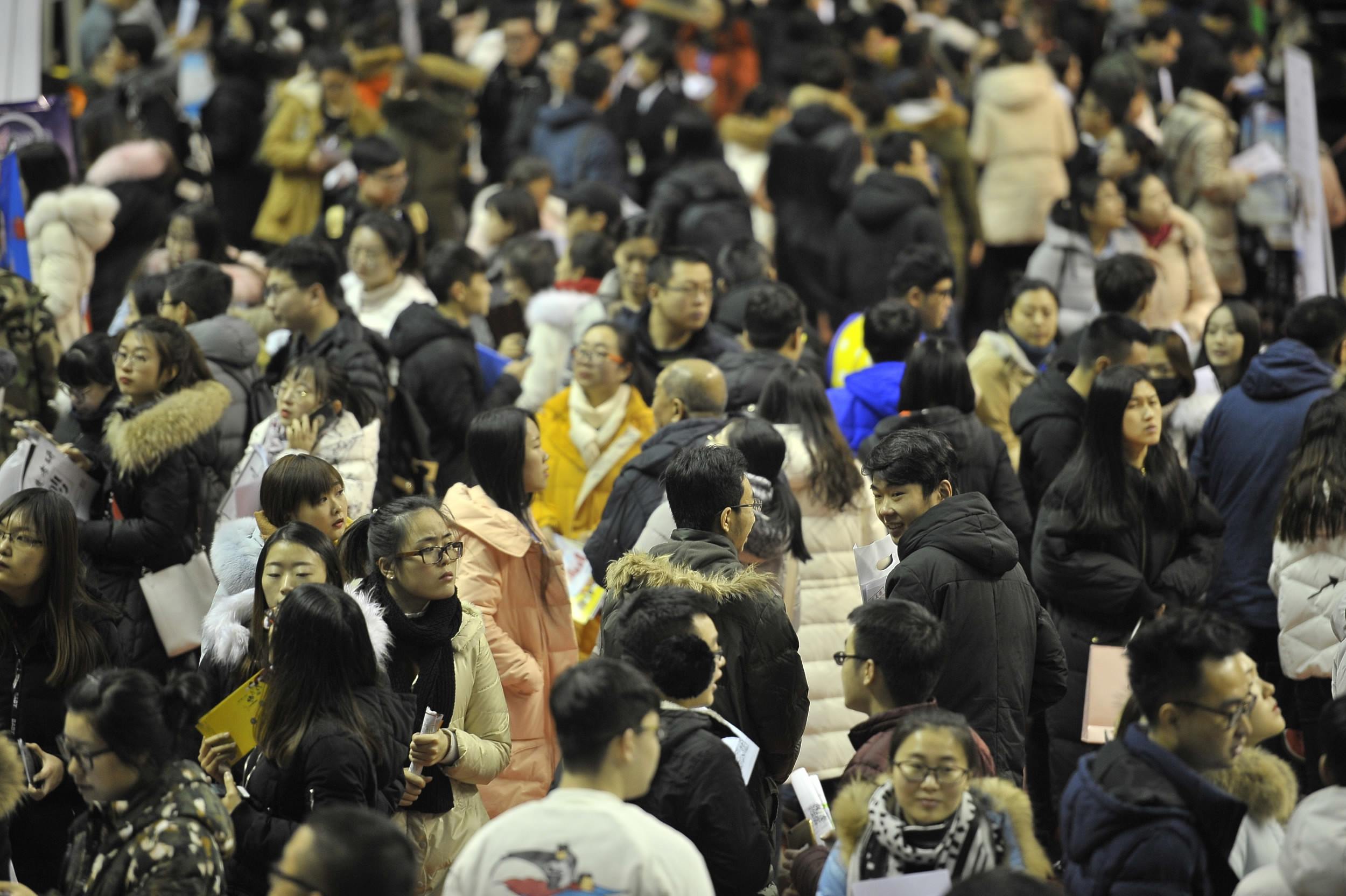
Chinese college graduates crowd booths of recruiters during a job fair at Heilongjiang University on December 28, 2017 in Harbin, northeast China. /VCG Photo
Chinese college graduates crowd booths of recruiters during a job fair at Heilongjiang University on December 28, 2017 in Harbin, northeast China. /VCG Photo
China's unemployment data come after similar trends in the US and Europe. US President Donald Trump is trying to take credit for reducing American unemployment to 4.1 percent, with several states reporting record-low jobless rates.
The EU is recovering from the financial crisis with promising growth forecasts for 2018, and a 9.1 percent unemployment rate is the lowest seen since 2009.
Central and Eastern European countries like the Czech Republic and Romania, along with Germany, are enjoying some of the bloc's best employment figures.
However, youth unemployment remains a pressing problem in southern Europe, particularly in Greece and Spain, where more than a third of people under 25 are still jobless.
It is difficult to obtain close accuracy when it comes to unemployment statistics, due to the number of factors and variables involved.
A 2015 study by Shanghai University of Finance and Economics for the National Bureau of Economic Research looked to calculate unemployment using alternative methods and data based on the Urban Household Survey.

Workers sort cuts of fresh pork in a processing plant of pork producer WH Group in Zhengzhou, Henan province China, November 24, 2017. /VCG Photo
Workers sort cuts of fresh pork in a processing plant of pork producer WH Group in Zhengzhou, Henan province China, November 24, 2017. /VCG Photo
The study found the alternative unemployment rate widely diverged from the official data, claiming China's jobless rate was 10.7 percent in 2005, compared to the official figure of around four percent.