
17:03, 27-May-2019
Highlight – Belt and Road Initiative coincides with the trend of globalization

Share






Copied
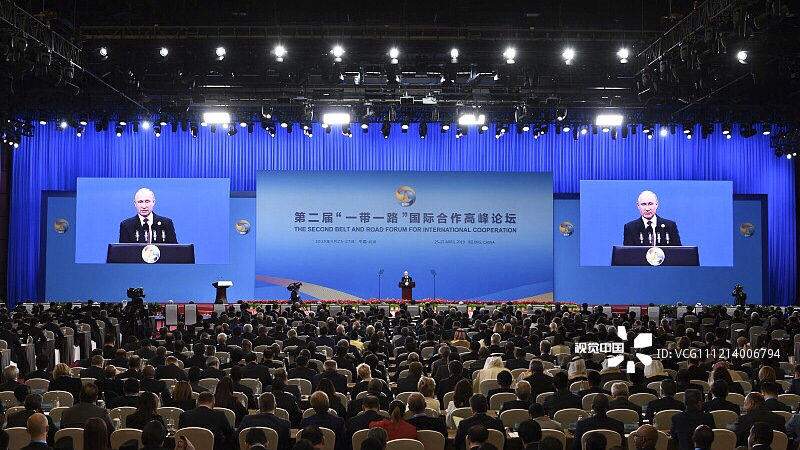
The Second Belt and Road Forum for International Cooperation was held in Beijing attending with 37 heads of states and numerous government and international organizations.
By the end of March 2019, China had signed 173 cooperation agreements with 125 countries and 29 international organizations. The Belt and Road has expanded from Asia and Europe to include new participants in Africa, Latin America and the South Pacific.
China states that the Belt and Road Initiative was first proposed from a global perspective. What's its history? Robert Lawrence Kuhn discusses the Belt and Road background with Xing Guangcheng, Director of the Institute of Chinese Borderland Studies, Chinese Academy of Social Sciences.
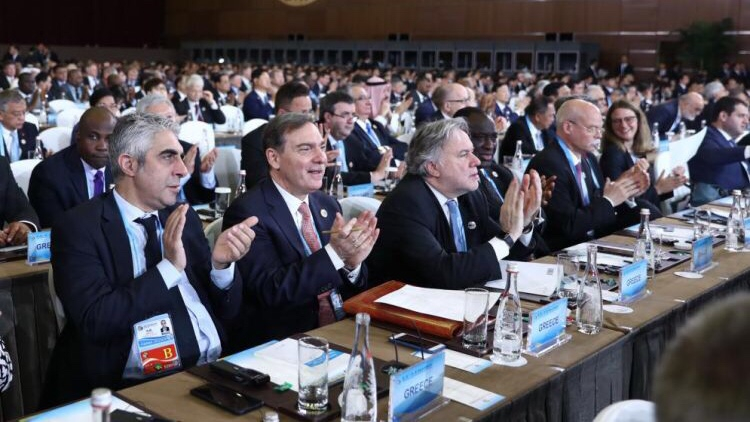
The Second Belt and Road Forum for International Cooperation was held in Beijing on April 26, 2019/ Xinhua Photo
The Second Belt and Road Forum for International Cooperation was held in Beijing on April 26, 2019/ Xinhua Photo
According to Xing Guangcheng, the Belt and Road Initiative coincides with the trend of globalization. Faced with an increasingly complex global economic growth landscape, China proposed a grand plan to address issues of global inequality and imbalances.
And the Belt and Road Initiative no longer only involves countries along the ancient Belt and Road route, but has become a global project.
Over the past five years, many countries have joined, increasing their cooperation with China.