
Politics
22:11, 24-Feb-2018
Cambodian Senate election: What you should know
 ["china"]
Share







Copied
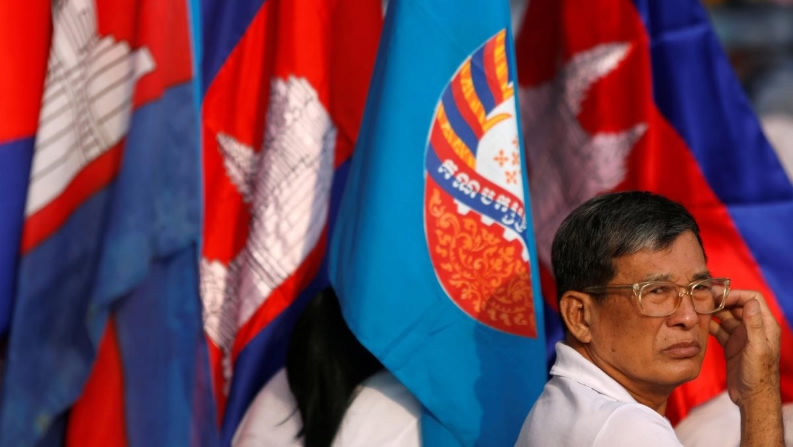
Five months before the Cambodian national election, the country's senate elections are due to be held on Sunday after having been postponed since Jan. 14.
A preliminary result will be announced on Sunday afternoon, while the official one will be on March 3 if there are no complaints filed by any political parties contesting the result, a spokesman for the National Election Committee (NEC) said on Thursday.
A total of 276 observers from 12 organizations have registered to monitor the election, he added.
How does the senate election work?
Founded in 1999, the Cambodia's Senate – the upper house of the Parliament – is a legislative body elected every six years.
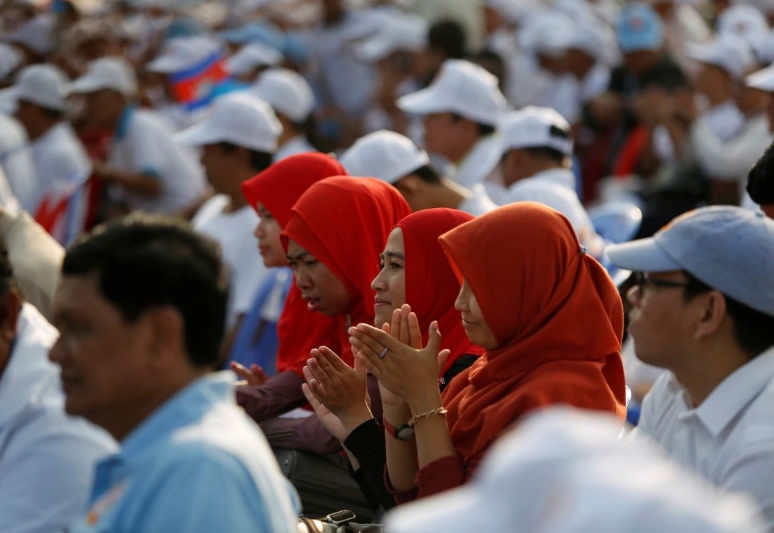
Supporters of the Cambodian People's Party (CPP), attend a senate election campaign at the Freedom Park in Phnom Penh, Cambodia, February 23, 2018. /Reuters Photo
Supporters of the Cambodian People's Party (CPP), attend a senate election campaign at the Freedom Park in Phnom Penh, Cambodia, February 23, 2018. /Reuters Photo
The law on Senate Election passed last year increased the number of Senate seats from 61 to 62 while the campaign period for the Senate election was reduced from three weeks to two weeks.
According to Cambodian law, the King and National Assembly will each appoint two senators and the rest will be elected through indirect votes: 11,572 commune councilors and 123 members in National Assembly (the lower house) will vote at 33 polling stations across the country.
Four parties are joining the senate race this year: the ruling Cambodian People's Party (CPP) of Prime Minister Samdech Techo Hun Sen, the Funcinpec Party of Prince Norodom Ranariddh, the Cambodian Youth Party, and the Khmer National United Party.
Hun Sen and the CPP
The ruling CPP, led by Hun Sen, is expected to continue its victory in the Senate election on Sunday, as well as the National Assembly election which will be held in July this year.
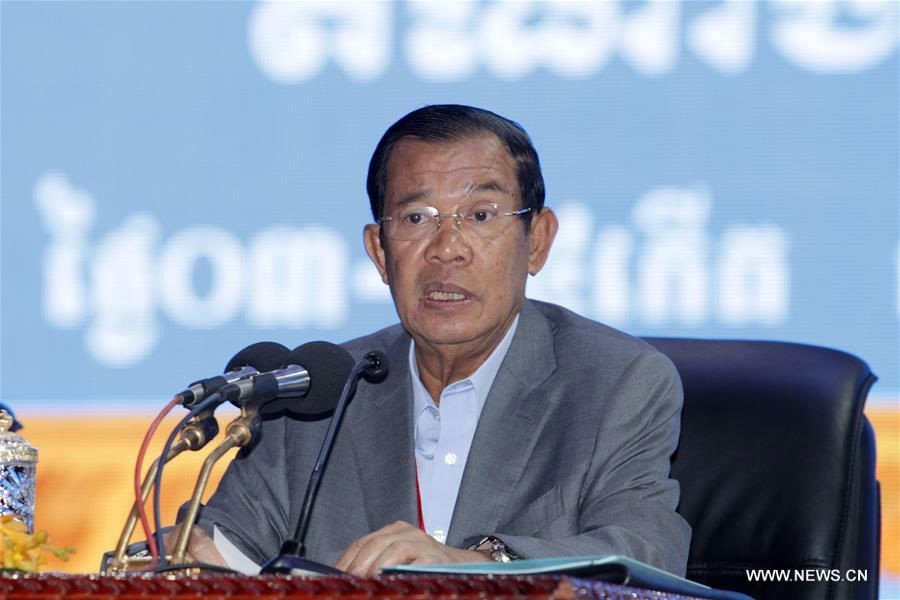
President of the Cambodian People's Party (CPP), Samdech Techo Hun Sen, who is also the prime minister of Cambodia, gives a speech during the CPP's extraordinary congress in Phnom Penh, Cambodia, January 19, 2018. /Xinhua Photo
President of the Cambodian People's Party (CPP), Samdech Techo Hun Sen, who is also the prime minister of Cambodia, gives a speech during the CPP's extraordinary congress in Phnom Penh, Cambodia, January 19, 2018. /Xinhua Photo
The CPP has ruled the country since 1979. Its current central committee consists of 545 members.
In the 2013 general election, the CPP won the majority, receiving 68 parliamentary seats against 55 seats for the now-defunct opposition CNRP.
The Prime Minister Hun Sen, also the president of the CPP, was born in 1951 in Cambodia's Kampong Cham Province. He was elected vice president of the CPP in 1991 and served as second prime minister of Cambodia after the first general election in 1993.
Hun Sen became the Cambodian prime minister after winning the general election in 1998 and was reelected in 2003, 2008, and 2013 respectively.
In 2015, Hun Sen became the president of the CPP.
Back story: Dissolution of the main opposition party
Experts say that the CPP is expected to win all seats as a consequence of the main opposition party, Cambodia National Rescue Party (CNRP), being dissolved.
The CNRP made large gains in last June's communal election as it won 489 out of the country's 1,646 commune chiefs' seats, 5,007 out of 11,572 commune councilors' seats, the second highest number among all parties.
CNRP was formed in 2012 when the Sam Rainsy Party merged with the Human Rights Party, which since then had become the country's main opposition.
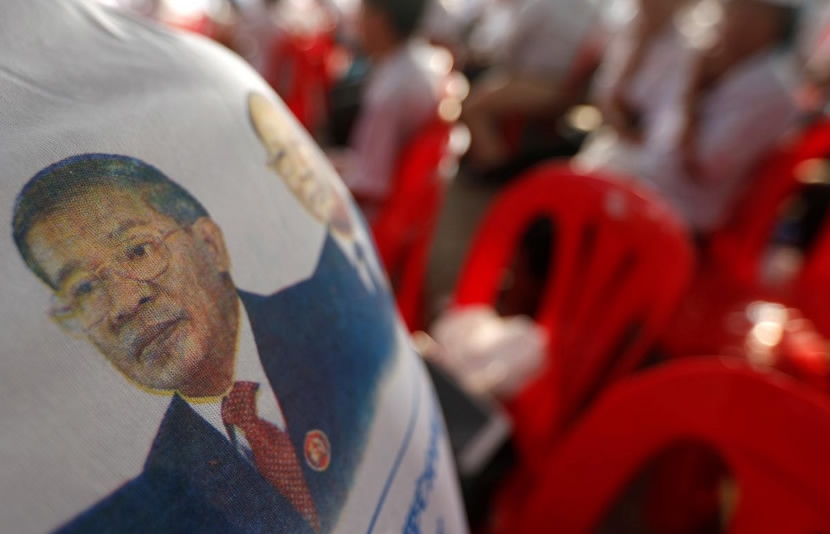
A supporter of the Cambodian People's Party (CPP), wears a T-shirt with a portrait of CPP president and Cambodia Prime Minister Hun Sen during a senate election campaign at the Freedom Park in Phnom Penh, Cambodia, February 23, 2018. /Reuters Photo
A supporter of the Cambodian People's Party (CPP), wears a T-shirt with a portrait of CPP president and Cambodia Prime Minister Hun Sen during a senate election campaign at the Freedom Park in Phnom Penh, Cambodia, February 23, 2018. /Reuters Photo
CNRP's leader Kem Sokha was arrested last September and charged with treason. In the aftermath, the Cambodian's Supreme Court last November dissolved the CNRP and banned more than 100 of its politicians from office for five years.
After dissolution, more than 5,000 former CNRP commune seats were reallocated by the NEC and the majority, comprising 4558 seats, went to the CPP.
EU and the US announced the suspension of assistance to NEC in the wake of CNRP's dissolution and claimed that the upcoming election would not be seen as legitimate.
However, Hun Sen said that the 2018 national election result does not need recognition from the international community to be valid.
"Under the Cambodian Constitution, it (the election result) does not require endorsement from presidents of other countries or from the United Nations secretary-general to be legitimate," adding that the election result would be legitimate when it is recognized by the National Election Committee, the Constitutional Council and Cambodian King Norodom Sihamoni.
(With input from agencies)
3351km