
22:38, 06-Apr-2019
Milipol Asia-Pacific: Bi-annual forum focuses on new-age security threats
Updated
22:30, 09-Apr-2019
 []
[]
Share







Copied
03:17
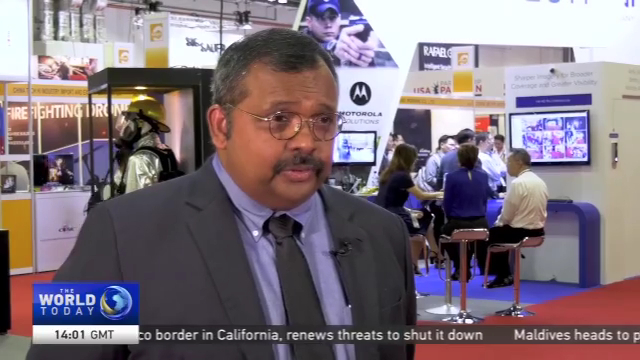
Singapore is hosting a major conference on homeland security. Experts and government leaders discussed how to deal with terror threats and organized crime. CGTN's Miro Lu tells us more.
ISIL presence in the middle east, Iraq and Syria has practically been eliminated. But security experts warn that the threat from the terror group is far from over. In fact, a large number of experts believe that Southeast Asia may become the next breeding ground for the terror outfit.
PROFESSOR KUMAR RAMAKRISHNA HEAD, NATIONAL SECURITY STUDIES PROGRAM S. RAJARATNAM SCHOOL OF INTERNATIONAL STUDIES "ISIS strategy is to sort of try and find operational space in places where there are relatively lack of good governance, where there are history of troubled relations between the center and the periphery. And in Southeast Asia you can find so-called troubled regional waters for ISIS to fish in."
The ever-changing challenges emerging from extremists and terror groups - was the overarching theme at the homeland security conference - Milipol Asia Pacific this year.
Professor Kumar Ramakrishna is the head of national security studies programme at RSIS in Singapore. During his session at Milipol, he warned of two threats emerging from supporters of ISIL and its extremist ideology in Southeast Asia.
The first - plots by local terror groups conducted on behalf of ISIS. The second and more challenging one - is from fighters returning from the middle-east to their home countries.
PROFESSOR KUMAR RAMAKRISHNA HEAD, NATIONAL SECURITY STUDIES PROGRAM S. RAJARATNAM SCHOOL OF INTERNATIONAL STUDIES "There is a need for good laws and legal legislative framework to know what to do. If we find that the families coming back, not all of them are radicalized then what to do with the women and the children. We need a comprehensive solution for the challenge of returning foreign fighters and their families."
A significant aspect highlighted at Milipol was the role of the internet and social media as a facilitator. Counter-terrorism expert Yaniv Peretz explains that small groups or self-radicalized individuals are able to carry out attacks with no training.
YANIV PERETZ COUNTER-TERRORISM EXPERT "Radicalised individuals see YouTube videos, see some kind propaganda material all over the internet and they say, you know what I am going to take the choice into my hand and I am going to carry the attack. It is a major issue for us as security professionals, why? because we don't have intelligence about them. They are not associated with any terrorist organization."
MIRO LU SINGAPORE "Apart from the conference, another key highlight of Milipol 2019 is this exhibition area. More than 300 exhibitors are in attendance, showcasing the latest technology and future innovation in various areas of homeland security, including search and rescue operations, border protection and crowd control."
On display at the exhibition were a wide array of weapons, military gear, and security scanners. But the focus area this year was anti-drone technology. Drones are being seen as a potential weapon that can be misused by terrorists and criminals alike. As a result, anti-drone solution providers are seeing an increased demand for drone detectors and jammers.
A lot still needs to be done in the fight against terror, but experts feel that forums like Milipol can go a long way in dealing with the ever-changing threat of terrorism. Miro Lu, CGTN, Singapore.