
Tech & Sci
13:29, 18-Apr-2018
EU court rules against Poland in logging case
 ["europe"]
Share







Copied
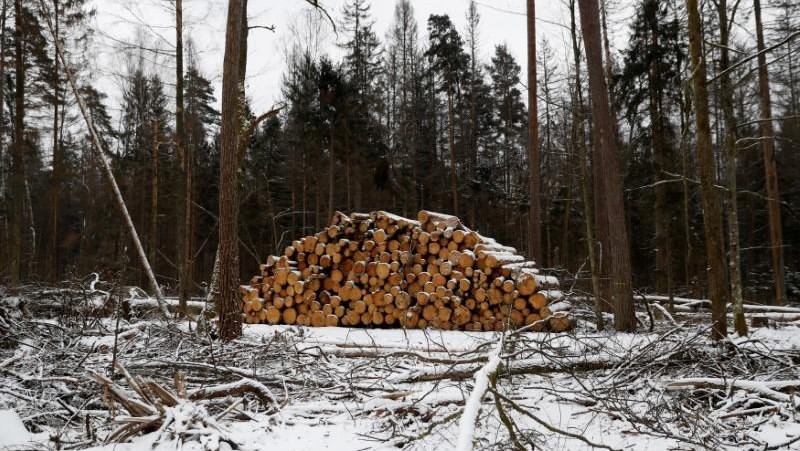
The European Union's highest court on Tuesday ruled in a final judgment issued on Tuesday that Poland violated environmental norms with large-scale logging in a Unesco-protected forest.
Last year, Poland's environment ministry approved felling of more than 10,000 trees in Białowieża forest to reportedly control beetle infestation.
ClientEarth, together with six other organizations had filed a complaint with the European Commission against the illegal logging. The Commission approached the court to resolve the issue. “The judgment is final, and the Polish side cannot appeal it. The verdict is valid from today, so the government will have to adjust to it as soon as possible,” the environment group maintained.
In case of delay, the Commission will launch a legal case over non-compliance, which could result in hefty fines. “The minimum penalty is 4.3 million euros, but usually in such cases the fines are much higher, potentially reaching tens of millions of euros.”
In March 2016, then Poland’s Minister for Environment Jan Szyszko, who was dismissed last month because of this case – had tripled the logging limits in Bialowieza Forest. Jan Szyszko took the logging decisions despite warnings from scientists that his decision would be very harmful to the forest.
“We warned that the increased logging would breach EU law even before the minister officially authorized it. From a legal perspective, the case has been as clear as day from the beginning – it was very obvious that the law was being broken,” ClientEarth chief executive James Thornton said.
Poland’s government maintained that it would comply with the court’s verdict. “We will carry out an in-depth analysis of the judgment of the Court of Justice of the European Union. As I declared earlier, Poland will respect the verdict," said Minister of Environment Henryk Kowalczyk.
“The Białowieża Forest is our national heritage. All the activities have been undertaken with its preservation in the best possible condition for present and future generations in mind,” he added.
Białowieża Forest is the last remaining primeval forest in the lowland Europe, which is spread over an area of over 1500 square kms. The forest that houses centuries old Oak, Elm, Lime trees is a crucial habitat for rare species of birds and animals.
The European Union’s environment commissioner, Karmenu Vella in a tweet over the court’s verdict said, “We welcome Polish Govt's recognition & look forward to implementation.”
[Cover: Logged trees are seen at one of the last primeval forests in Europe, Bialowieza forest, near Bialowieza village, Poland February 15, 2018. /Reuters Photo]