
Tech & Sci
17:45, 28-Jun-2017
Study reveals two black holes orbiting in relation
 []
[]
Share







Copied

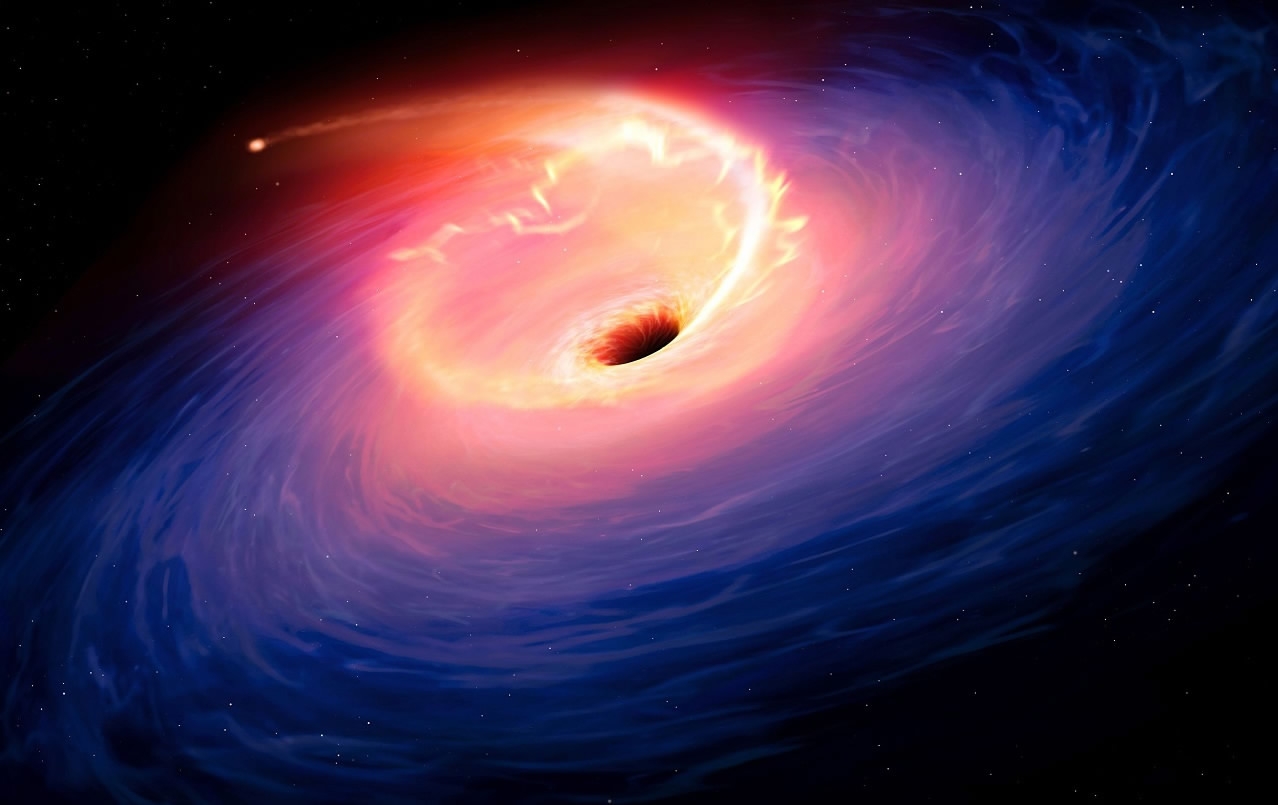
New research released Tuesday in Astrophysical Journal unveils that one of the two black holes in a gigantic, expanding galaxy about 750 million light years from Earth seems to be orbiting around the other.
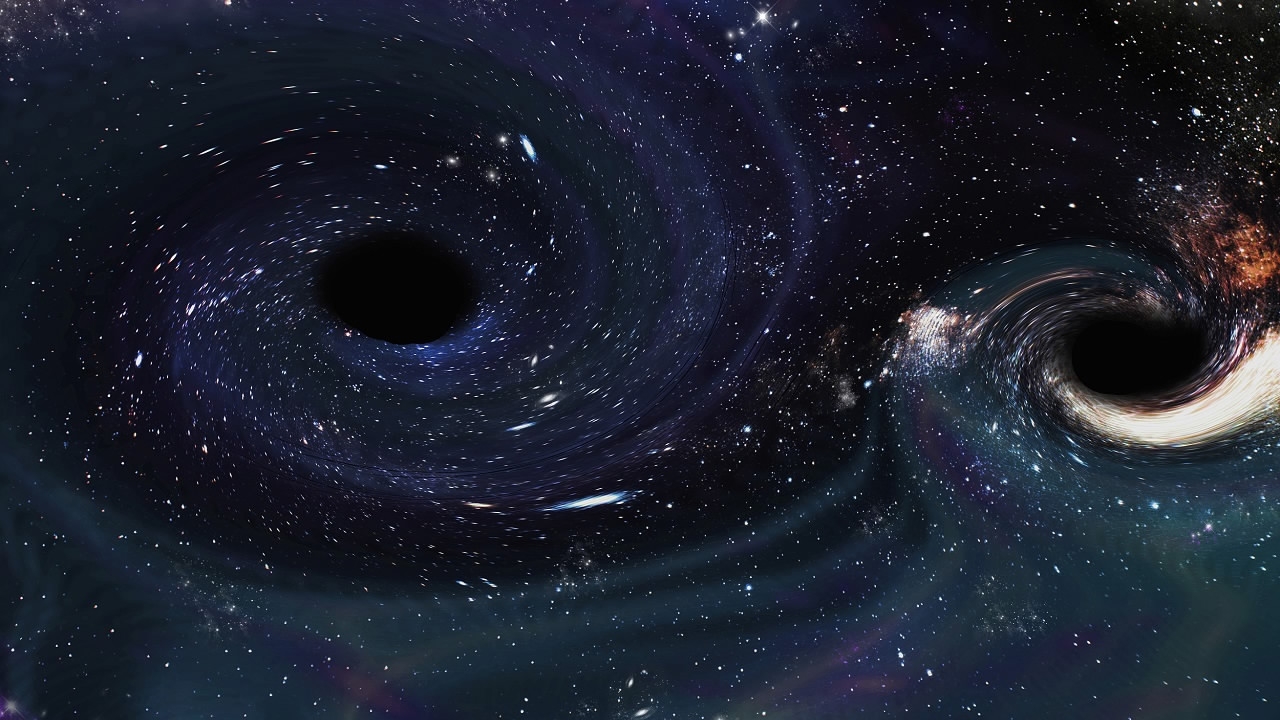
It will be the first duo of black holes ever shown to be moving in relation to each other if confirmed.
VCG Photo
VCG Photo
Potentially, it is the smallest ever recorded movement of an object across the sky, also known as angular motion.
"If you imagine a snail on the recently discovered Earth-like planet orbiting Proxima Centauri, a bit over four light years away, moving at one centimeter a second, that's the angular motion we're resolving here," said Roger W. Romani, professor of physics at Stanford University and co-author of the paper.
Scientists led by Greg Taylor, a professor of physics and astronomy at the University of New Mexico, have taken snapshots of radio galaxy 0402+379, the one containing the two black holes over the past 12 years. Officially discovered in 1995, the galaxy was confirmed in 2006 to have a supermassive black-hole binary system with an unusual configuration.
VCG Photo
VCG Photo
The two black holes are among the largest ever found.
"The black holes are at a separation of about seven parsecs, which is the closest together that two supermassive black holes have ever been seen before," Karishma Bansal, a graduate student in Taylor's lab and lead author of the paper, was quoted as explaining in a news release from Stanford.
In the recent paper, the team reports that one of the black holes moved at a rate of just over one micro-arcsecond per year, an angle about one billion times smaller than the smallest thing visible with the naked eye. Based on this movement, the researchers suppose that one black hole may be orbiting around the other over a period of 30,000 years.
Result of two galaxies merging?
View of galaxy. /VCG Photo
View of galaxy. /VCG Photo
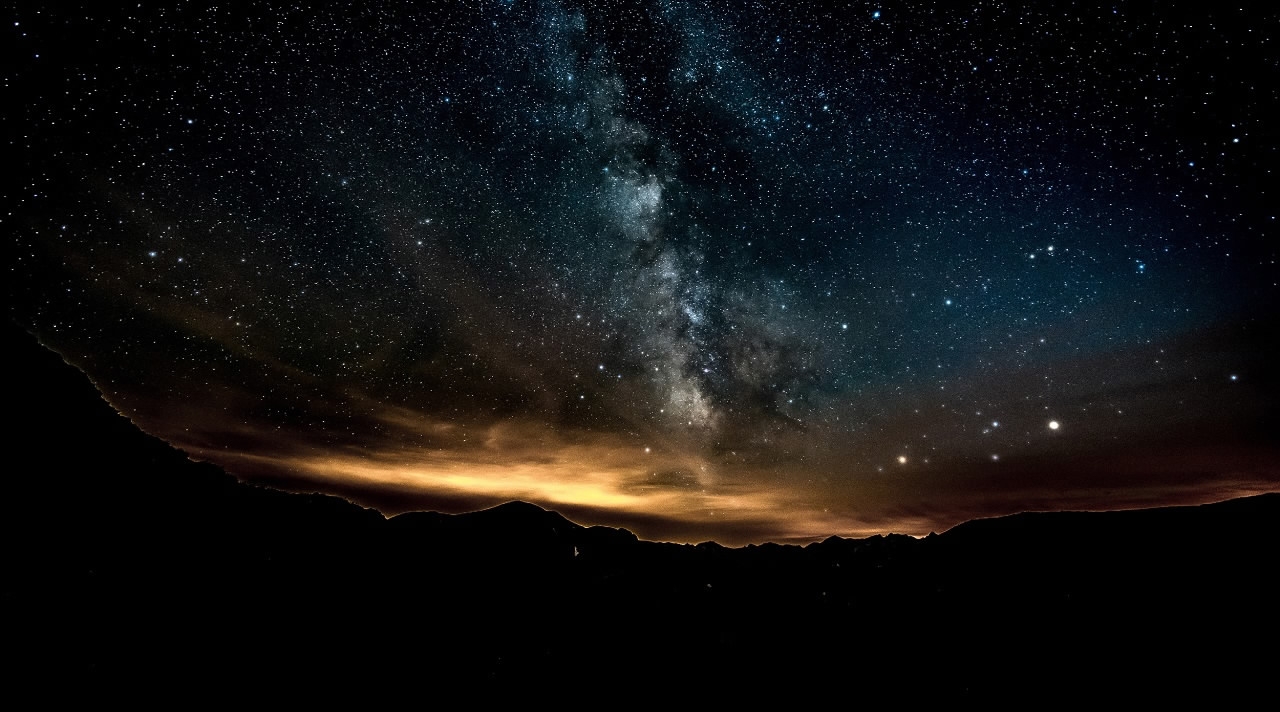
Although it is not the only supermassive black-hole binary ever found, the researchers believe that 0402+379 likely has a special history. "We've argued it's a fossil cluster," Romani said. "It's as though several galaxies coalesced to become one giant elliptical galaxy with an enormous halo of X-rays around it."
Researchers believe that large galaxies often have large black holes at their centers and, if large galaxies combine, their black holes eventually follow suit. It's possible that the apparent orbit of the black hole in 0402+379 is an intermediary stage in this process. "For a long time, we've been looking into space to try and find a pair of these supermassive black holes orbiting as a result of two galaxies merging," Taylor said. "Even though we've theorized that this should be happening, nobody had ever seen it, until now."
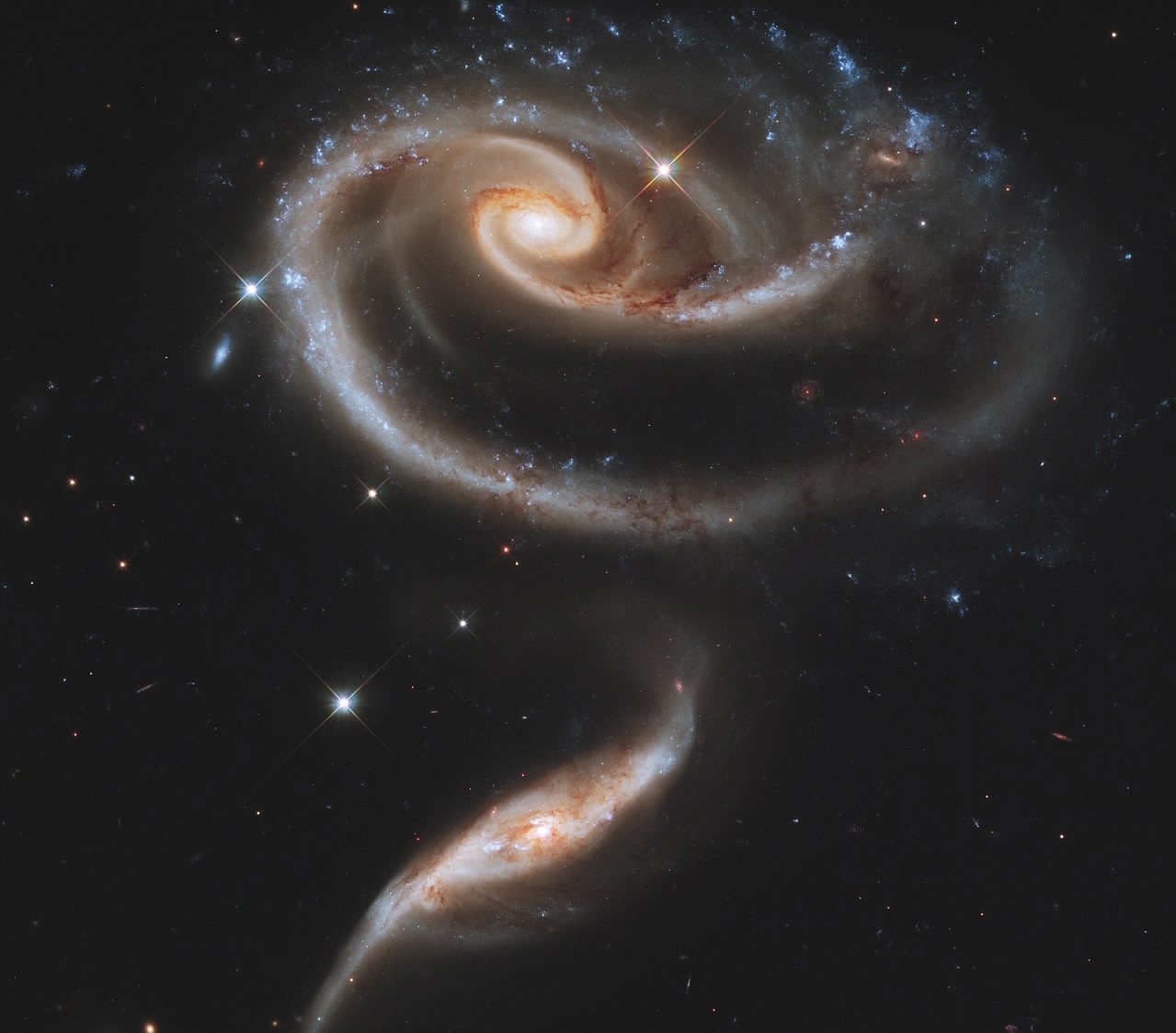
Arp 273 interacting galaxies in Andromeda. /VCG Photo
Arp 273 interacting galaxies in Andromeda. /VCG Photo
A combination of the two black holes in 0402+379 would create a burst of gravitational radiation. However, this theorized convergence between the black holes may never occur. Given how slowly the pair is orbiting, the researchers think the black holes are too far apart to come together within the estimated remaining age of the universe, unless there is an added source of friction.
By studying what makes this stalled pair unique, the researchers try to better understand the conditions under which black holes normally merge.
(Source: Xinhua)