
20:50, 29-Jun-2019
Sichuan Earthquakes: What happened before and after the disaster?
Updated
17:02, 09-Jul-2019

Share






Copied
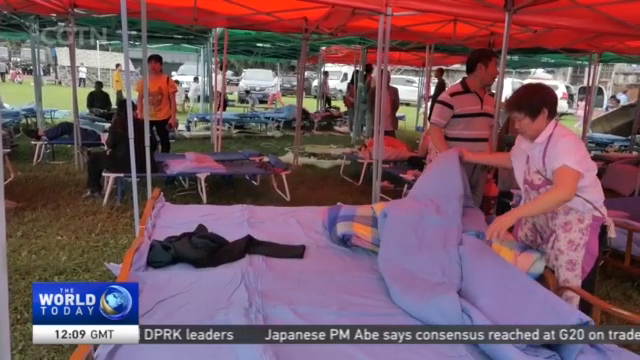
Authorities in Sichuan are calling an end to 10 days of search and rescue operations after two earthquakes rocked the region this month. We take a look at the events that led up to the disaster, along with some analysis from experts.
DR. YI GUIXI, RESEARCH PROFESSOR SICHUAN EARTHQUAKE PREDICTION RESEARCH CENTER "The Changning Earthquake, and a series of other quakes followed, occurred at the southern edge of the Sichuan Basin. The geological structure of this region is relatively stable. Throughout history, the intensity of quakes here, what we call magnitude, is generally lower. The tectonic activities are relatively weak, as earthquakes in the region are mainly controlled by folds and associated small-scale faults."
DR. YI GUIXI, RESEARCH PROFESSOR SICHUAN EARTHQUAKE PREDICTION RESEARCH CENTER "The Wenchuan Earthquake in 2008 exerted a stress-loading effect on the entire Sichuan Basin, which added a force to the region. The Changning Earthquake and a series of aftershocks with magnitudes greater than 5 are actually a set of moderate and strong quakes during this active period."
DR. YI GUIXI, RESEARCH PROFESSOR SICHUAN EARTHQUAKE PREDICTION RESEARCH CENTER "Throughout history, seismic activities in Sichuan Basin were weak, with relatively low magnitude and long recurrence intervals of damaging shocks. Residents in the region do not have a strong awareness of earthquakes. Therefore, residential buildings lack earthquake resistance capabilities, and people do not realize that their houses need to guard against risks. China Earthquake Administration has published a new version of seismic intensity maps. So long as we build houses in strict accordance with the new standards, we can improve shock resistance of those buildings."
DR. YI GUIXI, RESEARCH PROFESSOR SICHUAN EARTHQUAKE PREDICTION RESEARCH CENTER "It's difficult to predict the occurrence of earthquakes. Though we've been doing it for over 30 years, I think progress has been very slow. We hope to make more progress, and to be able to do short-term forecasting. But it's still a long road ahead. We expect to warn the public of potential earthquakes in advance to minimize casualties and property damage. But we're not there yet, and we're still working in that direction."