
21:20, 22-Feb-2019
China's Judicial Reform: Information technology improves judicial efficiency and transparency
Updated
21:20, 25-Feb-2019
 []
[]
Share







Copied
02:56
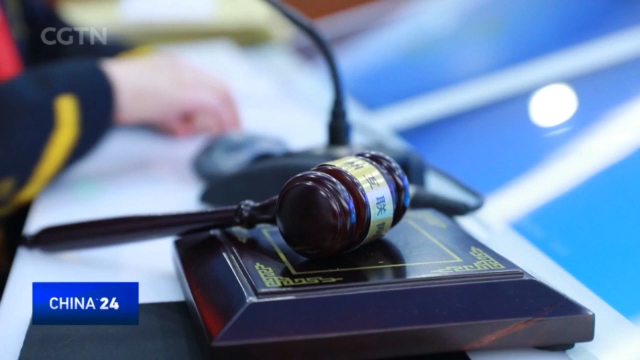
A Shanghai court has become the first in China to officially adopt new artificial intelligence-supported software to facilitate judicial hearings. Chinese judges and prosecutors are using the new technology to improve efficiency and accuracy. CGTN's Wu Lei finds out more.
It's a case of paper, and even people, slowly disappearing from courtrooms. Shanghai's Number 2 Intermediate People's Court becomes the first in the country to adopt a new 'artificial intelligence-supported system' to aid in criminal trials. It was put to the test in January during a case involving robbery and murder. No paper was filed during the trial and nearly all the materials were shown through electronic display.
HUANG BOQING, DEPUTY CHIEF JUDGE SHANGHAI NO.2 INTERMEDIATE PEOPLE'S COURT "In previous trials, identifying and verifying evidence needed a lot of time and attention. But this AI system has helped us a lot. The digital guidance has largely improved the efficiency and ensure the quality of the case."
The system can also act as a stenographer, transcribing speech and identifying judges, prosecutors, defendants and witnesses according to their roles. After almost 2 years of intensive learning, the system is expected to play a bigger role in court trials.
CUI YADONG, FORMER PRESIDENT SHANGHAI HIGH PEOPLE'S COURT "From investigations to prosecutions and in court, this AI system helps through the entire criminal procedure. The principals of mutual support and mutual constraint will be better implemented."
After Shanghai, this AI support system is expected to be promoted to courts in other cities across the country.
WU LEI HANGZHOU "In addition to criminal cases, Chinese courts are also using information technology to handle online disputes and civil cases. Here at Hangzhou Court of the Internet, the agents representing the plaintiff and the defendant don't even have to be present in the courtroom. They can communicate with the judge online."
With the help of technologies like AI, big data and cloud computing, this court handled about 10 thousand online cases in 2018 alone.
NI DEFENG, VICE PRESIDENT HANGZHOU COURT OF THE INTERNET "We are hoping to reshape the whole trial process of internet related cases, because the unique features of online cases, like cross-region and sector make the current law very difficult to cover."
Ni says challenges remain as judicial reform continues because data security and technology neutrality will always be paramount for the benefit of everyone's legal rights. WL, CGTN, ZJ province.