
13:09, 16-Mar-2019
Foreign Investment Law: Global firms welcome new protections
Updated
13:00, 19-Mar-2019
 []
[]
Share







Copied
02:58
China's new Foreign Investment Law addresses some long-held concerns of Western companies. Many choose Shanghai for their Chinese headquarters, so our Han Peng is there, meeting with some high-profile investors to get their take.
The highly-anticipated Foreign Investment Law has become a reality. It bans forced technological transfers, vows equal treatment for foreign investors and protects intellectual property rights.
DAN McCLORY HEAD OF CHINA OPERATIONS BOUSTEAD SECURITIES "By not forcing technology transfer, not even having the perception that there's force technology transfer, will lead to much greater openness. And once that understood, once companies become more comfortable with that, it will really lead to a wave of investment."
Some say China rushed the passing of the law due to pressure from the ongoing trade negotiations with the United States. But Beijing insists that it's simply another chapter in China's opening up. Lawmakers started drafting it two years before US President Donald Trump took office, and last year, Shanghai witnessed the opening of the first foreign car factory independently owned by a foreign investor.
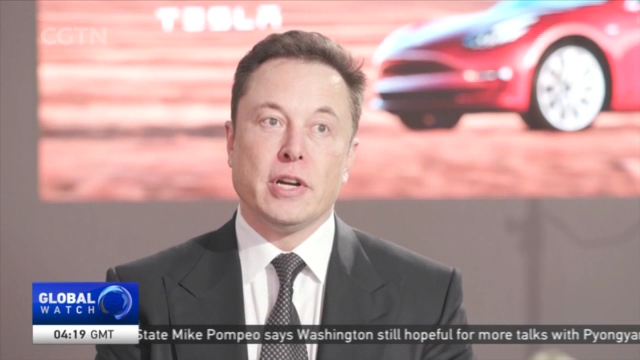
ELON MUSK TESLA CO-FOUNDER & CEO "This is going to be Tesla's first factory outside the United States, and will be our most advanced factory in the world."
In the past, China required foreign auto factories to enter the country by setting up a joint venture with a domestic car brand, causing suspicions of forced tech transfer.
ELON MUSK TESLA CO-FOUNDER & CEO "China's opening up policy has been a steady movement towards opening. And we feel very optimistic about the long-term future."
Some foreign investors say the newly passed law makes Beijing's message clearer to investors around the globe. But others say a few clauses of the law still lack specific details of how companies can utilize it to protect their rights.
TITUS BONGART ERNST & YOUNG "The law is written in a way which gives a lot of promises and hopes. And many companies hope that the implementation will be in a way they see it at the moment."
Titus Bongart has lived and worked in Shanghai for over 20 years. He witnessed the rise of the city's skylines from literally nothing in the 1990s.
With things moving so quickly, he says the Chinese government should not take all the blame when foreign investors complain about having a difficult time in China.
TITUS BONGART ERNST & YOUNG "The happy times are over for many industries. In the past, foreign investors came to China and they encountered certain industries where they were without competition. But today, they face domestic competition as local players are catching up."
HAN PENG SHANGHAI "The approval of the Foreign Investment Law has been a welcomed move by many foreign companies operating in China. Some still have concerns, leaving more room for China to further open up. Han Peng, CGTN, Shanghai."