
China
12:50, 30-Jan-2017
Mud, roosters, somersaults: how Dong people mark New Year
Updated
10:38, 28-Jun-2018
 []
[]
Share







Copied

In southern China, many ethnic minorities maintain their own traditions and rituals to celebrate Chinese New Year. The Dong people in Guizhou and Guangxi let rip with a range of unusual festivities.

VCG Photo
VCG Photo
VCG Photo
VCG Photo
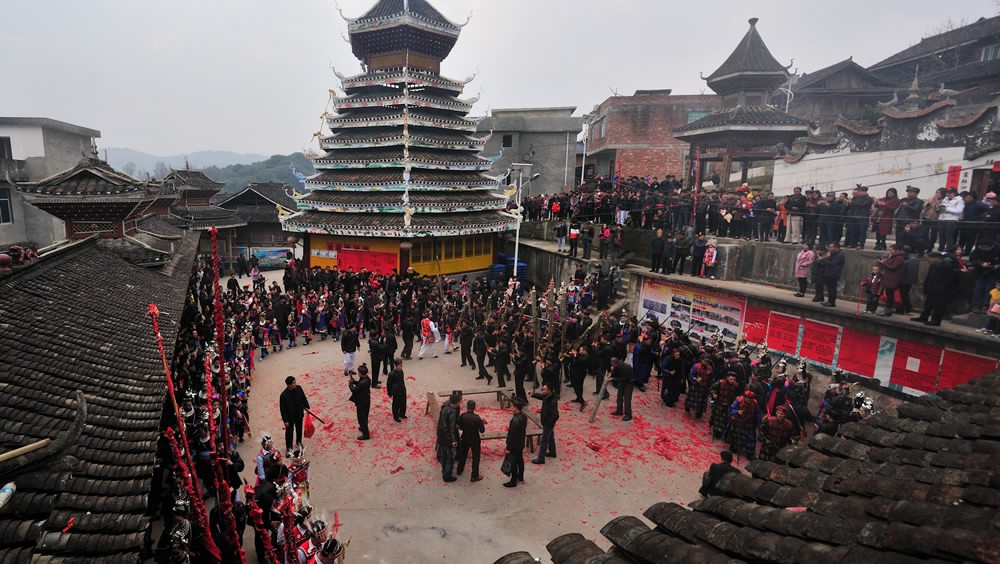
More than 10,000 Dong paraded through the streets of Guizhou’s Longtu village in traditional costumes on January 28, New Year’s Day. The parade was a ceremony devoted to Sa Ma, a goddess attending to locals’ happiness, security and prosperity.
VCG Photo
VCG Photo
VCG Photo
VCG Photo
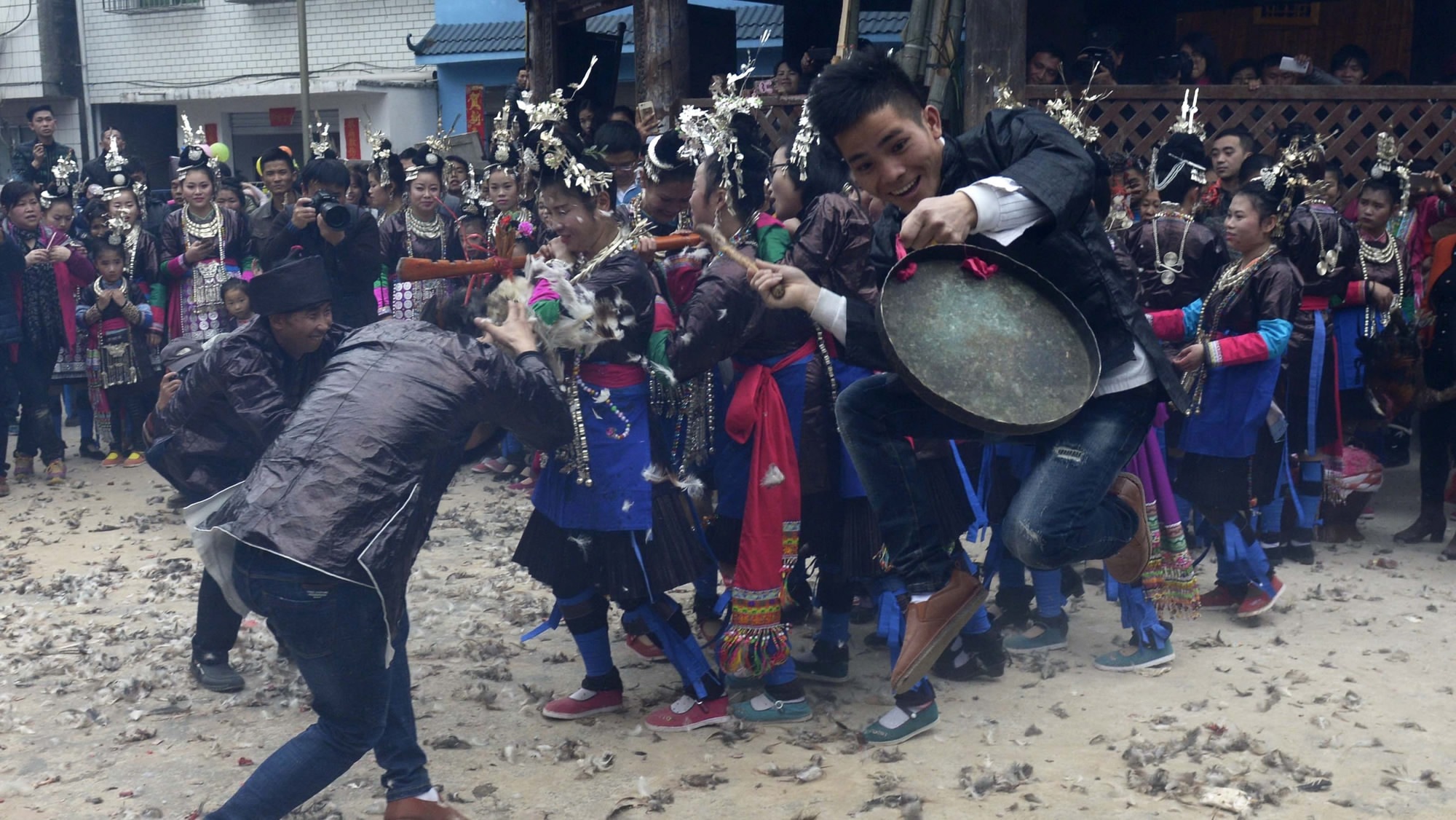
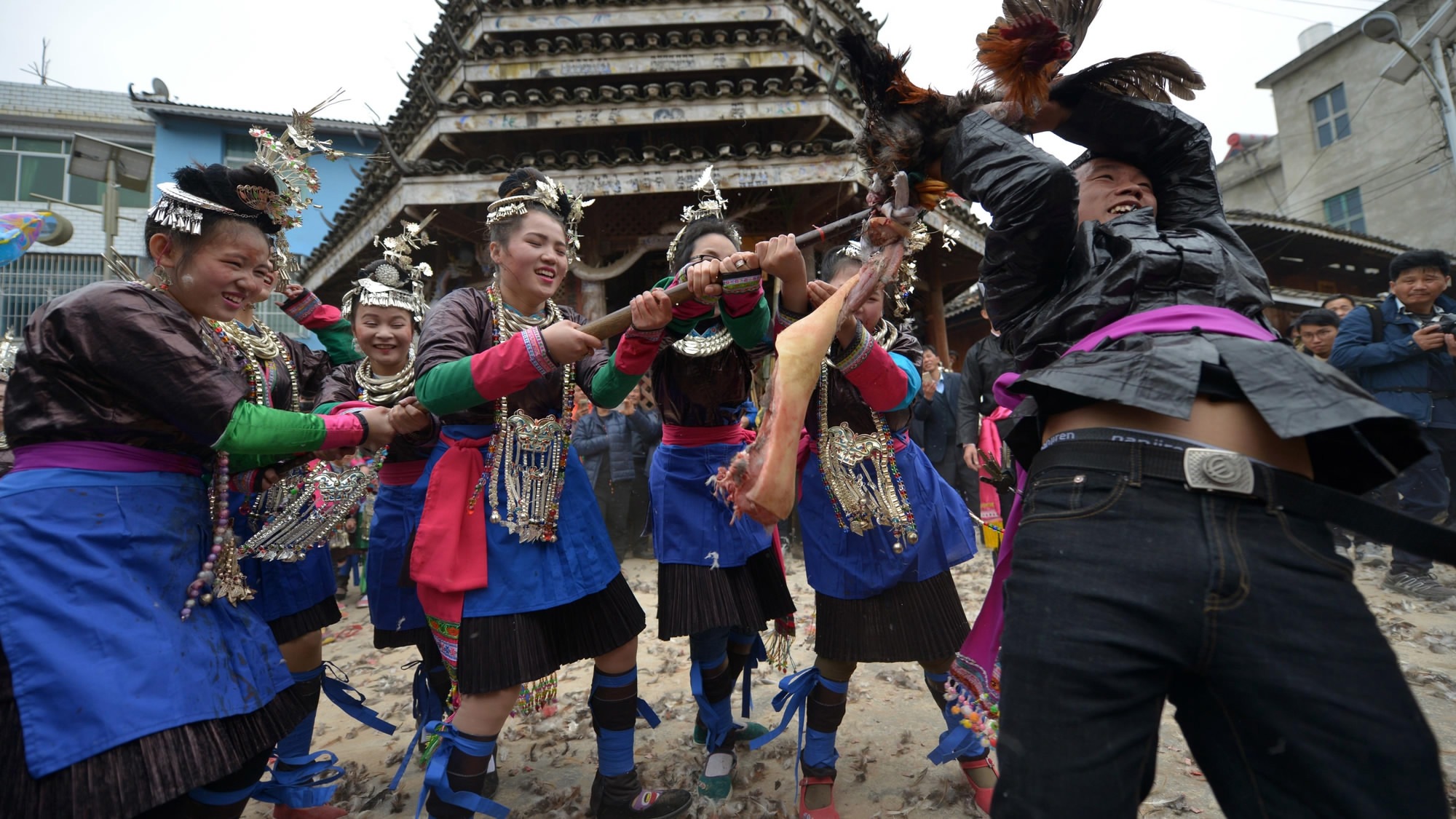
On January 29, Dong people living in Gantuan village in Guizhou took part in a traditional game based on a marriage ritual. They tied a rooster to one end of a shoulder pole and a bowl of glutinous rice to the other. Two men, each leading a team, had to compete to bite the rooster.
According to elderly people in Gantuan, local Dong in the Qing Dynasty used to arrange marriages for youngsters, making a girl marry someone from the far end of the family to bring the clan closer together. But when a pair of lovers demanded that the custom be abolished, a tradition was created whereby two men, one an arranged groom and the other chosen by the girl, competed for a chance to marry her. The marriage ritual has long since stopped being practiced, but it lives on in the form of this festive performance.
VCG Photo
VCG Photo

VCG Photo
VCG Photo
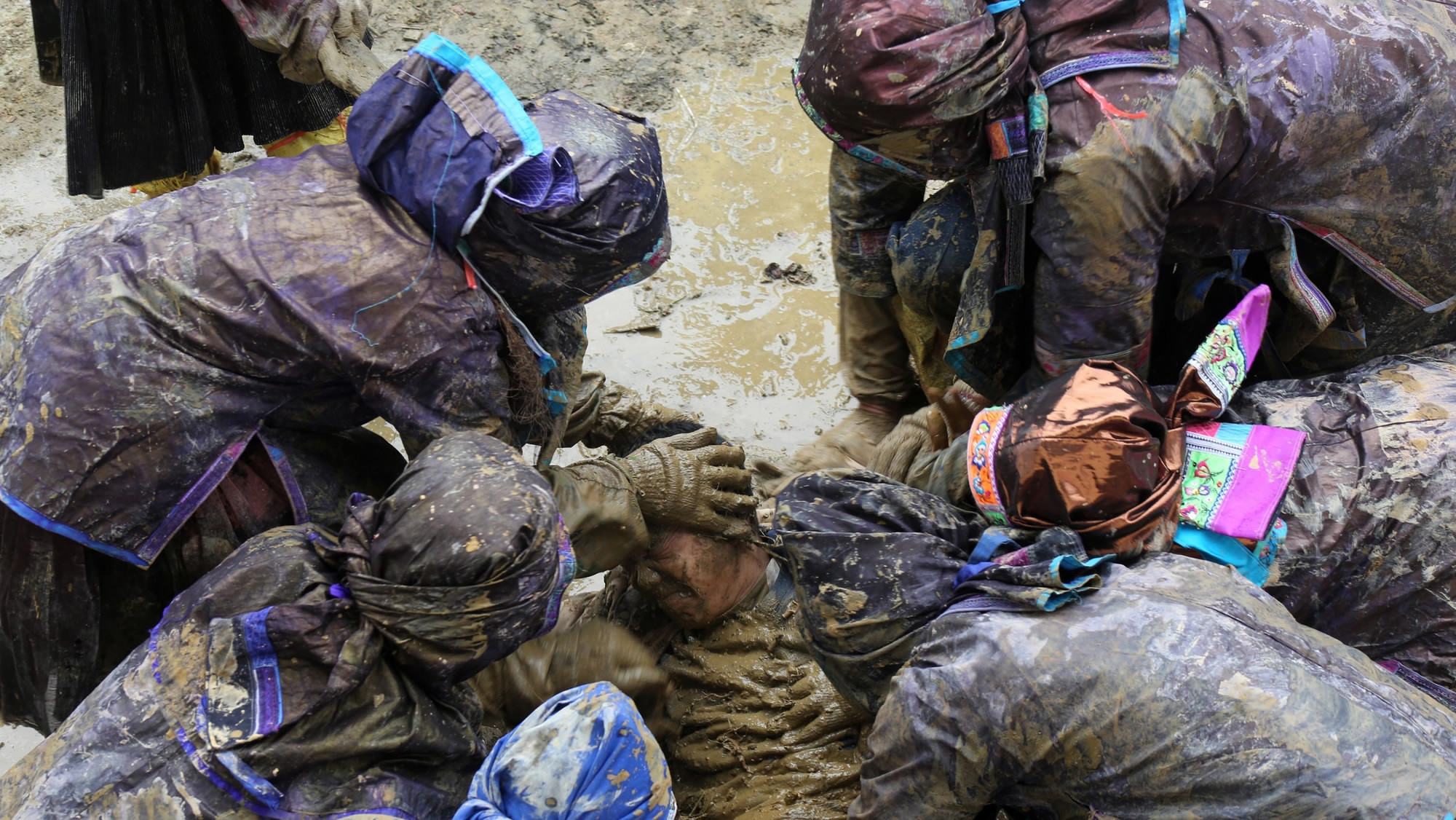
A wilder celebration was held by Dong people in Huaidong village, Guangxi. Men dressed up as “Mao Gao,” a propitious god. They wore bark masks and danced through the streets to pray for a bumper harvest. They also smeared mud on one another and performed somersaults. Locals believe that having mud smeared on them brings luck.