
13:24, 09-Apr-2019
Israel Elections: Israelis head to polls on Tuesday
Updated
13:20, 12-Apr-2019
 []
[]
Share






Copied
02:28
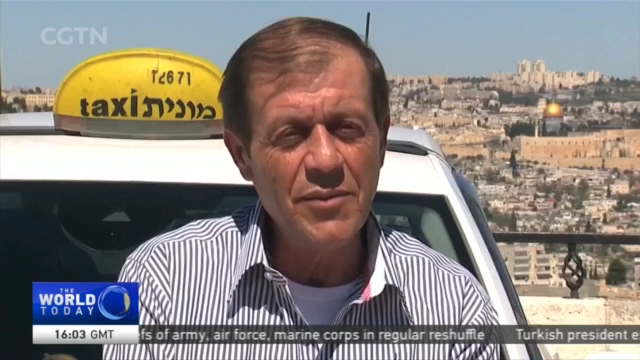
A new survey shows Israelis are more undecided than ever as they head to the polls on Tuesday. Indecision is particularly strong among centrist voters and statistics show a shrinking left. CGTN's Stephanie Freid explains how ethnicity and religion are playing a role.
Hard politicking, external support, gimmicks and close to a hundred surveys. Israelis cast their votes on Tuesday after four months of campaigning described as exhausting, aggressive and exceptionally thorny.
TEL AVIV RESIDENT "I'm going to be voting blue and white - Benny Gantz."
JERUSALEM RESIDENT "I'm voting for Netanyahu, Likud party."
"This time I'm confused because, to be honest, I'm not happy with most of the parties."
"I'm still not certain who I am going to vote for."
Numbers show this is Israel's tightest election in years. Prime Minister Netanyahu's right-wing Likud party is trying to hang onto its edge. But newbie centrist Blue and White party, jointly headed by a former military commander and TV anchor, threatens to push the incumbent out. Who Israel's nearly six and a half million voters choose inside the booth depends a lot on their ethnic backgrounds and religious leanings.
STEPHANIE FREID TEL AVIV "Pollsters say Israel's left is fading. Today's voter is predominantly male in his mid-twenties, religiously observant, increasingly right-wing and opposed to Palestinian statehood."
A fifth of voters are Arab residents of Israel, more than half say they won't vote due to lack of parties addressing their needs. Ultra-Orthodox Jews tend to go with parties who will strengthen their standing - in this round of elections that is the right. In the post-election, coalition-building phase, ultra-religious parties could re-shape Israel's character.
BRADLEY BURSTON POLITICAL ANALYST, HAARETZ "There is no question that at least two of these constituent parties are not interested in a democratic Israel and they've said - openly - that they're interested in an Israel that eventually is ruled by religious law. By Jewish, religious law."
That would exclude Moslem and Christian Israeli populations. Preferences aside, a pre-election survey shows that more than a quarter of voters don't trust the election process. Stephanie Freid, CGTN, Tel Aviv.