
Business
21:00, 18-Apr-2018
Expert: Effects of trade friction may show up in third quarter
 ["china"]
Share







Copied
02:02
China’s economy has maintained steady growth in the first quarter of 2018, despite the heated rhetoric with the US on trade. With a possible trade war looming, Chinese officials said the country is prepared to counter any impact it may have on its economic growth.
With an average growth rate of 6.8 percent in the first quarter of 2018, commodity prices in China showed a slight downturn in March. Chief among them, food prices went down slightly by 1.7 percent compared with that in February. Steel prices continued to decrease by 1.32 percent. The price indices for nonferrous metals dropped by 1.98. And the wholesale price of petroleum products declined by 2.24 percent.
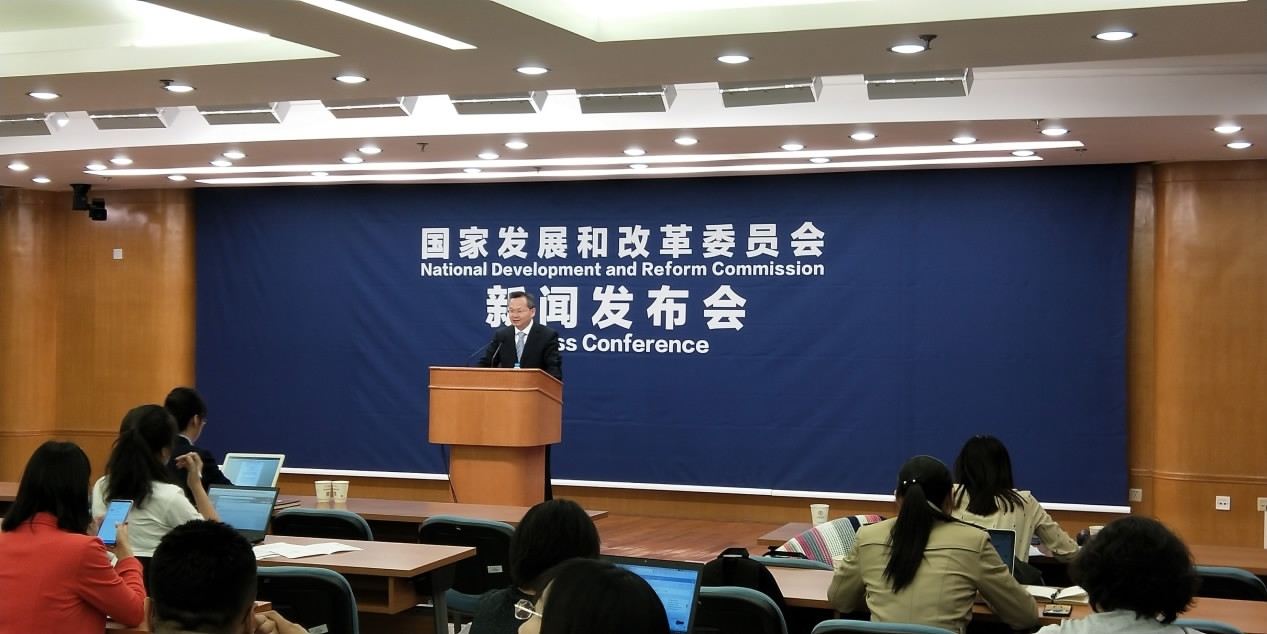
National Development and Reform Commission holds press conference on April 18, 2018, releasing indexes for the first quarter’s economic growth./ CGTN Photo
National Development and Reform Commission holds press conference on April 18, 2018, releasing indexes for the first quarter’s economic growth./ CGTN Photo
Experts said the impact of trade friction between China and the United States has not shown up in the first quarter of China’s economy as of yet.
"Starting from the third quarter, we must take some precautions, as the US trade measures may have an impact on the prices of some products, such as petrol, soybean and pork," said Liu Chunsheng with Central University of Finance and Economics.
"As for the trade friction initiated by the US, we have different strategies prepared already to fight back. Analysis shows that the friction has limited impact on China's economy, and we have the confidence and ability to ensure China's stable economic growth," Yan Pengcheng, spokesperson for National Development and Reform Commission.
Chinese President Xi Jinping promised to further open up the market at the Boao Forum held in south China’s Hainan Province at the beginning of April. Now, the limit on foreign equity ownership in joint ventures is expected to be lifted gradually – this year, in the field of new energy vehicles.
"We will step up efforts to better the business environment for foreign investors, and to ensure fair competition between domestic and foreign investors, including qualification licensing, government procurement and the setting of standards," said Yan.