
22:00, 12-May-2019
China-US Trade: Insiders have their say on recent escalation of trade tensions
Updated
17:01, 13-May-2019
 []
[]
Share







Copied
03:22
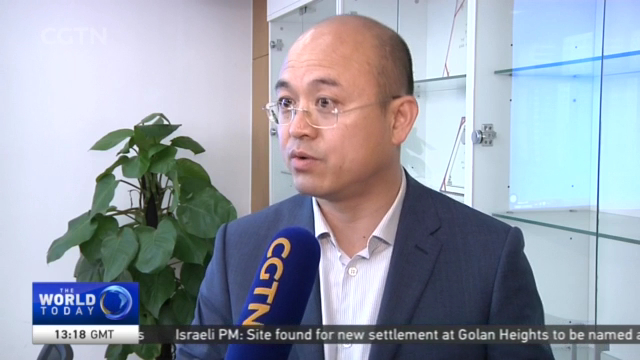
While both sides called the trade talks constructive, the United States never-the-less increased tariffs on billions of dollars worth of Chinese imports over the weekend. So what does the week's activity mean for their trade relations going forward? CGTN reporter Wang Mengzhen has more.
Uncertainty once again reins in China-US trade relations. US President Donald Trump announced a renewed 25 percent tariff hike on some six-thousand Chinese products, from textiles to electronics. This came as a hammer blow to the chances of a break-through. And Chinese trade experts tried to make their concerns heard at a gathering in Beijing on Sunday.
GAO LINGYUN RESEARCHER, INSTITUTE OF WORLD ECONOMICS & POLITICS CHINESE ACADEMY OF SOCIAL SCIENCES "In the next three to six months, China and the US will share the cost of the tariffs. But after that, it's the American retailers and local consumers who'll be paying the cost. Based on our calculations, the Chinese companies' share of the total cost of the product caused by tariffs is only 10 percent, while the US accounts for 90 percent or even more."
Indeed, a study from a consulting firm called Trade Partnership indicates the tariffs could cost an average American family of foursome 800 dollars more every year, whilst it would also cut US employment numbers by nearly one million. While this week's trade talks did have some setbacks, there were some positives: For instance, for the first time, Chinese vice premier Liu He outlined their three major differences in talks. Veteran trade negotiator Wei Jianguo, also a former vice minister of commerce, spoke highly of China's efforts at the negotiating table.
WEI JIANGUO VICE CHAIRMAN, CHINA CENTER FOR INTERNATIONAL ECONOMIC EXCHANGES "First, the US didn't expect China to be so determined on its matters of principle. Second, the US didn't expect China's economy to stay performing, and to stay resilient, in the face of the ongoing pressures of tariff hikes; And last, the US didn't expect this could severely damage its own consumers and businesses, such as in agriculture"
So, looking ahead, where does China go from here? The scholars agreed that the top leadership should stay focused on the national economy.
ZHANG YANSHENG SECRETARY GENERAL, CHINA'S NATIONAL DEVELOPMENT & REFORM COMMISSION "Our government needs to prioritize our own matters, including how to help Chinese export enterprises get through these difficult times and upgrade themselves amid the ongoing trade tension. This will include issues such as technologies, funding, labor costs, social securities, addressing pollution, among others."
PROFESSOR CHENG DAWEI SCHOOL OF ECONOMICS, RENMIN UNIVERSITY "We always use WTO dispute settlement system to argue for China's interest as the possible alternative, but the problem is WTO is long -term solution. If you use WTO dispute settlement, it takes one more year. No matter what happens around the world, China can develop its own economy."
Earlier, Trump said he was preparing another tariff increase on more than 300 billion dollars worth of Chinese imports. It remains to be seen how that would affect their already complex bilateral trade ties, as well as the businesses and people of both nations, not to mention the knock-on effect on the global economy.
Wang Mengzhen, CGTN, Beijing.