
14:44, 23-Jun-2019
Inner Mongolia Development: A region sets example for sustainable development
Updated
17:13, 09-Jul-2019

Share






Copied
China has some of the largest, driest, hottest deserts in the world. However, following decades of effort, China's total desert area continues to shrink, by nearly two thousand square kilometers every year. Various projects have been carried out since 1956. In the Kabuki desert, the sixth largest desert in China and a major source of sand storms that affect North China, over half the area was turned green.
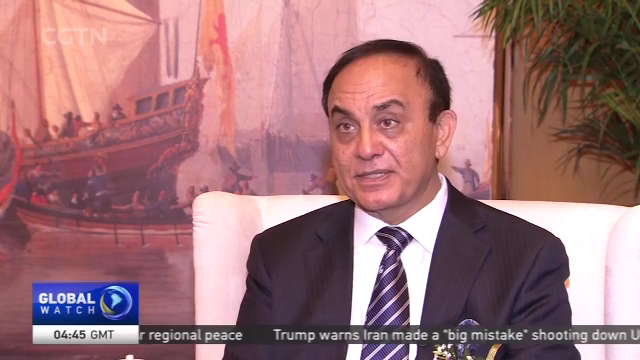
DR. PRADEEP MONGA, DEPUTY EXECUTIVE SECRETARY UNITED NATIONS CONVENTION TO COMBAT DESERTIFICATION "China has been at the forefront in anti-desertification efforts. It is one of the few countries, which in 2003 or 2004, drafted the first National Law on anti-desertification, that show the commitment of the national level.."
Anti-desertification efforts involve a series of social and economical issues. With support from the central government, private companies and social organizations have actively joined the effort. Inside the middle of the Kubuqi desert, solar power stations were built to improve power for nearby factories, which process sea-buckthorn, a plant commonly found in desert areas, into high value added products from cosmetics to drinks. A big data platform was also built to speed up the restoration process of degenerated land.
HU PEIXING, DEPUTY DIRECTOR DESERTIFICATION CONTROL DEPARTMENT NATIONAL FORESTRY AND GRASSLAND ADMINISTRATION "The Central government is giving inclusive support to local governments, private companies and the general public in their anti-desertification efforts. Such measures have greatly stimulated the enthusiasm of all parties."
70 million people were lifted out of poverty during the process. In 2017, The United Nations gave the 'Champions of Earth Award' to the Saihanba Afforestation Community for building the largest man-made forest in the world. In China's Kubuqi Desert, an ecological economy is taking shape.
DR. PRADEEP MONGA, DEPUTY EXECUTIVE SECRETARY UNITED NATIONS CONVENTION TO COMBAT DESERTIFICATION "We have models of Public-Private Partnerships. We have models like Elion group and others. We are also looking at community partnerships. So I think China is very experienced, and in these areas can be very helpful for other countries. It can be really very much applied for South-South cooperation."
Nearly a quarter of all of China's land will one day be covered by forest. Anti-desertification efforts are helping to lift 70 million people out of poverty. As a corresponding party, the National Forestry and Grass Administration says China will fulfil its obligations to work with other countries, provide training and necessary support for research.