
22:01, 17-Mar-2019
Old Museum's New Success: Palace Museum drawing consumers closer to heritage
Updated
22:00, 20-Mar-2019
 []
[]
Share







Copied
03:23
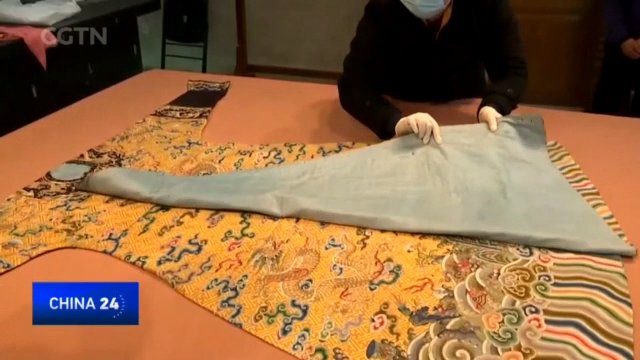
China's Palace Museum which not long ago was quite a cold and austere feature of Beijing's heritage has been coming back to life of late. Also known as the Forbidden City, and located in the heart of the Chinese capital, the Museum is now a "must-see" for anyone who wants to learn more about the country's ancient imperial past. And those who run it have been trying to give visitors the ultimate experience through a process of creative innovation. CGTN's Wang Yuan has more.
A glorious past, a transforming present, and an exciting future,
the six-hundred-year-old museum is turning something old into gold.
Showcasing the history of China's cultural relics, opening doors to people under the full moon and it's all proving to be a big hit with visitors.
SHAN JIXIANG, CURATOR THE PALACE MUSEUM
"President Xi said there are two important ways to revive cultural relics, the exhibition heritage, and the characters of ancient books. One is to systematically sort historical and cultural resources, and the other is to highlight the unique charm of Chinese culture in various ways."
And China's iconic Palace Museum is doing exactly that with innovative ideas like depicting some of the country's most famous cultural artifacts on items of clothing.
For instance, its "Ji" Clothes is proving to be ever so popular, as it incorporates traditional Chinese paintings.
GU YINGYING, FOUNDER AND CEO ICY GLOBAL DESIGNER PLATFORM
"During China's thousands of years of history, people have worn different clothes in different festivals to express their inner joy and peace and to pray for good luck. It's an old costume category. Through this subtle thing, it can reflect the aesthetics of the East, the sense of ritual in life, and we've provided a modern interpretation. We can see the great trend of the Palace Museum's culture through this small sign."
And the Palace Museum isn't the only one making moves to distinguish itself.
By the end of last year, the National Museum of China and the Summer Palace had opened online stores.
Even the British Museum is looking to tap into the Chinese market.
While some are concerned the Palace Museum may be coming too commercialized, most consumers are happy to support its efforts.
"I think it's good. That's the big difference between China and other countries. We spread our culture so it's much closer to the people. I had heard the Palace Museum had stopped producing a lipstick over a quality issue. I went in and saw it for sale, so I bought it to try to support it."
"We need to support it. Now with society developing so fast, not many people are willing to study China's traditional culture. So it's a good platform. People like those little products first, and then dig into the culture, it's like a window for people to get to know China's ancient history. It means a lot."
"Well don't throw away cultural things. Like the cat series, everyone likes it, but don't forget, the cat is an element of the Palace Museum."
With efforts like these to regenerate its image and expand its appeal among young people, the Palace Museum's glorious and ever-changing history should be safe and sound for the foreseeable future. Wang Yuan, CGTN.