
19:56, 07-May-2019
Emptiness and Reality: Inspirations behind traditional Chinese gardens
Updated
19:50, 10-May-2019
 []
[]
Share







Copied
02:20
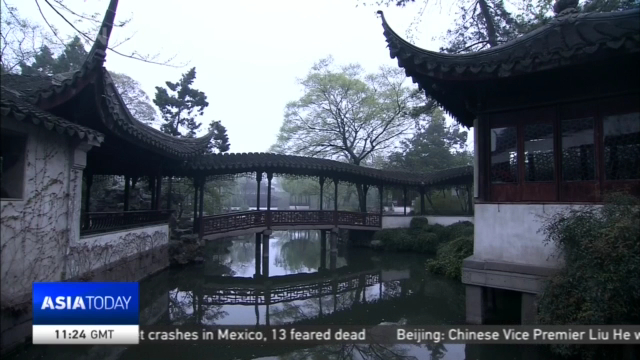
Traditional Chinese gardens are constructed to recreate and miniaturize larger natural landscapes. Their designs are supposed to blend delicate buildings with natural elements. But did you know they are also rooted in Chinese landscape paintings? Take a look.
The Summer Palace in Beijing, a gorgeous historic ensemble of natural and architectural elements. It's been well preserved and considered one of the finest examples of Chinese garden art.
It includes diverse features: natural hills, lakes, as well as pavilions, temples, palaces and bridges. All these make a harmonious and aesthetically compelling site.
Strolling through the garden gives one the impression of being part of a three dimensional Chinese landscape painting. Like those paintings, Chinese gardens do not seek to re-create vast landscapes but rather capture the essence of nature on a smaller scale.
For the paintings, balance and harmony are key among different aspects of a work. And this is also very important for garden designers. "The combination of emptiness and reality" is the concept from Chinese traditional paintings, and also applies to gardening.
Located in South China, Suzhou is called the City of Gardens, boasting more than 100 of different sizes.
Among them, the Humble Administrator's Garden and the Lingering Garden are the most famous. They feature mature artistic conception, exquisite construction, elegant style and plentiful cultural connotations.
The Chinese term for landscape is "shan shui", literally "mountains and water". From the perspective of the ancient Chinese philosophical concept of Yin-Yang, water represents the former as a calm, nurturing and yielding element, while mountains are the complementary "yang", vertical and powerful.