
13:18, 13-May-2019
A Taste of Asia: Cumin an essential part of NE China's dietary culture
Updated
13:10, 16-May-2019
 []
[]
Share







Copied
03:09
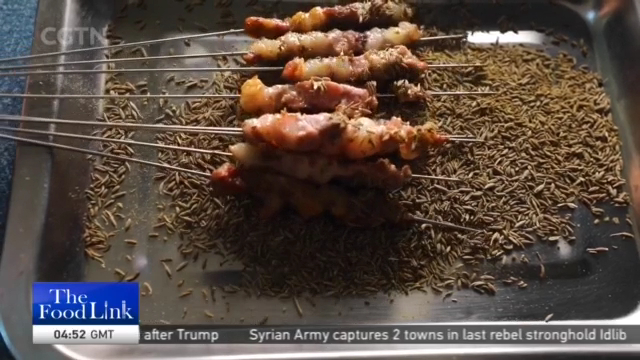
No matter what your favorite food is, chances are, its rich flavor tempts and tickles your taste buds. Each food has its own unique mix of ingredients, and in many cases, spices. CGTN reporter Feng Yilei takes us to northeastern China to show us the spice that's essential for all the local favorites.
The fresh of the grill taste of barbecue meat. It's undoubtedly the signature flavor of northeastern China. The magic of meat and fire, catalyzed by a pinch of pixie dust or as you might know it, cumin.
ZHANG HE CHEF "Cumin makes roasted meat tender and tasty. It increases your appetite."
It's not hard to tell from Shenyang people's dining tables, that cumin dominates many dishes. It's often added to spice mixtures, but also used alone. At the city's biggest flavoring wholesale market, the spice can be seen at almost every stall.
YANG CHAO, MANAGER XIUHUA FLAVOURING "We sell about 200 to 300 tons of cumin each year. Sales grow as the best season for barbecue is coming and more young people take a liking to it."
What they may not be aware of is the exoticness of the spice. While many food historians believe cumin entered China centuries ago through the ancient silk routes from the Middle East, even today, the increasing appetites in China's northeast, where cumin does not grow, are still fed by suppliers from elsewhere- namely India, and China's Xinjiang region.
PROFESSOR NI YUANYING CHINA AGRICULTURAL UNIVERSITY "Cumin has features unique to certain communities. Sources suggest it was first widely used in China by the Uyghurs in Xinjiang as both a seasoning and a herbal medicine. Along with cultural exchanges, it gradually became well-accepted throughout the country."
However, at Shenyang's late-night food shindigs, the religious and medicinal significance of cumin gets lost amid all the fun.
FENG YILEI SHENYANG "This foreign spice has blended perfectly into local food. Its warm, earthy aroma and sweet, sharp taste bring the typical Shenyang chicken bone its optimum flavor."
The seasoning is perhaps already a staple for most Chinese in this region and also, a symbol of their cultural identity.
"It's now a must-have for people in the Northeast as we have strong tastes."
"As a northeasterner, I enjoy the scent it makes. It's part of our food culture."
And today, new ways are being developed to enjoy cumin and sophisticate more Chinese diets.
TANG CHENGBIN BARBECUE RESTAURANT OWNER "I'm trying to bring back the warm memory of my childhood with cumin-flavored barbecue. It's not just a taste, but more like a song that resonates among us."
And that taste will take cumin and the culture it carries further. Feng Yilei, CGTN, Shenyang.