
13:17, 14-Apr-2019
Russia Internet Regulation: New laws spark controversy on censorship
Updated
13:10, 17-Apr-2019
 []
[]
Share







Copied
02:35
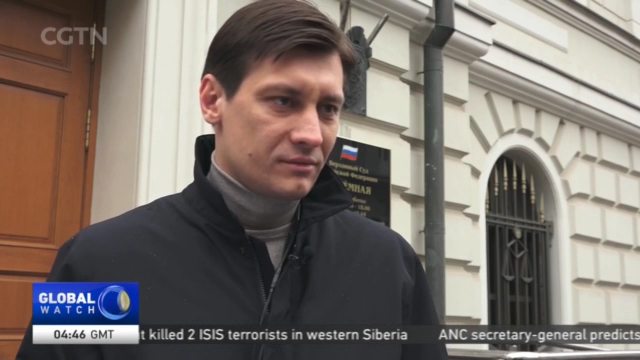
In Russia, two new laws are being introduced to regulate what happens online. One is designed to stop the spread of fake news; the other makes it a crime to "disrespect" the state. While the bills passed through parliament with relative ease, critics say they tighten state control of the Internet and restrict free speech. Moscow correspondent Lucy Taylor met one campaigner as he lodged an appeal.
The new law may focus on internet posts, but to oppose it, takes an old-fashioned stack of paper.
Dmitry Gudkov is a former member of Russia's parliament. And he's here at the Supreme Court to appeal against legislation that makes it a crime to insult the state online.
DMITRY GUDKOV CAMPAIGNER "I am against this law because it violates our constitutional rights, the freedom of speech. And the freedom of critics. I am against censorship, this law puts a censorship on the internet and doesn't allow any people to criticise politicians in Russia."
Anyone found guilty could end up in jail.
LUCY TAYLOR MOSCOW "For years now, Russians have been turning to the internet to discuss politics. Lawmakers say it's because the internet is increasingly important in public life, that people there need to be better protected. But campaigners like Dmitry Gudkov say it means that for the first time, what people say online can be controlled."
Under another new law, the courts can fine people tens of thousands of dollars for spreading fake news online. Independent polls suggest two-thirds of Russians believe these laws are designed to prevent criticism of the authorities. But the senator behind both says they won't be misused.
ANDREY KLISHAS RUSSIAN SENATOR "There is no sign of censorship. We simply suggested that the same rules that exist for any public space should be spread to include virtual spaces. So online discussions are held based on the same rules as when you talk to people in person."
One of the new laws has already been used. Authorities asked several local news websites to delete reports about spray paint graffiti which insulted the president. It is part of a new global debate about how to police the internet, without holding back freedom of speech. Lucy Taylor, CGTN, Moscow.