
14:51, 22-Mar-2019
Water Supply Trouble: Limited access to clean and safe water in Nigeria
Updated
14:50, 25-Mar-2019
 []
[]
Share






Copied
02:50
Meanwhile, the Nigerian bureau of statistics has found a heartbreaking reality - Millions don't have access to clean and safe water in the country. CGTN's Kelechi Emekalam has the story.
Kabusa- a community in the outskirts of capital Abuja. The community is cut off from the central water supply of the city. Its an impoverished community with mostly jobless or casual laborers for small businesses. Everyone here depends on water drawn from privately owned water wells. A survey conducted by Nigeria's bureau of statistics shows 64 percent of households in the country get water from similar sources while only 9 percent have access to clean and safe water. Water from wells are not regulated and not pre-treated with chlorine. Which makes them unsafe for human consumption but they are the only source of water for millions of Nigerians.
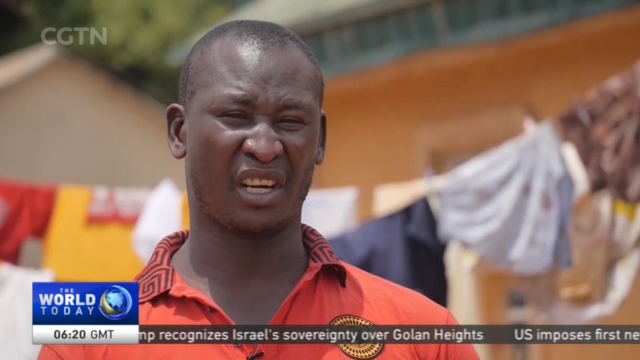
MONDAY AYUBA RESIDENT "Honestly if I tell you we have clean water here I am lying to you. The only way you can get clean water here is by some individual people that did their own personal borehole for their personal business which before you get any clean water here you have to go to the borehole or you call Mai Ruwa (The Water Cart pushers) to bring it for you and then you pay him money."
KELECHI EMEKALAM ABUJA, NIGERIA "The UN says about 69 million of Nigeria's 190 million population do not have access to clean and safe water. Most of them live in rural parts of the country but even in Abuja the capital, the situation is equally dire."
The private wells are installed with electric pumps but electricity supply here is quite erratic. So power outage triggers immediate water crisis in the area.
MONDAY AYUBA RESIDENT "Once there is no light (electricity), getting water is a problem to us. We have to wait until the day they bring the light (electricity) and pump water that's when we would get water and buy. But if somebody should tell you that there's a stream around here it's a lie. No water around this place."
The findings by the bureau of statistics exposes some some stagnation in Nigeria's efforts to attain global standards of universal access to clean and safe water.
UN children's agency Unicef which aid conduct of the survey is calling for heavy budgetary allocation to water and sanitation for Nigeria to achieve the sustainable development goals by 2030.
Kelechi Emekalam CGTN ABUJA NIGERIA.