
14:39, 03-Apr-2018
Quseir Amra: 8th-century frescoes dazzle visitors to UNESCO-listed palace in Jordan
 []
[]
Share







Copied
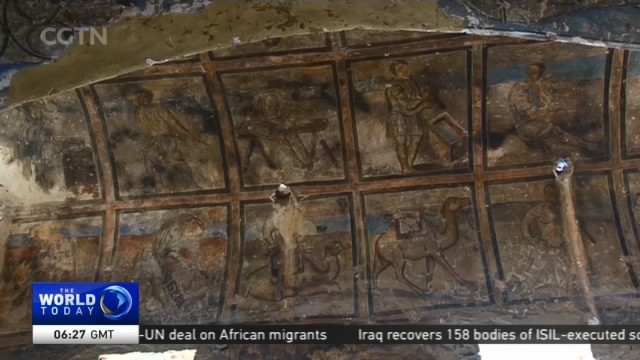
Despite its remoteness, an 8th-century palace in eastern Jordan is still drawing tourists to see its remarkable frescoes. The UNESCO-listed site of Quseir Amra is considered to be an Islamic architectural masterpiece. Take a look.
This is a place where the Islamic rulers of the region once spent their leisure hours. At one side of the palace is a well that's 40 metres deep, which supplied the complex with water. Visitors can still see the reception room and the bath house, all decorated with fresco paintings that UNESCO says are unique to this period. The frescoes depict animals, birds and hunting scenes, along with portraits of people and Greek gods. Despite regional instability, the 8th-century palace remains popular among tourists who enjoy venturing a little off the beaten track.
ELIZABETH HACKING BRITISH TOURIST "Well, I love the place, I've just arrived here on a tour of the desert castles. I like the setting out in the desert in the middle of nowhere, and this square building and then you come inside and this all delight, the real sense of antiquity, paintings are beautiful, incredibly well preserved, considering they're the best part of 15-hundred years old.
UNESCO says the site is important because the frescoes show how Islamic art developed from the classical and Byzantine styles that came before.
BRENDA WIDERA GERMAN TOURIST "For us, it's a very interesting location, a world heritage site, and therefore of special importance on our itinerary. This castle is in the 'middle of nowhere', and has exceptional architecture, exceptional art and it's important to us to visit it and to support the site."
The palace consists of a rectangular reception hall, with two adjoining spaces divided into three corridors. The middle hall is connected to two small rooms that were used for siesta purposes. One guide says in the 8th century, this area was not the arid desert it is now, but a forested place inhabited by lots of animals.
KAMAL AL-HYARI JORDANIAN TOURIST GUIDE "The Umayyad castles, or the Islamic castles dates back to 710, exactly that year they built Amra Castle here, and Al-Kharaneh Castle, which were very important caravan stations, these areas. But Amra Castle is a little bit different because it was more for leader for hunting when they come from the north for hunting in the desert, which was not really a desert this area, it was forest and plenty of animals."
The complex has been on the World Heritage List since 1985. And it's one of five World Heritage sites in Jordan.