
21:35, 28-Feb-2018
China PMI: Factory growth slows on holiday & smog war
 []
[]
Share







Copied
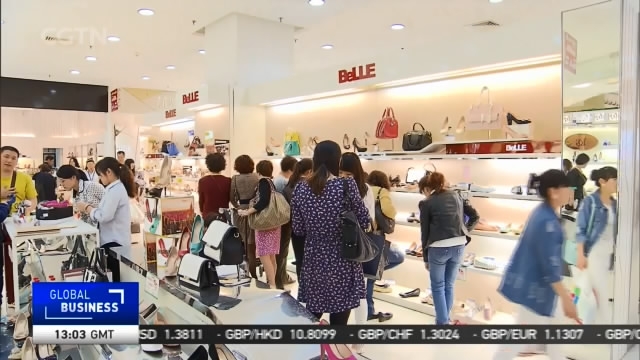
Now for a look at the Chinese economy. Data released by the National Bureau of Statistics on Wednesday showed that growth in China's manufacturing sector slowed in February to the weakest level in over one-and-a-half years. That was because the Lunar New Year holiday disrupted business activity while tougher pollution rules slowed factory output. Natasha Hussain has the details.
The official Purchasing Managers' Index (PMI) fell to 50.3 in February, down one point from last month. That's according to data released on Wednesday by the statistics bureau. A data break-down shows key indicators, including new orders and output, both eased due to the Lunar New Year holiday disruption.
SHI ZHAOHUI, SPOKESPERSON NBS "The historical record shows that the week-long lunar new year break tends to distort the data early in the year. The record also shows that small- and medium-sized companies are more susceptible to the seasonal impact."
Equipment manufacturing and high-tech industry expanded despite a sharp decline in the production of consumer goods and raw materials.
The central government's fight against smog also put a damper on some factories' output, including state-owned steel mills. Analysts say the country's pollution crackdown will likely have a broad impact on heavy industries this year.
Meanwhile, a separate survey said China's non-manufacturing PMI stood at 54.4 in February, up 0.2 points y-o-y. But that the impact of the holiday break varied among sectors.
CAI JIN, DEPUTY DIR. CFLP "Sectors closely connected to consumer spending, especially in such areas as retail, accommodations, tourism, and catering, fared well.The retail and catering sectors alone posted sales of over 900 billion yuan during the holiday period."
The services sector accounts for over half of China's economy. Rising wages also are giving Chinese consumers more spending clout. Chinese policymakers are counting on growth in services and consumption to rebalance their economic growth model from its heavy reliance on investment and exports.