
World
10:45, 19-Apr-2018
Zimbabwe fires 16,000 striking nurses, says they're 'politically motivated'
 ["africa"]
Share







Copied
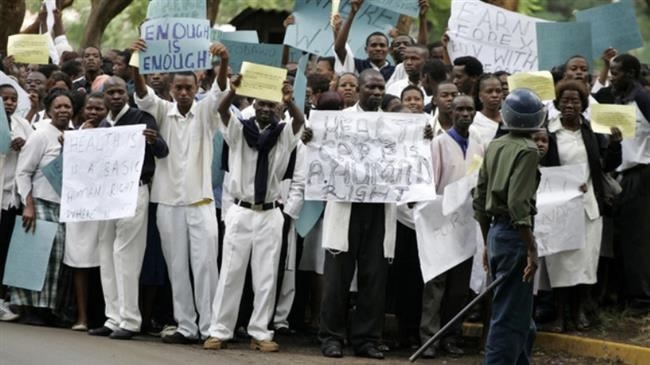
Zimbabwe has sacked 16,000 nurses who went on strike to demand higher salaries, with authorities accusing them of being "politically motivated". The mass layoff has been seen as an attempt by the government to rein in unrest in the run-up to the country’s general and presidential elections – the first since the fall of Robert Mugabe.
Zimbabwean Vice President Constantino Chiwenga, the retired army general who led a de facto military coup against Mugabe in November, maintained that the government was acting in the interest of patients and said the striking nurses had refused a deal to clear wage arrears.
The "government has decided in the interest of patients and of saving lives to discharge all the striking nurses with immediate effect," Chiwenga said in a statement.
Patients were turned away from major hospitals after the nurses began their protests over unpaid allowances on Monday, shortly after junior doctors ended their own weeks-long strike over pay and working conditions earlier in the month.
He said the Zimbabwe Nurses Association had rejected a 17-million-US-dollar offer to boost their pay and allowances, and accused the protesting nurses of staging a "politically motivated" walkout, without saying which group he thought was behind it.
The "government now regards this lack of remorse as politically motivated, and thus going beyond concerns of conditions of services and worker welfare," said Chiwenga late on Tuesday, noting that those fired would be replaced by retired and unemployed staff.
Mugabe regularly accused opposition groups of trying to undermine his government by encouraging the public sector strikes that punctuated his time in office.
The nurses’ association said they "noted" Chiwenga's statement but added that they remained on strike.
More than 90 percent of Zimbabwe's budget is spent on government wages. Teachers at public schools have threatened to go on strike if their pay is not increased.
President Emmerson Mnangagwa, who replaced Mugabe and will stand in elections set for July, has promised to revitalize the economy after decades of severe mismanagement, and vowed to attract foreign investment to fund better public services.
Cash shortages mean banks are forced to limit withdrawals, unemployment remains above 80 percent and the government still struggles to pay workers on time.
(With input from agencies)