
19:47, 20-Jan-2019
Myanmar's Fight Against Drugs: Opium cultivation decreases while meth production rises
Updated
19:40, 22-Jan-2019
 []
[]
Share







Copied
02:41
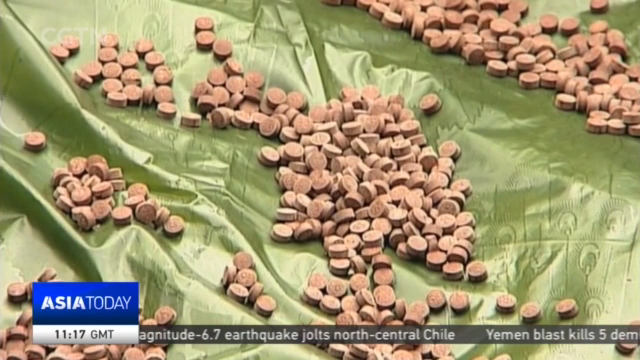
A recent UN report suggests that headway is being made in the fight against opium poppy cultivation in Myanmar, the world's second largest producer behind Afghanistan. But, another drug is on the rise and Myanmar's on-going armed conflicts are only adding more fuel to the drug trade. Dave Grunebaum has the story from Yangon.
In northeastern Myanmar near the borders with China, Laos and Thailand are opium poppy fields, the base ingredient for heroin.
The United Nations says about 37-thousand hectares of land here is used to cultivate opium poppies, a 10-percent drop compared to the year before.
But while the number of opium poppy fields is going down due to a decrease in demand for heroin, another drug is rapidly gaining ground.
TROELS VESTER UNITED NATIONS OFFICE ON DRUGS AND CRIME "It's no time to declare victory at all because we've seen another drug type being rolled out in Myanmar in the region and this is methamphetamine. What is locally here by laymen's terms is called yaba."
In many of the lawless drug producing areas, ethnic minority insurgents have been fighting Myanmar's military and militias connected to the military for decades.
The ethnic insurgents want more political autonomy in the regions of the country where they make up the majority.
DAVE MATHIESON ANALYST "Most of their armed resistance is not necessarily to do with the drug trade. It has to do with the lack of political concessions being given by the central state. Now drugs just as much as mining and agro-business and lots of other economic factors are further conflict drivers in these areas."
DAVE GRUNEBAUM YANGON, MYANMAR "Sometimes the clashes pit one armed ethnic group that's not involved with the drug-trade against another one that is. Or sometimes the fighting includes drug-making militias affiliated with the country's military. Heroin and methamphetamines are a multi-billion dollar underground business in Myanmar."
TROELS VESTER UNITED NATIONS OFFICE ON DRUGS AND CRIME "It's paying a lot of hands in a lot of places. So why would you give that up? It's very difficult to see and this is one of the challenges that the country has and the region has. The money flow is simply so big."
But this illicit industry gets help from outside of the country. Producing meth and heroin requires chemicals that are not made in Myanmar.
TROELS VESTER UNITED NATIONS OFFICE ON DRUGS AND CRIME "It comes in mainly from three countries: China, India and partly from Thailand, the chemicals. The yaba goes out to the Mekong region and the neighboring countries. The chrystal meth goes to Australia, New Zealand, Korea, Thailand."
The Myanmar government puts on displays where it burns confiscated drugs.
But the seizures barely crack the problem.
The drug business is resilient because there's so much money at stake.