
Politics
13:07, 17-Apr-2018
EU advocates political solution to Syrian conflict
 ["china"]
Share






Copied
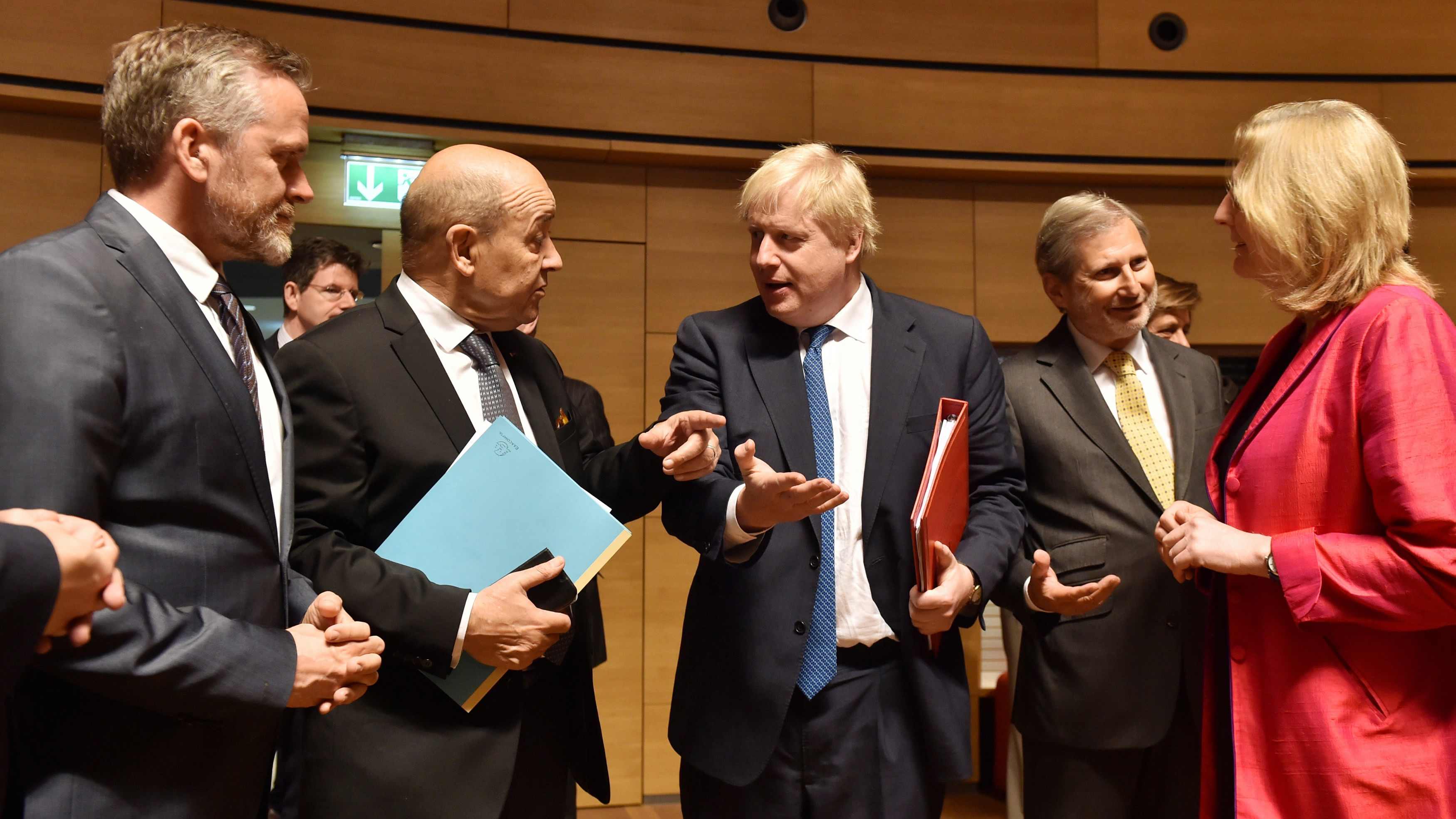
Europe's foreign ministers assembled in Luxembourg on Monday after Saturday’s coordinated missile strikes on Syria by the US, France and Britain in response to an alleged chemical attack in Douma, near Damascus, earlier this month.
Despite sweeping EU support coming in the hours following the military action, in Luxembourg, ministers dialed down the rhetoric, despite the UK Foreign Secretary Boris Johnson saying that it was "entirely the right thing to do."
In their final communique from the meeting, they were unanimous in blaming the chemical attack in Douma on the Syrian government. But they did not express outright support for the targeted airstrikes by the US, France and Britain. They simply said they "understood it had deterred the Syrian government from carrying out further chemical attacks on the civilian population."
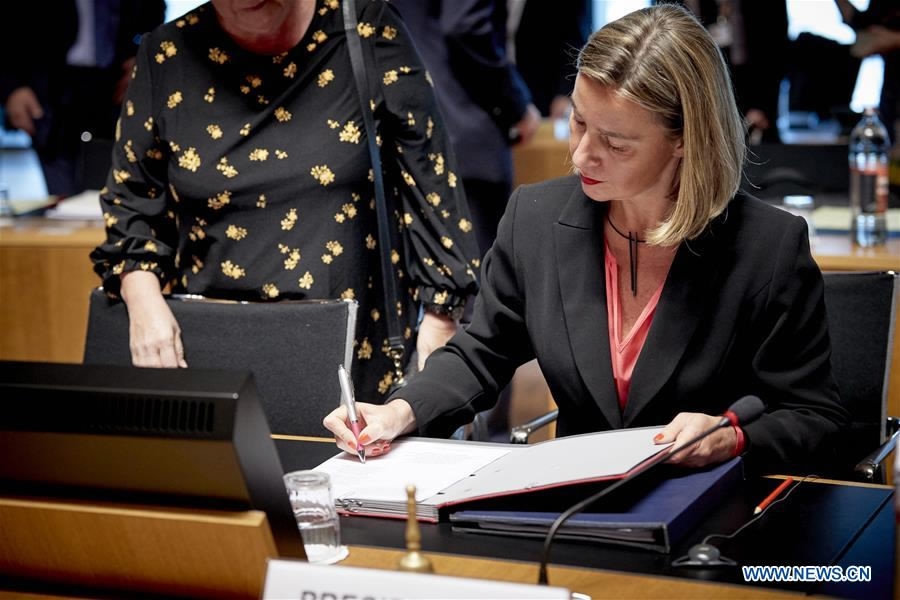
High Representative of the European Union for Foreign Affairs and Security Policy Federica Mogherini attends an EU Foreign Ministers' meeting in Luxembourg, April 16, 2018. /Xinhua Photo
High Representative of the European Union for Foreign Affairs and Security Policy Federica Mogherini attends an EU Foreign Ministers' meeting in Luxembourg, April 16, 2018. /Xinhua Photo
For its part the EU has been a strong advocate for finding a political solution to the conflict in Syria. And its Foreign Affairs Chief Federica Mogherini pointed to the UN-EU joint donor conference for Syria later on this month in Brussels. Mogherini expects – that with the high level of actors involved – a political will can be found to re-start talks, because "an endless conflict is in no one’s interest."
Iran's nuclear deal
One of the other big items on the agenda was the Iran nuclear deal.
US President Donald Trump had imposed a May 12 deadline for the EU to revamp the deal with Iran that had lifted international sanctions in exchange for curbs on Tehran's nuclear program.
The UK, France and Germany had been pushing the rest of the bloc to accept new sanctions on Iran for its actions in the Syrian conflict. It was the kind of affirmative action that could potentially stop Trump from abandoning the nuclear deal.
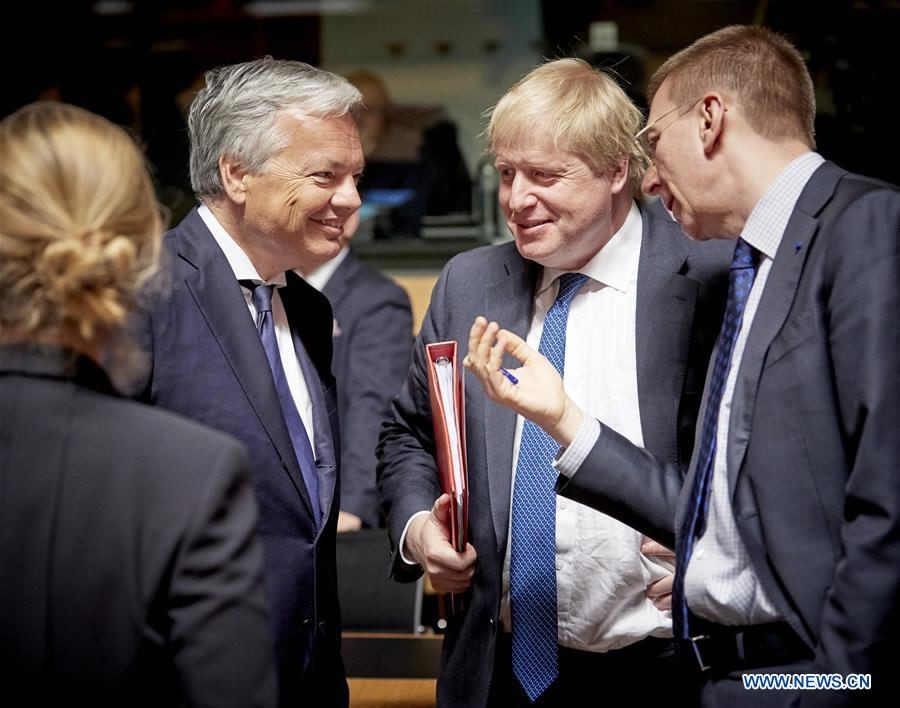
Britain Foreign Minister Boris Johnson (2nd R) attends an EU Foreign Ministers' meeting in Luxembourg, April 16, 2018. /Xinhua Photo
Britain Foreign Minister Boris Johnson (2nd R) attends an EU Foreign Ministers' meeting in Luxembourg, April 16, 2018. /Xinhua Photo
But the EU Foreign Affairs chief was emphatic – no non-nuclear sanctions on Iran. She added that the deal itself needs to remain outside the scope of any consideration of Iran’s regional actions – in Syria or beyond.
For her part, Mogherini has been very vocal on rebuffing all attempts by Trump to dictate terms to the EU on Iran. When Trump took power and first made the announcement to try to de-certify the nuclear deal, Mogherini said at the time that it's not up to any single country to terminate the Iran deal.
She was personally very involved in the agreement and has always guaranteed to Iran that it has the EU’s support.
For the EU, it would be more destabilizing for the region if world powers go back on the deal. Plus they run the risk of losing influence over Iran.
But of course the fear is that without strong US support for the deal, it may be only a matter of time before the pact between Tehran and six world powers unravels. With May 12 not far away, the EU will look wearily on to see what Trump could do next.