
13:17, 14-Apr-2019
Targeting Fake News: Singapore's proposed law against disinformation stirs controversy
Updated
13:10, 17-Apr-2019
 []
[]
Share







Copied
03:18
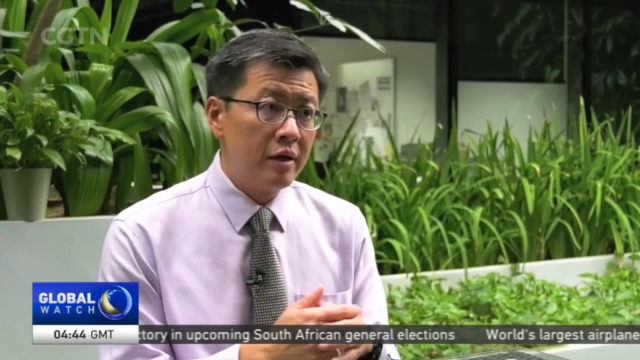
Singapore, like other many countries, is trying to battle the spread of disinformation online. Lawmakers began looking at a bill earlier this month, against fake news. But some of its proposals have raised eyebrows, both in and outside the country. CGTN's Miro Lu has more on this.
In a major crackdown on fake news, Singapore tabled a Bill against online falsehoods in Parliament last week. The "Protection from Online Falsehoods and Manipulation Bill" empowers ministers to ask platforms to issue corrections or take down false information. In extreme cases, proposed sanctions include fines of up to 1 million Singapore dollars - or about 740 thousand US dollars - and jail time of up to 10 years.
Social media giants like Facebook, Google and a coalition representing internet and tech companies in Singapore, have expressed concern over some of the Bill's proposals. The Bill has also come under severe criticism from some journalists and activists, who fear that the draft law could stifle online discussion and freedom of speech. Phil Robertson is the deputy Asia Director for Human Rights Watch. He has questioned the broad provisions that the Bill sets out.
PHIL ROBERTSON HUMAN RIGHTS WATCH "There is no really clear definition of what is false or misleading. What are the criteria for the determination by the minister. It's not set out in law. Essentially the minister has a huge grant of authority to determine this. So it's an over-broad Bill, its draconian, it goes far beyond what is required to deal with fake news in Singapore."
Eugene Tan is an Associate Professor in Singapore Management University's School of Law. He believes it's the implementation of the law that matters.
EUGENE TAN KHENG BOON ASSOCIATE PROFESSOR, SINGAPORE MANAGEMENT UNIVERSITY "There is an internal check and balance. So, it is not a situation of the minister being able to say, I don't like this piece of reporting, so I am going to use my powers and clamp down. Implementation will be one where the government would want to get it right and that, to me, is another form of check and balance because they want to be able to defend their action in the courts, in parliament, and to the public."
Media and business intelligence firm Meltwater analysed online sentiments during the first week after the bill was introduced. Their data reveals that 68.5% of the sentiment was negative as opposed to 10.8% being positive.
MIMRAH MAHMOOD MELTWATER "It's not negative in the sense that it's negative against the law itself. I think the negativity is more along people's concerns. So, when people are concerned they have a lot of opinions and they use words that are negative to describe that."
MIRO LU SINGAPORE "Amid the criticism, Singaporean Prime Minister Lee Hsien Loong defended the draft law calling it 'significant step forward'. There are strong arguments both for and against the proposals of the new bill. The one aspect that both sides seem to agree on, is that there is a need for strong legislation to control the menace of false news in the digital space. Miro Lu, CGTN, Singapore."