
Politics
09:47, 19-Apr-2018
Cuba: Canada's recall of diplomat families 'unjustified'
 ["china"]
Share







Copied
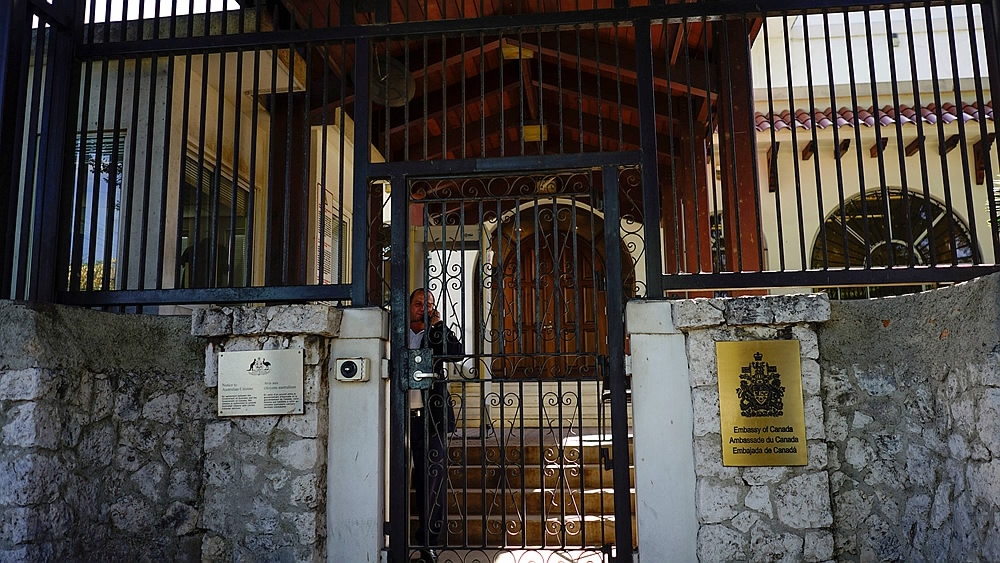
The Cuban government said on Wednesday that Cuba is a safe country, rebuffing Canada's decision to declare its embassy in Havana as "a mission without accompanying relatives."
Ottawa's measure means its diplomats will not be allowed to bring their families with them to Cuba, due to the alleged acoustic attacks reported by Canadian and American diplomats in 2017.
"Cuba ratifies that a rigorous investigation carried out by a group of highly qualified experts did not find any evidence of the suffering reported by the Canadian diplomats, nor any sign of any attack or incident on Cuban soil," said an official statement issued by the island's Ministry of Foreign Affairs.
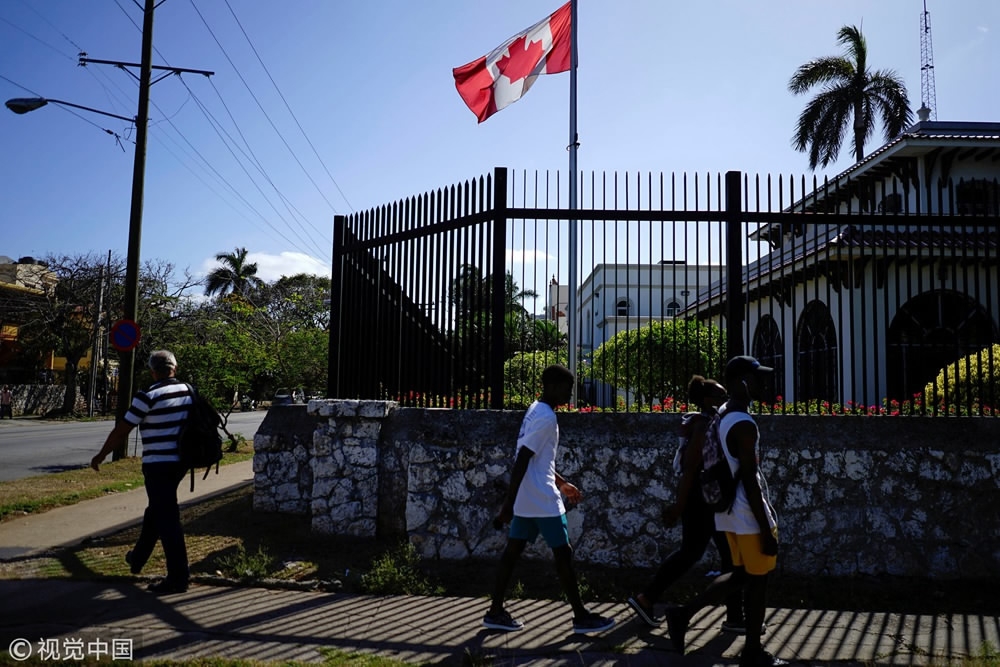
The Canadian Embassy in Havana, Cuba, April 16, 2018. /VCG Photo
The Canadian Embassy in Havana, Cuba, April 16, 2018. /VCG Photo
The Cuban authorities said they respected the decision adopted by Canada but considered it "unjustified."
They stressed that the island is a safe country for the almost 5 million international tourists visiting the island every year, including more than 1 million Canadians.
Havana also highlighted its guarantee of protection for all diplomats accredited in the nation, no matter where they come from.
"Cuba will continue working closely with the Canadian government ... and through cooperation among correspondent agencies and high-level experts to find conclusive explanations for the reported ailments," said the foreign ministry.
The Cuban government invited medical experts from both sides to share all possible information, while respecting the privacy of those affected.
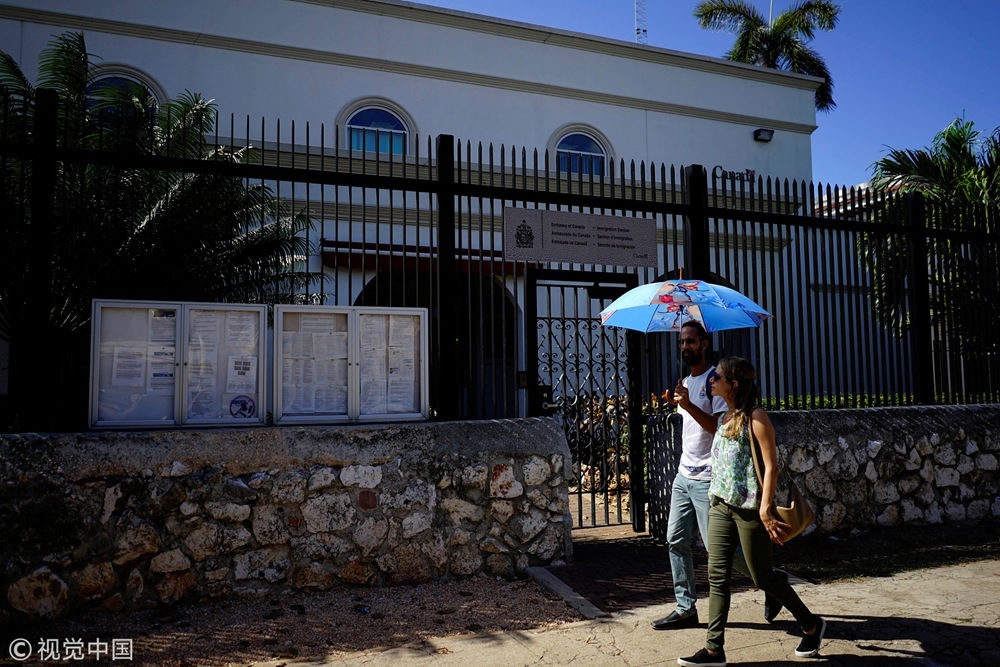
People pass by the Canadian Embassy in Havana, Cuba, April 16, 2018. /VCG Photo
People pass by the Canadian Embassy in Havana, Cuba, April 16, 2018. /VCG Photo
Ottawa on Monday announced the move to recall the families of its diplomatic staff on the island, saying the families would be returning to Canada in the coming weeks.
It said the number of staff and family members with symptoms had risen from eight to 10. In total, 27 diplomats and family members were tested after complaining of dizziness, headaches, nausea, nosebleeds or sleeplessness between April and December last year.
Canadian and US authorities had initially suspected a "sonic attack" or a "mass psychosomatic incident" but that idea was later dismissed, with a senior Canadian official describing it as "unlikely."
12757km
Source(s): AFP
,Xinhua News Agency