
11:56, 17-May-2019
China-US Trade Tensions: Trade dispute sows fears among US soybean farmers
Updated
11:50, 20-May-2019
 []
[]
Share







Copied
03:11
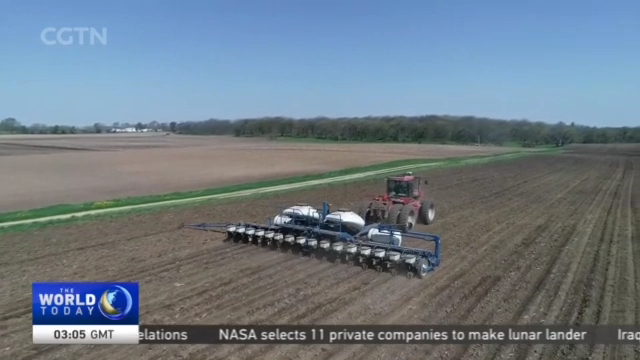
The Trump administration is working on a plan to help US farmers, hurt by its ongoing trade tensions with China. Agriculture Secretary Sonny Perdue says emergency aid totalling up to 20 billion dollars could be paid directly to farmers hit by tariffs. American farmers say they desperately need the assistance. And as CGTN's Dan Williams reports, they really want an end to the trade battle.
The Aavang farm in Woodstock, Illinois, has developed a number of revenue streams over the years, from dairy production to corn. The focus right now is on planting soybeans following months of wet weather. But the key concern for Michele Aavang remains the trade dispute between the U.S. and China.
MICHELE AAVANG FARMER "We really need a win in agriculture. This has really been going on for too long. We need to have some kind of resolution with China. That is the most important thing right now for most farmers."
Following months of U.S. - China talks, the two sides appeared to be getting close to a deal. But earlier this month, ahead of the latest round of talks, hopes were dashed as U.S. President Donald Trump went ahead with long-delayed plans to raise tariffs on 200 billion dollars of goods imported from China from 10% to 25%. China responded by targeting 60 billion dollars of U.S. goods for added duties.
DAN WILLIAMS WOODSTOCK, ILLINOIS "The recent progress in the trade talks between China and the US had given many farmers here a sense of hope. But following the new round of tariffs, those feelings, it would appear, have turned to despair."
SCOTT IRWIN AGRICULTURAL ECONOMIST, UNIV. OF ILLINOIS "I've been a skeptic of getting to an agreement from the start. Because essentially what I think we have is two countries that both think they have the strong hand in the negotiations."
Scott Irwin is an agricultural economist at the University of Illinois. Even if a deal is secured, he does not see a positive outcome for U.S. farmers.
SCOTT IRWIN AGRICULTURAL ECONOMIST, UNIV. OF ILLINOIS "History tells that once these kinds of ruptures occur, it is very difficult to ever get back what was lost. Because it is natural for the other side to want to diversify their suppliers, and they will simply say to themselves that we will never be that dependent on another single supplier again."
If that proves true, it could be a devastating blow for many U.S. farmers.
MICHELE AAVANG FARMER "It sounds like this could go on for years. And we just can't deal with it out here in the countryside. We are in our sixth straight year of declining farming income and there is not a lot of good news in sight."
This field will soon be full of soybeans. Still uncertain whether there will be a market for them to be sold at harvest time. Dan Williams, CGTN, Woodstock, Illinois.