
Politics
14:25, 04-Dec-2016
32 dead in N. China's coal mine explosion
Updated
10:25, 28-Jun-2018
 []
[]
Share







Copied
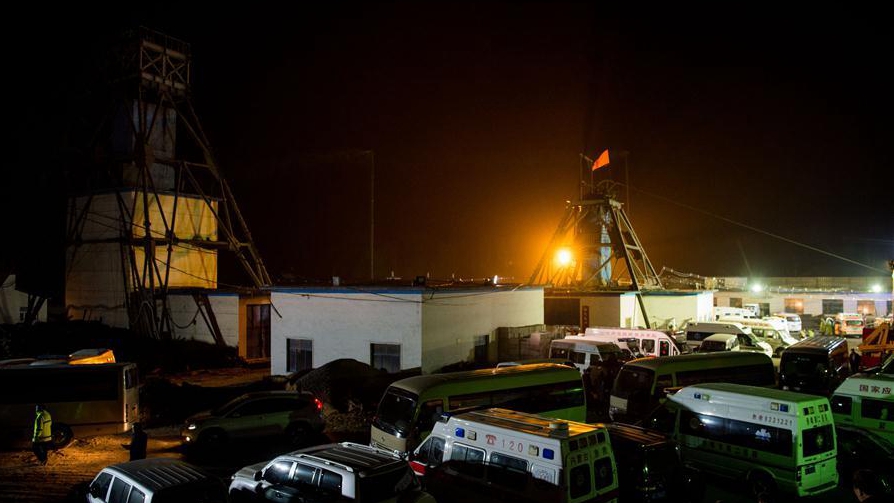
The cause of Saturday’s colliery blast in north China’s Inner Mongolia Autonomous Region, which killed 32 people, has been confirmed as a gas explosion, according to preliminary investigation.
The blast ripped through a coal mine belonging to Baoma Mining Co. Ltd. in the city of Chifeng around midday on Saturday, trapping 181 workers underground.
149 workers have been rescued.
As of 4:00 a.m. on Sunday, 268 policemen and 119 rescuers and medical staff along with 32 ambulances had been dispatched to the accident site, Vice Chairman of Inner Mongolia Autonomous Region Wang Bo noted during a press briefing on Sunday.
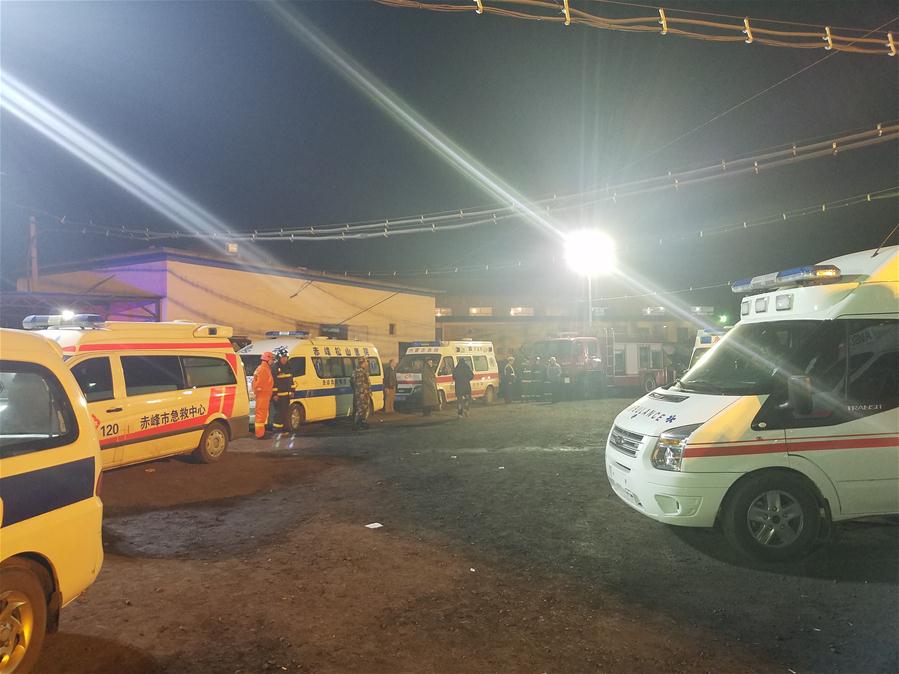
Rescuers and vehicles at the site of a coal mine accident at Baoma Mining Co. Ltd. in Chifeng, north China's Inner Mongolia Autonomous Region, Dec. 3, 2016./Xinhua Photo
Rescuers and vehicles at the site of a coal mine accident at Baoma Mining Co. Ltd. in Chifeng, north China's Inner Mongolia Autonomous Region, Dec. 3, 2016./Xinhua Photo
A dark cloud has loomed over China’s coal mining industry this week, with another tragedy taking place on Tuesday in northeast China’s Heilongjiang Province.
21 trapped miners were confirmed dead on Saturday in the accident that struck a private coal mine in the city of Qitaihe.
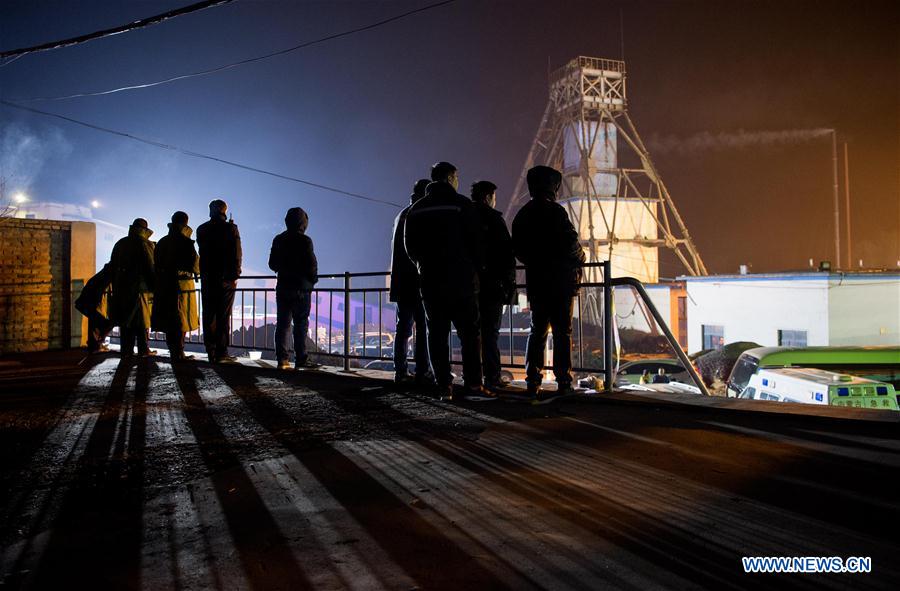
Onlookers at the site of a coal mine accident at Baoma Mining Co. Ltd. in Chifeng, north China's Inner Mongolia Autonomous Region, Dec. 3, 2016./Xinhua Photo
Onlookers at the site of a coal mine accident at Baoma Mining Co. Ltd. in Chifeng, north China's Inner Mongolia Autonomous Region, Dec. 3, 2016./Xinhua Photo
China's coal mines were ordered to conduct a safety overhaul to prevent major accidents as their frequency has surged in the past month. Song Yuanming, Deputy Director of the State Administration of Coal Mine Safety, noted earlier this week that there were on average two colliery accidents every month throughout 2016, but the rate peaked in November with five cases.
338km