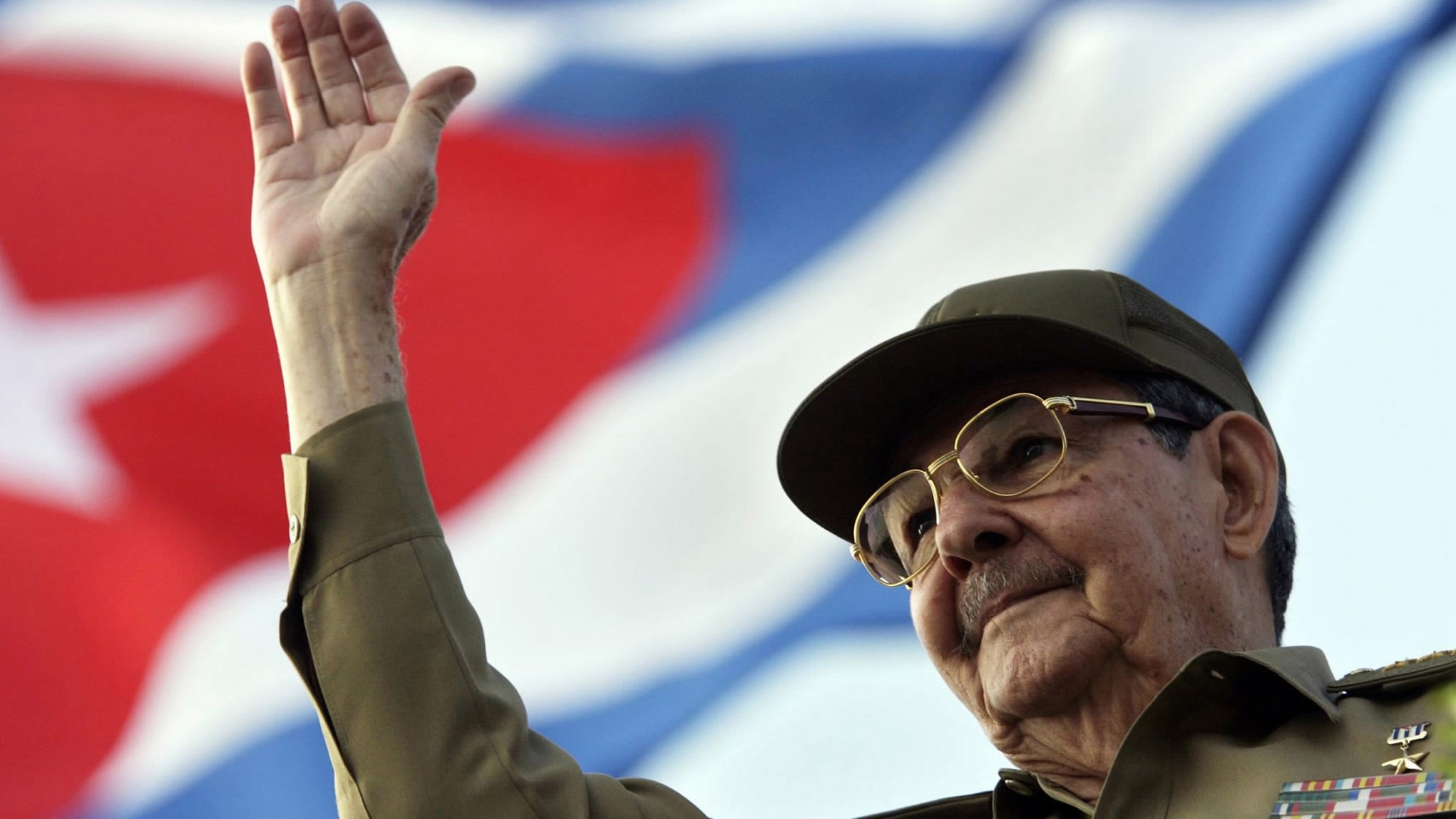
Cuba will witness a generational change in its political leadership during this year's National Assembly session. The state media said the country’s National Assembly will elect a new president on Wednesday, but won’t announce the result until Thursday.
Raul Castro, the 86-year-old current president of the country, announced last year that he will step down in 2018 due to health issues.
The elections system and its generational change
Cuba holds its election every five years. The process starts with election of municipal representatives and ends with the election of the president.
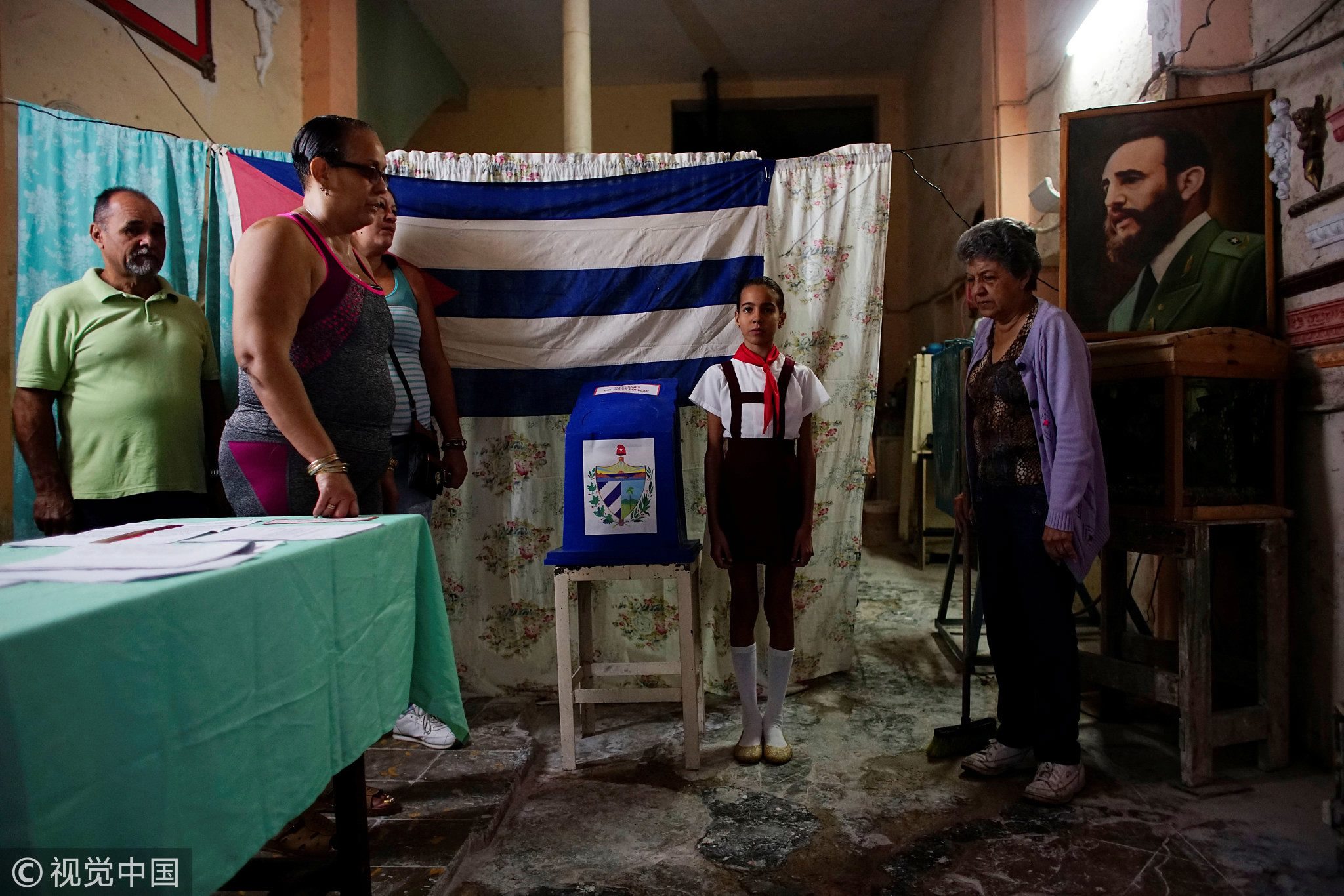
Election officials sing the national anthem beside an image of late Cuban president Fidel Castro, moments before opening a polling station in Havana, Cuba, November 26, 2017. /VCG Photo
Election officials sing the national anthem beside an image of late Cuban president Fidel Castro, moments before opening a polling station in Havana, Cuba, November 26, 2017. /VCG Photo
In November last year, residents cast their ballots, choosing representatives in municipal assemblies and on March 11, a new parliament – the National Assembly of People's Power with 605 parliamentary seats – has been elected through votes of eight million Cubans.
As the legislative session sits for the first time, lawmakers will elect the country's next president, first vice president, five vice presidents and 23 members of the State Council.
Many viewed this year's election signal a generational change, not only because Raul Castro is ending his terms as the president.
For March's election, the statistics from official newspaper Granma showed that 90 percent of the candidates were born after the Cuba revolution. The average age is 49 and the majority (56 percent) are first-time candidates.
More than 53 percent are women, which makes Cuba one of the top three countries in the world for the number of females in parliament.
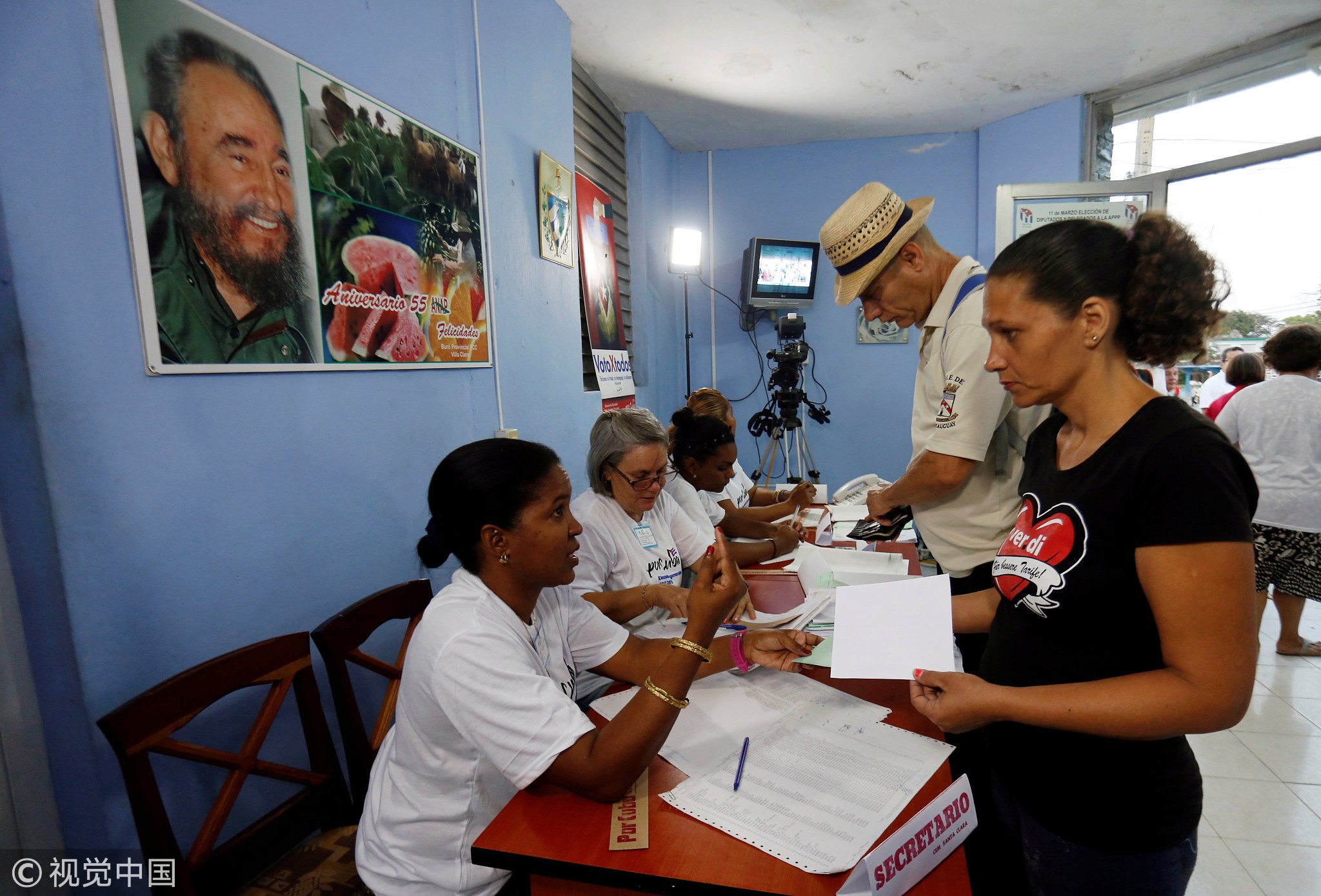
People register at a polling station to cast their votes during an election of candidates for the national and provincial assemblies, in Santa Clara, Cuba, March 11, 2018. /VCG Photo
People register at a polling station to cast their votes during an election of candidates for the national and provincial assemblies, in Santa Clara, Cuba, March 11, 2018. /VCG Photo
The possible successor?
The current first vice president, Miguel Diaz-Canel, has been widely expected as the successor to Raul Castro.
The younger Castro officially succeeded his brother in 2008 as the leader of the country, while revolutionary leader Fidel Castro, who was in power for 48 years, died in 2016.
"It’s only logical that Díaz-Canel become president after serving as first vice president for the past five years without any issues,” Arturo Lopez-Levy, a former analyst with the Cuban Interior Ministry who is now a lecturer at the University of Texas, Rio Grande Valley, told NBC news.
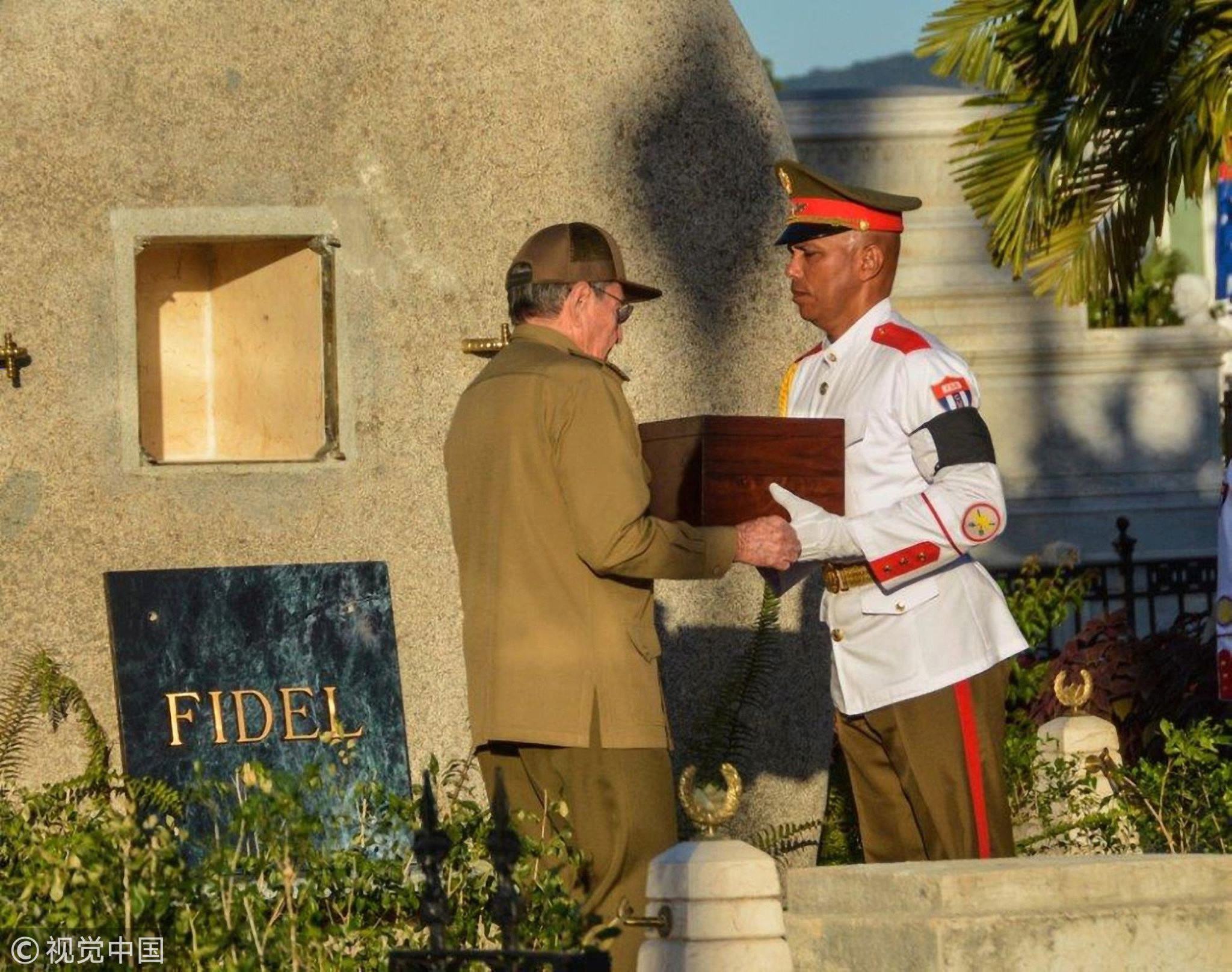
Cuban President Raul Castro places the urn with the ashes of his brother Fidel Castro in his tomb at the Santa Ifigenia cemetery in Santiago de Cuba, December 4, 2016. /VCG Photo
Cuban President Raul Castro places the urn with the ashes of his brother Fidel Castro in his tomb at the Santa Ifigenia cemetery in Santiago de Cuba, December 4, 2016. /VCG Photo
"Current First Vice President Miguel Diaz-Canel Bermudez, having delivered major party speeches and other telltale signs of succession, may yet step into the fray," the Latin American TV network TeleSUR said.
The 57-year-old Diaz-Canel has spent a long time serving in the Communist Party of Cuba. He headed Villa Clara Province from 1994 to 2003 and became the first secretary of the more populous province of Holguin in eastern Cuba in 2003, as well as becoming a member of the Politburo of Communist Party of Cuba.
He served as the minister of higher education before he was elected as the first vice president of the Council of State in 2013.
The official newspaper in Cuba, Granma, has a series of stories on Díaz-Canel receiving leaders from foreign countries and making trips abroad. He headed a delegation group to China in 2015, the year when the two countries celebrated the 55th anniversary of the establishment of diplomatic relations.
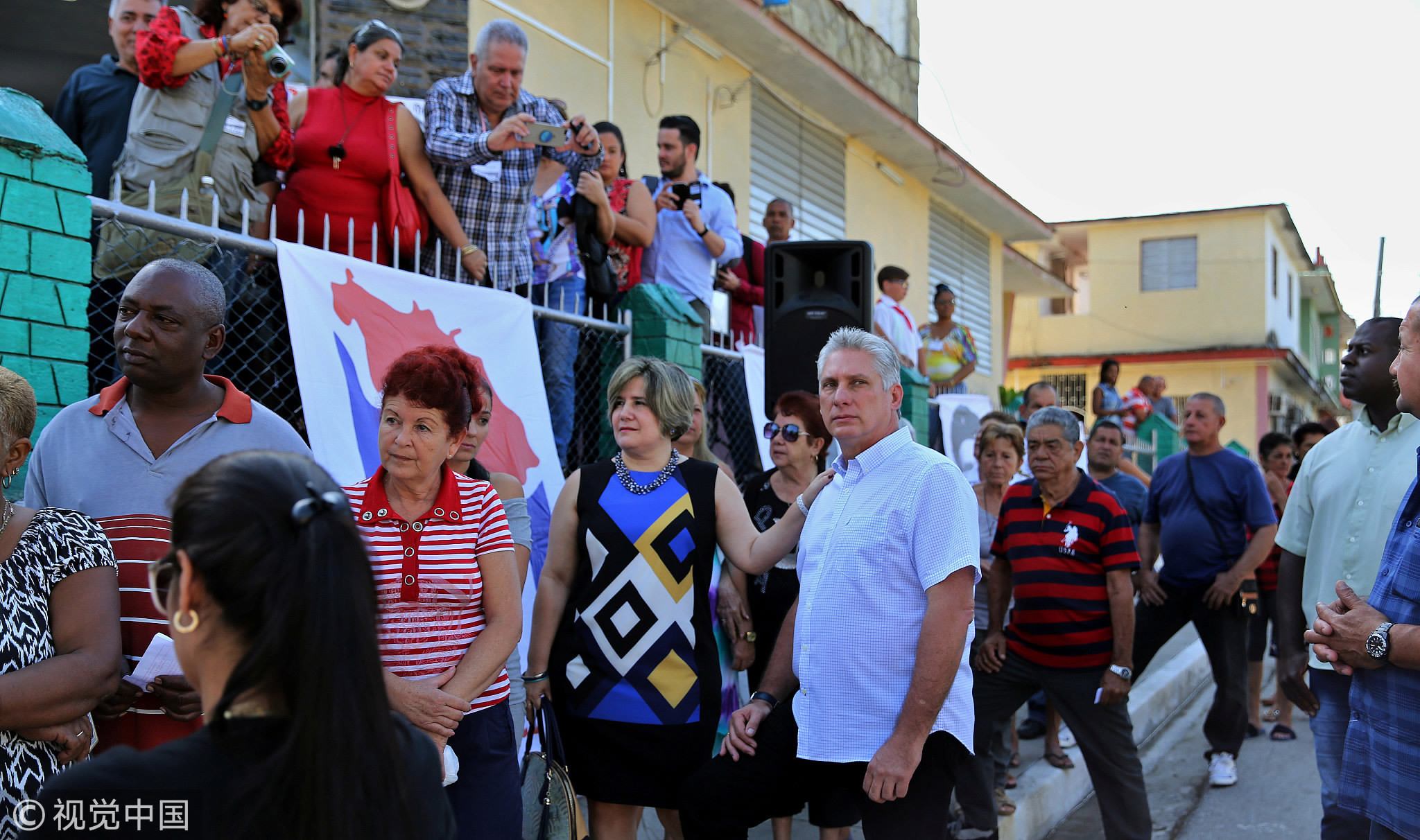
Cuba's first Vice President Miguel Diaz-Canel stands in line with his wife Lis Cuesta and local residents before casting his vote during an election of candidates for the national and provincial assemblies, in Santa Clara, Cuba, March 11, 2018. /VCG Photo
Cuba's first Vice President Miguel Diaz-Canel stands in line with his wife Lis Cuesta and local residents before casting his vote during an election of candidates for the national and provincial assemblies, in Santa Clara, Cuba, March 11, 2018. /VCG Photo
Díaz-Canel has a reputation for being liberal and supports gay rights, greater press freedom, and access to the internet.
However, if Diaz-Canel gets elected it will still mark an important decentralization of power as for the first time as the head of the party and the country will not be the same person.
Analysts expect that Diaz-Canel would not bring about major changes, because he has defended the political continuity on the island and maintained the socialist model.

Cuban first Vice-President Miguel Diaz-Canel prepares to cast his vote at a polling station in Nautico neighborhood in Havana, April 19, 2015. /VCG Photo
Cuban first Vice-President Miguel Diaz-Canel prepares to cast his vote at a polling station in Nautico neighborhood in Havana, April 19, 2015. /VCG Photo
Raul Castro’s 12 years in power
In 2006 Raul Castro assumed presidency as a temporary replacement for Fidel Castro. For the 12 years in power, Raul Castro has showed a different Cuba to the world
He began his term with increasing the country’s agricultural productivity. Over the last decade, the Cuban government provided private farmers with one million hectares of idle land and made efforts in improving their working conditions.
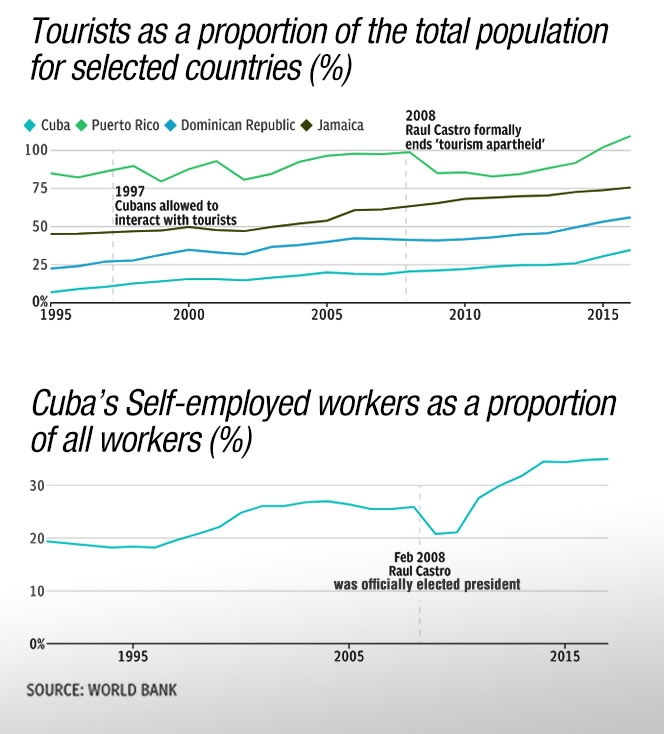
Furthermore, Raul Castro began a series of reforms to liberalize the economy to expand private sectors and state decentralization, stating in 2010: “Either we change course or we sink.”
Since then there were more than 300 measures including flexible migration policy, promoting foreign investments, elimination of the double currency system, attracting tourists and eliminating massive public subsidies.
Raul Castro is continuing the gradual opening-up of Cuba. In January 2013, the Cuban government ended the need for Cubans to have a travel permit to travel abroad.
The highlight of Raul Castro’s presidency was in December 17, 2014 when he announced to restore diplomatic relations with the US after nearly half a century of hostility between the two sides. Then US president Barack Obama also visited Havana in March 2016.
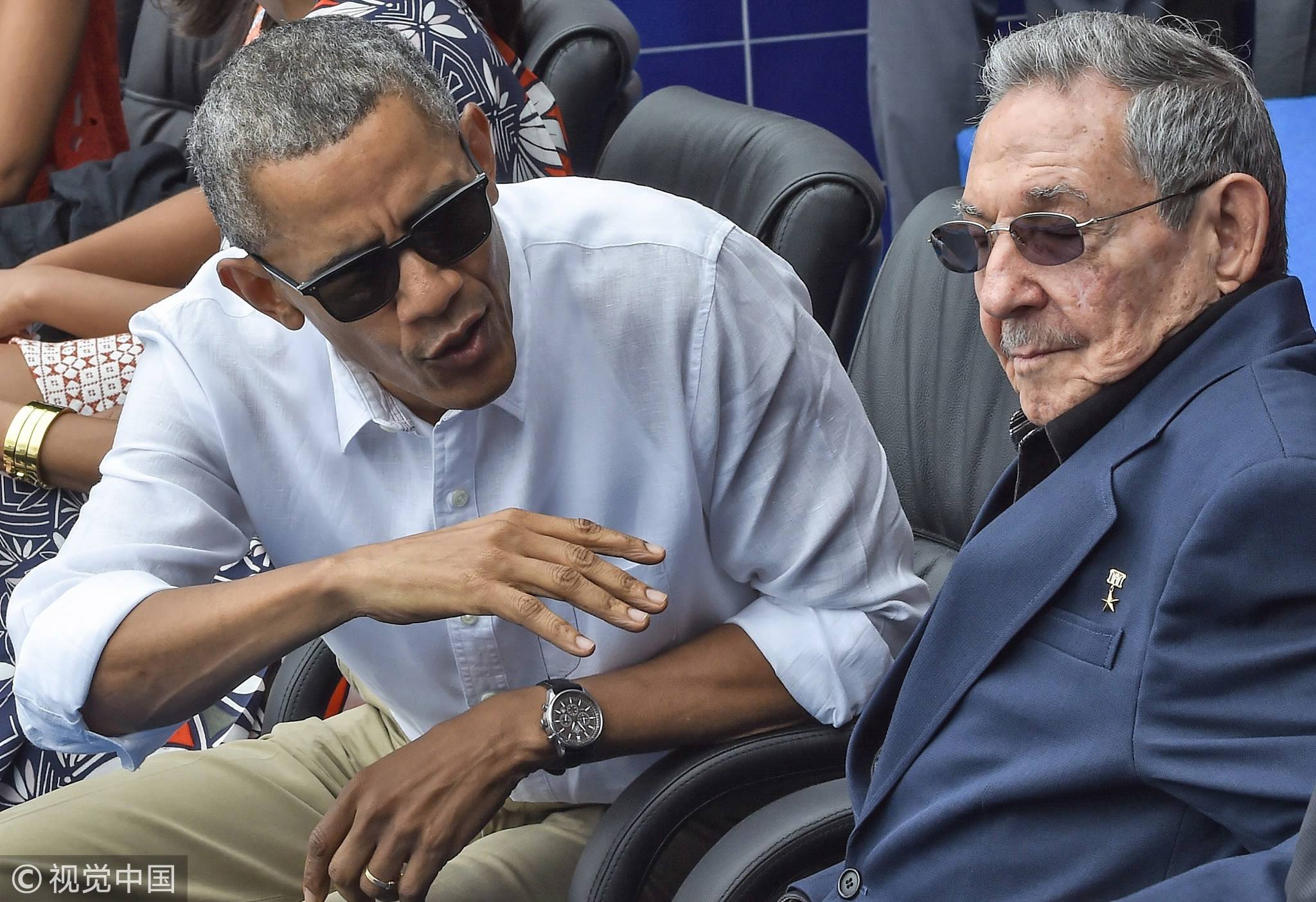
US President Barack Obama speaks next to Cuban President Raul Castro (R) during a Major League baseball exhibition game between the Tampa Bay Rays and the Cuban national team at the Latinoamericano stadium in Havana, March 22, 2016. /VCG Photo
US President Barack Obama speaks next to Cuban President Raul Castro (R) during a Major League baseball exhibition game between the Tampa Bay Rays and the Cuban national team at the Latinoamericano stadium in Havana, March 22, 2016. /VCG Photo
However, current US President Donald Trump rolled back the opening with the island initiated by his predecessor and toughened the economic blockade limiting trade and issued a series of travel restrictions on US travelers to Cuba.
Whoever the new Cuban leader is, he has to deal with this new situation with the US.

 ["china"]