
World
15:02, 14-Feb-2018
Iran accuses West of using lizards to spy on its nuclear program
 ["other","Middle East"," Iran"]
Share







Copied
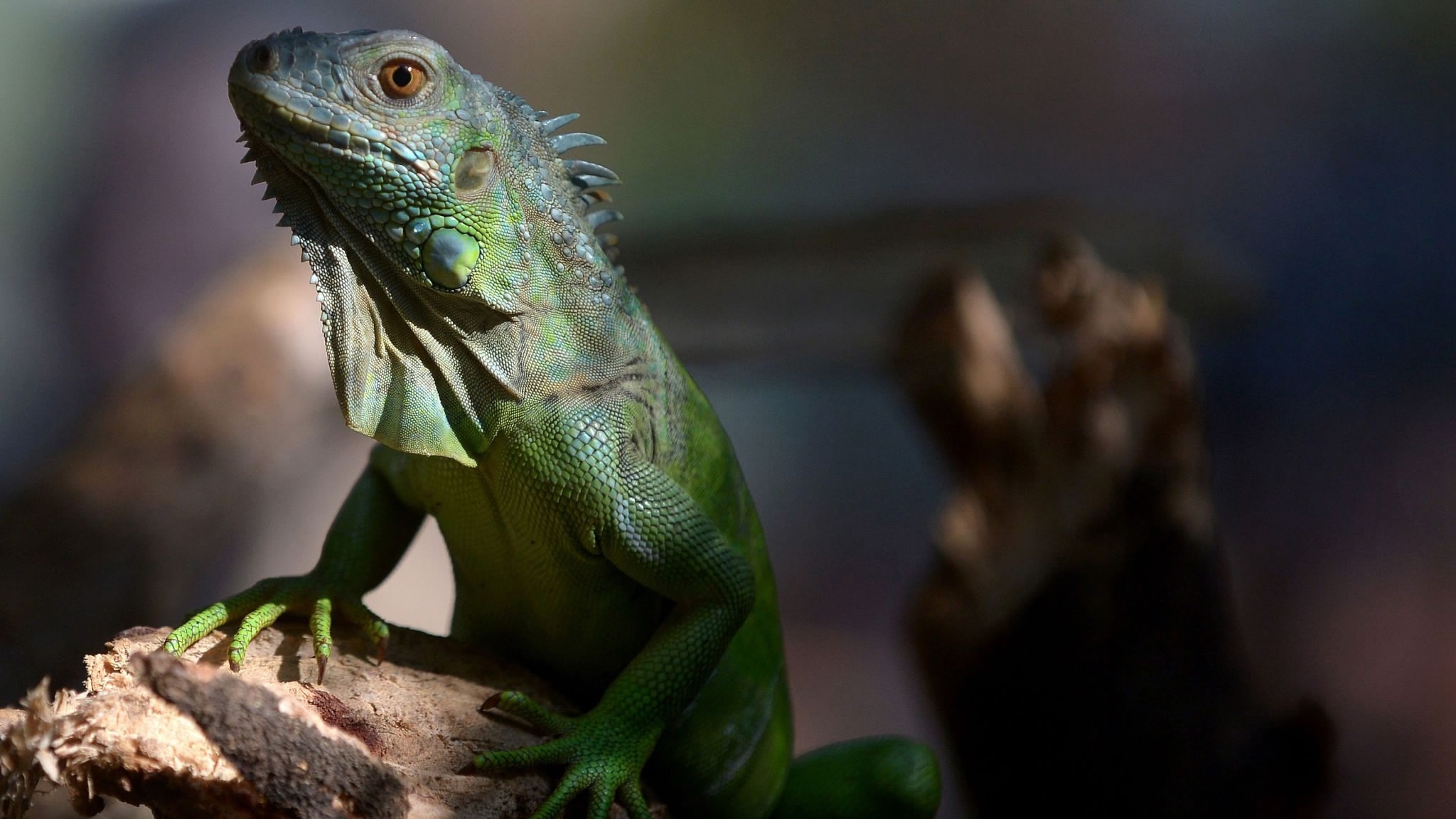
A former Iranian army chief has accused Western spies of using lizards to “attract atomic waves” and spy on his country’s nuclear program.
The remarks from former chief-of-staff of Iran’s armed forces General Hassan Firouzabadi, who is currently the senior military adviser to Iran's Supreme Leader Ayatollah Ali Khamenei, came in response to questions from the local media on the recent arrest of environmentalists.

A file photo of General Hassan Firouzabadi /Reuters Photo
A file photo of General Hassan Firouzabadi /Reuters Photo
Firouzabadi claimed the West had often used tourists, scientists and environmentalists to spy on Iran.
“Several years ago, some individuals came to Iran to collect aid for Palestine… We were suspicious of the route they chose,” he said, according to Iran’s ILNA news agency.
“In their possessions were a variety of reptile desert species like lizards, chameleons… We found out that their skin attracts atomic waves and that they were nuclear spies who wanted to find out where inside the Islamic Republic of Iran we have uranium mines and where we are engaged in atomic activities,” he claimed, without revealing details of the cases.
What do the experts say?
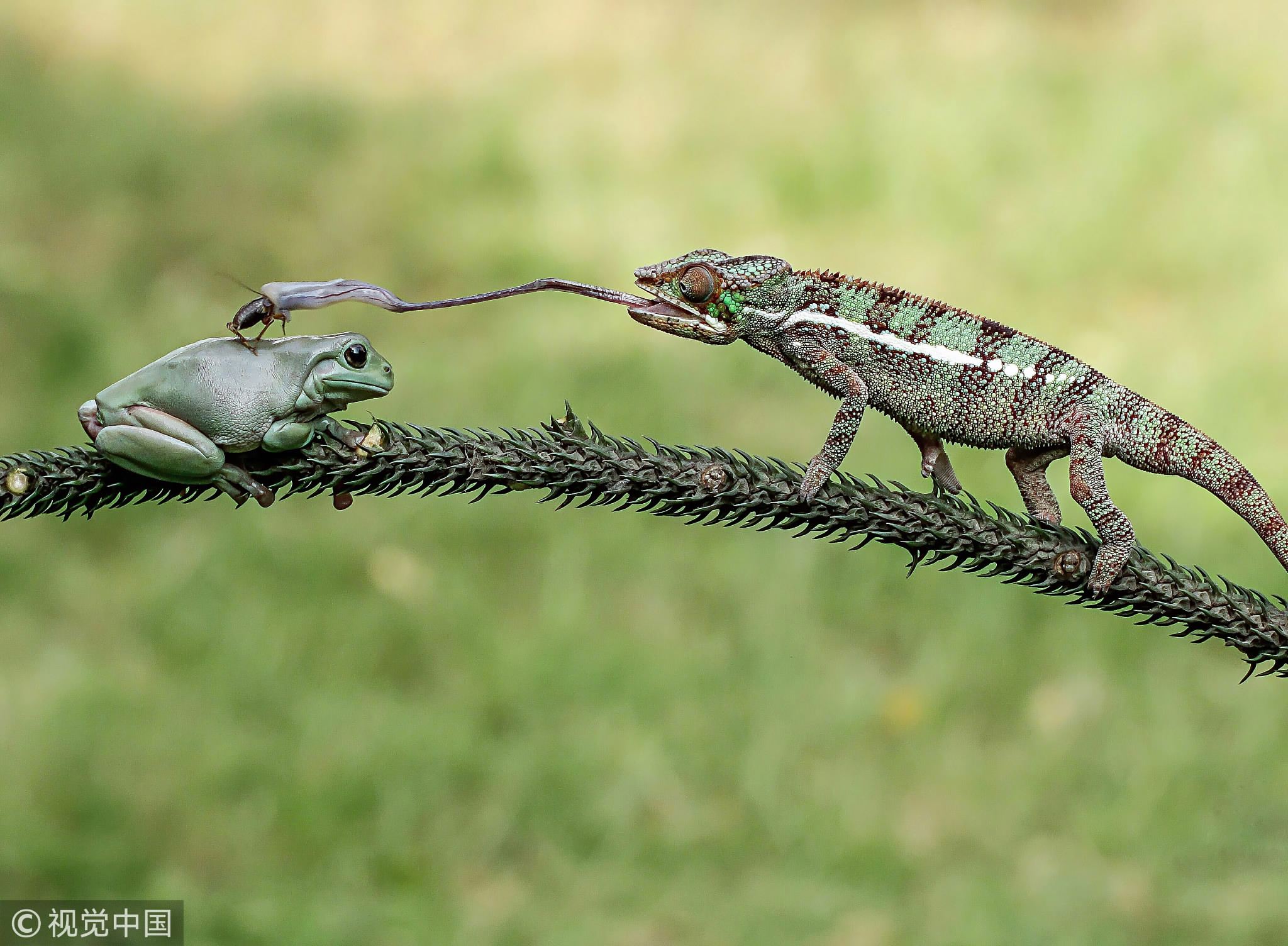
A chameleon catches a cricket off a frog's back. /VCG Photo
A chameleon catches a cricket off a frog's back. /VCG Photo
Reptile experts were unconvinced, to say the least.
Speaking to New York-based Live Science magazine, Eric Pianka, a zoology professor at the University of Texas at Austin, said, "The idea that lizards could somehow attract 'atomic' waves doesn’t make sense, because lizard skin is made of the exact same proteins as human skin: keratin A and B. Neither has any special ability to detect uranium or other radioactive materials."
Barry Sinervo, an evolutionary biologist at the University of California, Santa Cruz, rejected the idea of lizards being drawn to uranium mines.
"For one, lizards, which are cold-blooded and seek warm spots to hang out, would have no incentive to venture deep into cold uranium mines," Sinervo told Live Science.
"Chameleons… live in trees and therefore have no incentive to leave their home base on twigs to go crawling around on rocks in a uranium mine," he added.
Custody death of an environmentalist

This handout photograph released on February 11, 2018, by the family of Iranian-Canadian environmentalist Kavous Seyed-Emami shows him at an unidentified location. /VCG Photo
This handout photograph released on February 11, 2018, by the family of Iranian-Canadian environmentalist Kavous Seyed-Emami shows him at an unidentified location. /VCG Photo
Firouzabadi’s remarks came amid growing controversy over leading Iranian-Canadian environmentalist Kavous Seyed-Emami, who reportedly committed suicide in Tehran’s Evin prison following his arrest along with other members of his wildlife NGO on January 24.
A report in Iran's official IRNA news agency on Tuesday accused Seyed-Emami, 63, of spying for the CIA and Mossad. The report claimed Firouzabadi was passing information on the country’s missile bases to the US and Israeli intelligence services and planning to create an environmental crisis.
IRNA quoted Tehran prosecutor Abbas Jafari Dolatabdi as saying Seyed-Emami and a network of people installed cameras in strategic areas of the country pretending to observe environmental issues but, in fact "it was for monitoring the country's missile activities and they were sending images and information to foreigners."
Dolatabdi claimed Seyed-Emami hosted one of two US intelligence officers during their visit to Iran, without elaborating.
Is Israel nurturing 'wildlife spies'?
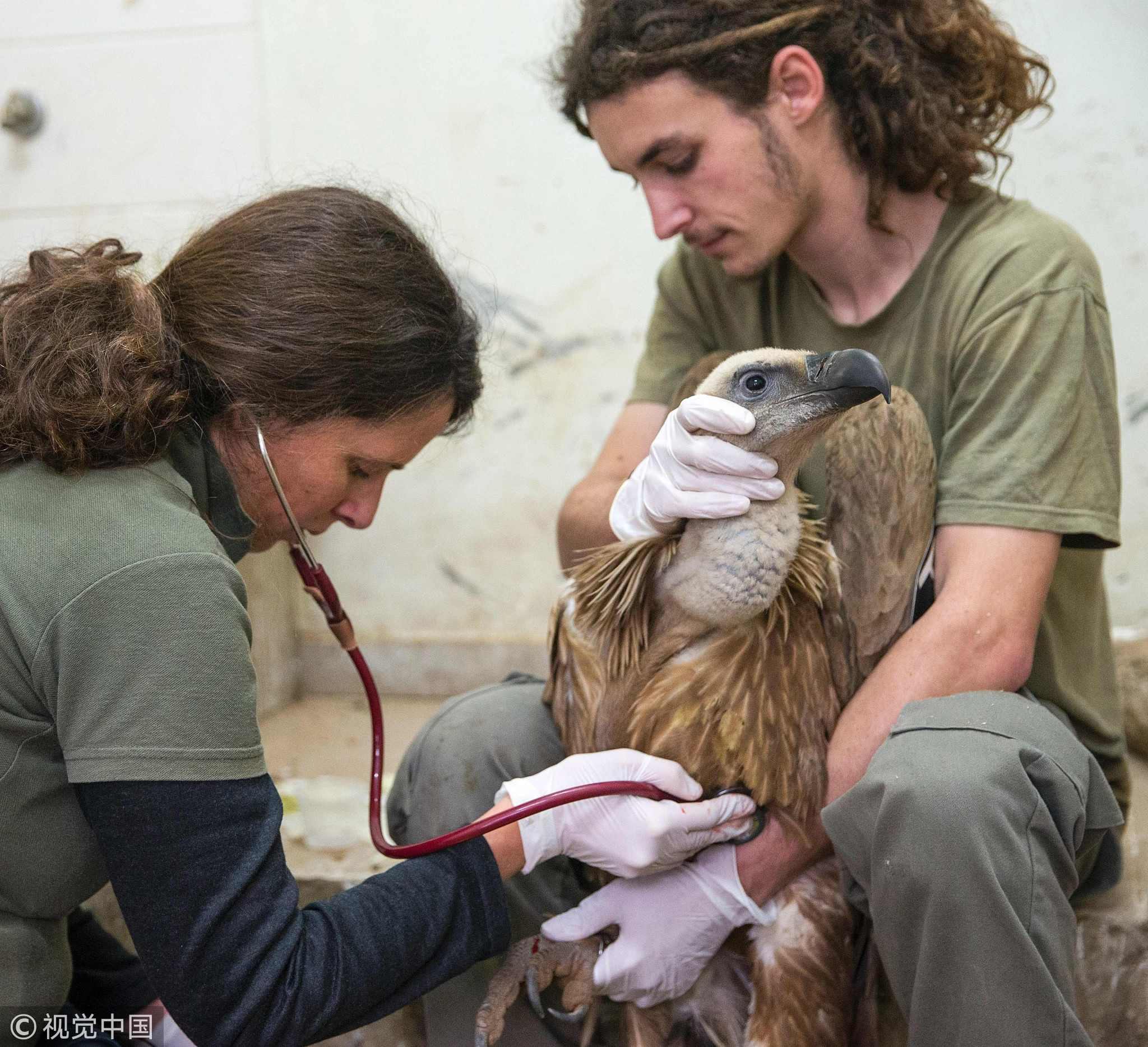
Israeli medical staff members treat a vulture at a veterinary clinic in the Wildlife Hospital of Ramat Gan Zoo Safari near Tel Aviv, January 29, 2016. A vulture captured in Lebanon on suspicion of spying for Israel was returned home with the help of the United Nations. /VCG Photo
Israeli medical staff members treat a vulture at a veterinary clinic in the Wildlife Hospital of Ramat Gan Zoo Safari near Tel Aviv, January 29, 2016. A vulture captured in Lebanon on suspicion of spying for Israel was returned home with the help of the United Nations. /VCG Photo
Analysts are linking Firouzabadi’s claim of lizards being used as “spies” to Seyed-Emami’s death as the environmentalist headed the Persian Wildlife Heritage Foundation.
Several spying allegations involving wildlife have been leveled against Israeli intelligence in recent years by various countries and groups.
In January 2016, Lebanese residents captured a griffon vulture wearing an Israeli tracking device. The bird was released later after the UN intervened to convince Beirut that the transmitter strapped to the bird was intended for scientific research rather than espionage.
Several months earlier, the Hamas group, which controls the Palestinian territory of the Gaza Strip, claimed to have caught a dolphin wearing Israeli spying equipment.
Twice in recent years, Turkish media has reported capturing of birds by local authorities who alleged that the animals were tagged with Israeli university tracking devices and were on espionage missions.
In 2012, an eagle with an Israeli tag in Sudan was captured and alleged to be a Mossad spy.
In neighboring Egypt, officials have blamed Israel-controlled sharks for a number of attacks on tourists in the Red Sea.
(With inputs from agencies)
[Top photo: A Green Iguana, also known as an American Iguana, looks on while on display at Guindy Snake Park. /VCG Photo]
5602km