
19:36, 27-Jun-2019
Inca New Year Celebration: Peru marks 75th anniversary of festival's revival
Updated
17:06, 09-Jul-2019

Share






Copied
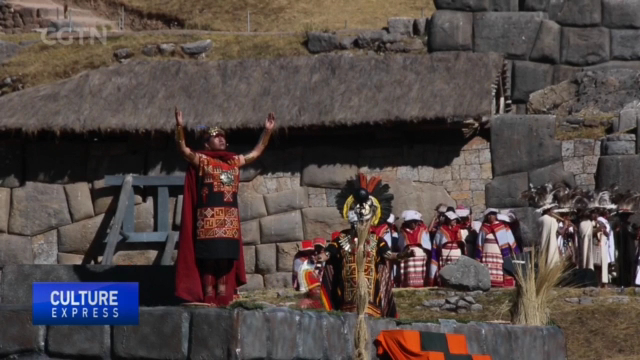
In the former capital of the Inca Empire, people are celebrating an ancient tradition in the modern day. The Festival of the Sun is believed to have been one of the most important Inca rituals. CGTN's Dan Collyns went to Cusco to see the 75th-anniversary celebrations of the festival's revival there.
Saluting the sun, the Inca, he is one of hundreds of actors participating in this historical reenactment. The dancers represent the four geographic regions of Tawantinsuyo, the Inca Empire, which at the height of its existence, was the largest empire in the world.
DAN COLLYNS KORIKANCHA "As the sun rises above Koricancha the Inca temple of the sun and fills the plaza beneath it, the Inti Raymi festival begins."
Tourists and locals flock to watch this dawn spectacle held annually in June.
"Amazing, amazing, amazing. I'm glad that the people of Peru are keeping their culture."
"It felt very real, so I think they portrayed it in a beautiful way, there was a lot of essences."
"The costumes are really colorful, the dances are nice and active, so I really enjoyed it."
And for the locals - descendants of this civilization - it's a special feeling.
LUISA GARRIDO CUSCO NATIVE "It makes us relive our past, our past which has been so painful and known around the world, it moves us to see what we are now and how we were then. It is who we are and we have to treasure that."
And today, Cusco attracts millions of tourists to Peru. All of those here paying handsomely for ringside seats to the spectacle. While hundreds of local people watch from further up the hillside.
DAN COLLYNS SACSAYHUAMAN "Inti Raymi has its origins in the time of Tawantinsuyu or the Inca Empire but today it celebrates its 75th anniversary. Peru revived the festival in 1944, just about the same time as it established its first hotel for tourists in Cusco."
That's no coincidence, says Mark Rice, a historian of Peru.
MARK RICE PERU HISTORIAN "Inti Raymi provides a very compelling folkloric narrative which backs up the touristic selling of Machu Picchu linking it to this utopian version or vision, I should say, of an Inca past."
That vision reaches its peak above the city of Cusco in the temple-fortress of Sacsayhuaman. As some seven hundred women and men act out this rendering of the empire's court. Soldiers and subjects from the four corners of the empire pay homage. At its centre, the Inca, whose followers believed was the child of the sun, holds court on the ceremonial pyramid or Ushnu. Military leaders and officials bring news from the empire prompting rituals offering of chicha, an ancient alcoholic drink made from corn and the symbolic sacrifice of a llama.
DAN COLLYNS SACSAYHUAMAN "From up here you can really appreciate the full scale of this intricately choreographed spectacle which pays homage to an empire which was defeated but continues to live on in the hearts and traditions of the people here in Cusco, and its legacy is Peru's greatest tourist attraction."
With the Inca's final message imploring the sun God not to go away, this evocation of times past draws to close. As Inti Raymi ends, so does a month of festivities in Cusco. But according to Inca tradition, the sun festival ushers in a period of renewal, which could bring many more tourists. Dan Collyns, CGTN, in Cusco, Peru.