
10:56, 16-Apr-2019
Mexico-US Border: Border swamped with activity under threat of closure
Updated
10:50, 19-Apr-2019
 []
[]
Share







Copied
03:25
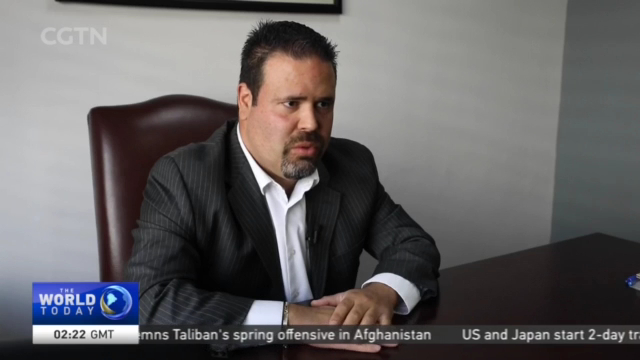
Waiting times for trucks to cross the Mexico-US border soared, after American President Donald Trump threatened to close the southern boundary several weeks ago. Mexican companies rushed to get as much cargo into America as they could before a possible shutdown. CGTN's Alasdair Baverstock has the latest, from Tijuana, at Mexico's border with California.
Long lines at the world's busiest border crossing, where Tijuana meets the state of California. This part of the border normally sees around three-thousand commercial trucks cross from Mexico into the U.S. every day. But since late March, local officials say they're surprised if half that number make it through. Salvador Diaz is an industrial leader at the port entry.
SALVADOR DIAZ MESA DE OTAY INDUSTRIAL ASSOCIATION "This has been going on for two weeks, and we're a full day behind when it comes to deliveries, and in addition to the slow progress, it's affecting the quality of the deliveries. A lot of fruit crosses the border, and 2 out of every 10 trailers are being sent back because the fruit spoils in the long wait times at the border."
The slowdown is the result of President Trump's threat to close the southern border - citing Mexico's large trade surplus, illegal immigration and inability to control rates of drug trafficking.
DONALD TRUMP US PRESIDENT "If the drugs don't stop, Mexico can stop them if they want, we're going to tariff the cars, the cars are very big, and if that doesn't work we're going to close the border."
While Trump backed down on his border-closure threat, the Department of Homeland Security has reassigned hundreds of Customs and Border Protection Agents, pulled from their posts at the border checkpoints and redeployed to border patrol work.
It's caused a slow-down along the length of the three-thousand -kilometer border, putting in jeopardy hundreds of billions of dollars of international trade.
SALVADOR DIAZ MESA DE OTAY INDUSTRIAL ASSOCIATION "We must remember that 80% of the factories here in Tijuana belong to companies based in the U.S., so it's affecting the United States just as much as Mexico. On the U.S. side, it's leading to shortages of essential supplies, while in Mexico having a surplus of inventory will cut back new production output and labor, which is what we supply."
Mexico's foreign minister called Trump's threat to block the border a 'bad idea' which be costly to both countries.
BERNABE ESQUER TIJUANA ECONOMIC DEVELOPMENT SECRETARY "We're a region that is inseparable from the United States. So it is a problem we are facing, it is a problem, but we have the tools at hand to improve it, seeking dialogue with our U.S. counterparts."
ALASDAIR BAVERSTOCK TIJUANA, MEXICO "As the border slowdown impacts travels and trade processing at the points of entry, it's local economies along the frontier that are being hit hardest. In the meantime, businesses will be looking to Mexico City and Washington DC to bring a diplomatic end to this economic impasse. Alasdair Baverstock, CGTN, Tijuana, Mexico."