
Culture
15:36, 02-Apr-2018
Chinese filmmaker Vivian Qu receives top Indian film award
 ["china"]
Share







Copied
"Who are you, reader, reading my poems a hundred years hence?
I cannot send you one single flower from this wealth of the spring, one single streak of gold from yonder clouds.
Open your doors and look abroad.
From your blossoming garden gather fragrant memories of the vanished flowers of a hundred years before.
In the joy of your heart may you feel the living joy that sang one spring morning, sending its glad voice across a hundred years."
--Rabindranath Tagore
These soulful words from the poem "A Hundred Years Hence," written by Asia’s first-ever Nobel laureate and renowned author from India, Rabindranath Tagore, once inspired renowned Chinese filmmaker Vivian Qu to pursue her dream of dabbling in art and creativity.
“The poem touched my heart quite deeply and invigorated me towards fulfilling my passion and dream,” said Qu after receiving the Best Director’s award of the annual International Film Festival of India, or the IFFI.
The Chinese filmmaker was conferred with the award, the "Silver Peacock," for her groundbreaking film, "Jia Nian Hua" ("Angels Wear White in English") at the IFFI in Goa, an Indian holiday retreat, in November 2017 – just a few months after the Indian movie, "Dangal" ("Shuaijiao ba baba" in Chinese), swept the box-offices across China.
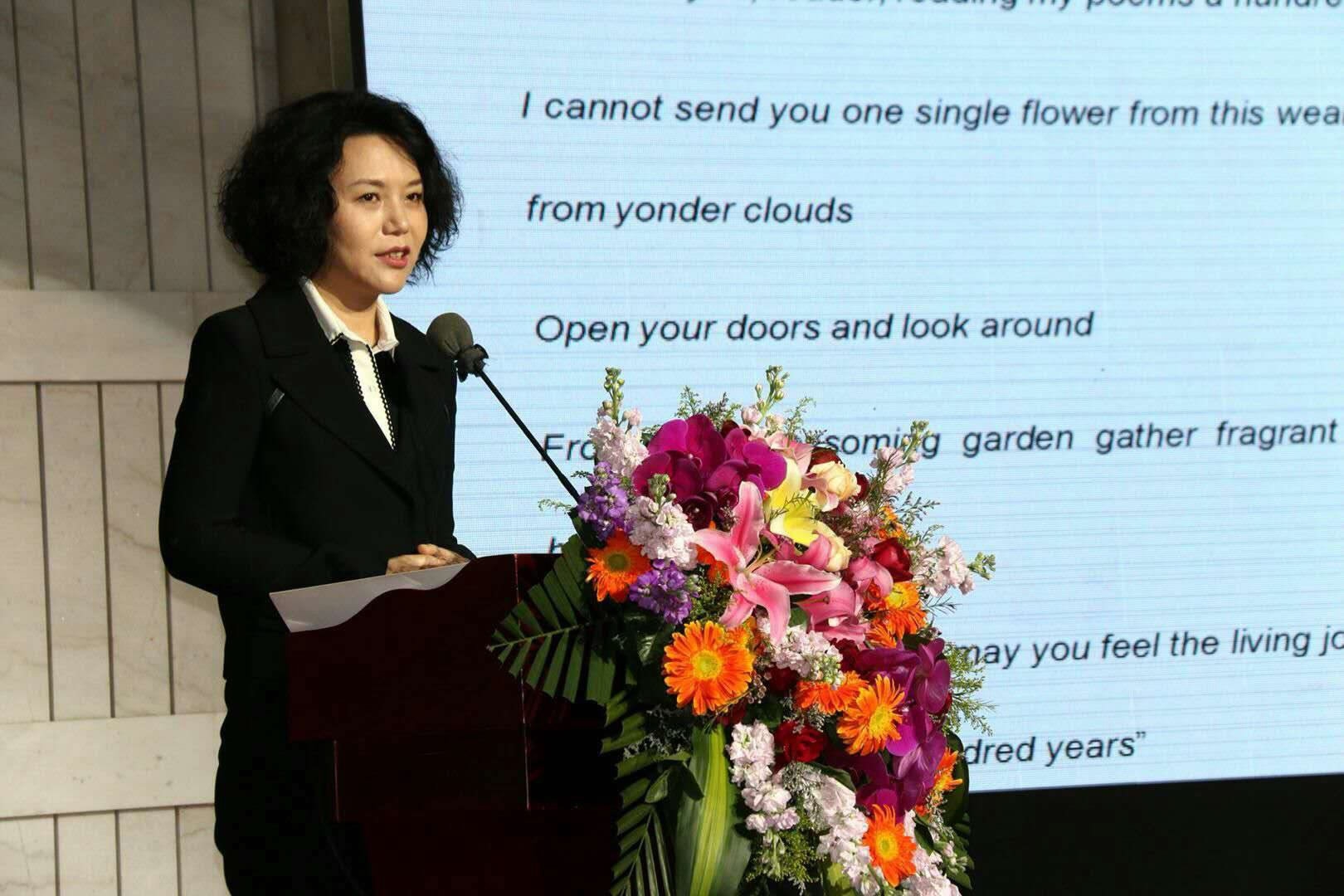
Chinese filmmaker Victoria Qu’s acceptance speech after receiving the IFFI Best Director’s award from India’s Ambassador to China, Gautam Bambawale, in Beijing. /Photo by Suvam Pal
Chinese filmmaker Victoria Qu’s acceptance speech after receiving the IFFI Best Director’s award from India’s Ambassador to China, Gautam Bambawale, in Beijing. /Photo by Suvam Pal
Qu added, "Today, perhaps the most adored Indian for the Chinese youth is Amir Khan, but in my youth, the most admired Indian was Tagore. We voraciously read his poems, and could only, imagine how pleasant it would be to hear his verses in Bengali. I still remember, during a spring afternoon, I read 'A Hundred Years Hence'."
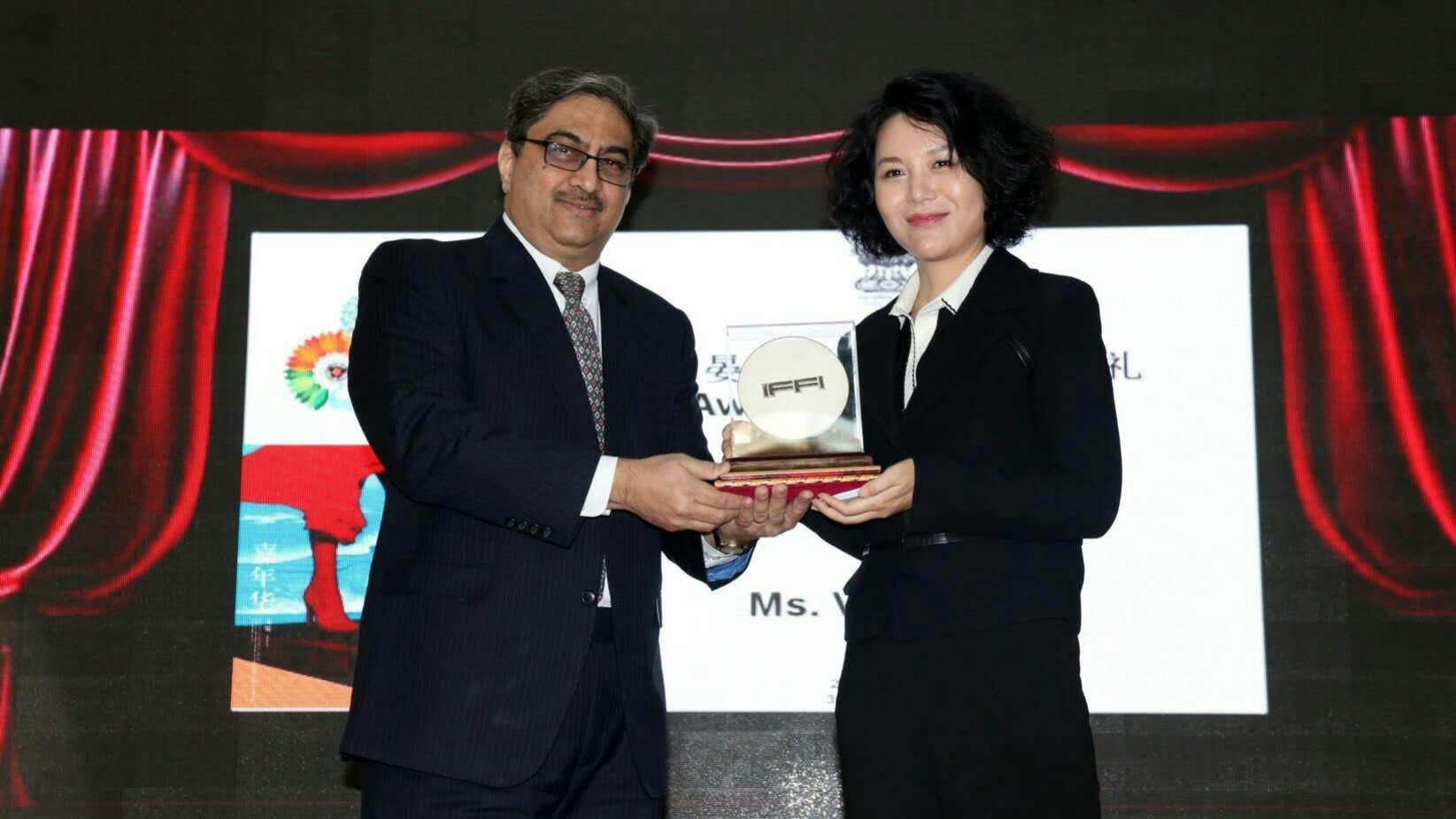
As Qu couldn’t make it to the event in India last year, the award – a Silver Peacock – was handed over to the immensely talented filmmaker at a special screening event in Beijing by India’s Ambassador to China, Gautam Bambawale. “The people of both India and China have a fascination for the movies. Both our countries have huge talents as directors and actors,” remarked Bambawale at the function.
Interestingly, apart from Tagore, as Qu mentioned, it was eminent Indian filmmaker and Academy Award winner for Lifetime Achievement, Satyajit Ray, that made an impact in her life as a filmmaker. “I first saw Satyajit Ray’s magnum opus 'Pather Panchali' ('Song of the Road') and his famous Apu trilogy at a New York theater and the experience was simply priceless,” said the Chinese filmmaker, who is already being dubbed as China’s Kathryn Bigelow for the depth and complexity of her film.
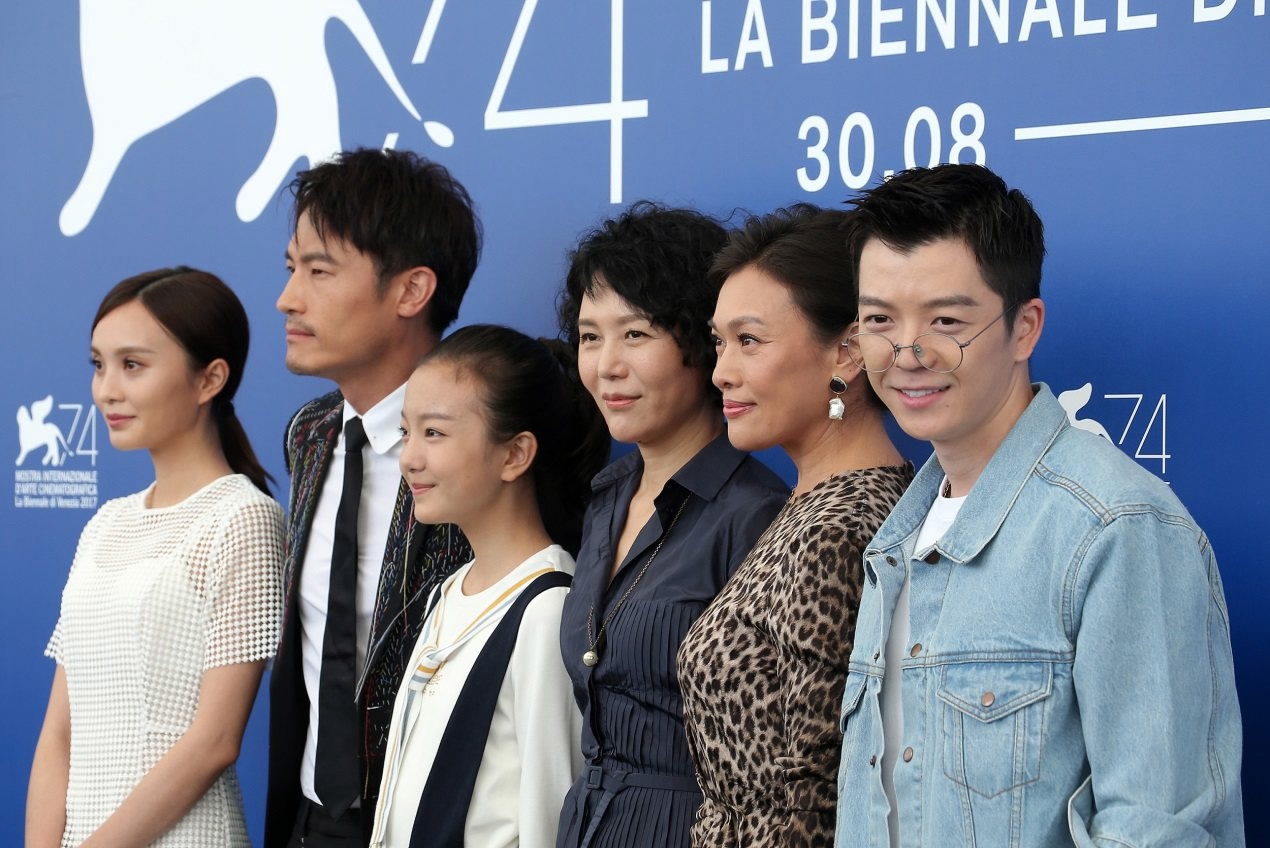
Actress Jing Peng, actor Le Geng, actress Zhou Meijun, director Vivian Qu, actress Shi Ke and actor, in Venice, Italy, on September 7, 2017. /VCG Photo
Actress Jing Peng, actor Le Geng, actress Zhou Meijun, director Vivian Qu, actress Shi Ke and actor, in Venice, Italy, on September 7, 2017. /VCG Photo
While highlighting the significance of a mutual appreciation for each other’s culture and cinema, Bambawale also informed, “I can also tell you that Chinese movies are also liked in India. I myself remember having sat enthralled through the film 'Red Sorghum' by Zhang Yimou as well as some of Chen Kaige’s films.”
The edge-of-the-seat thriller, set in a small seaside town, where two schoolgirls are assaulted by a middle-aged man in a motel, has earned rave reviews at a number of premier film festivals across the world and has won several laurels as well as accolades since its release.
Interwoven with several sub-plots and subtle symbolism of modern day society, the almost all-female star cast delivered a flawless performance and Qu felt, “It was heartening to see that my second film as a director is being appreciated worldwide.”