
13:25, 19-May-2019
Asian Civilizations: Longmen Grottoes: Symbol of ancient cultural exchange in Asia
Updated
13:20, 22-May-2019
 []
[]
Share







Copied
03:04
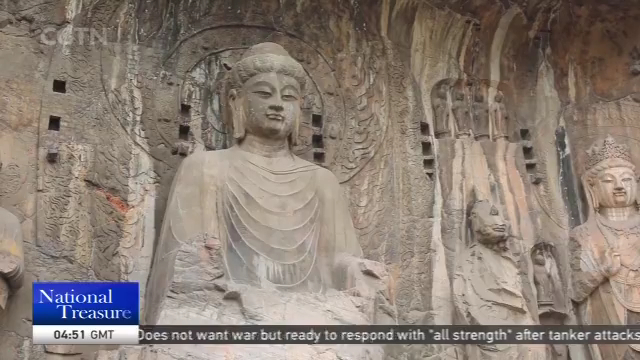
Now a look at the development of Buddhism in Asia. when the teachings of the Buddha reached outside India, each modern-day Asian country interpreted them differently. China was no exception. And to this day, the Long-men Grottoes in central China's Henan Province, feature tens of thousands of Buddha statues sculpted in caves. How do they reflect the exchanges between different civilizations? CGTN's Cui Hui'ao takes a look.
Giant Vairocana Buddha, sitting high in a cave. The 17 meter-high statue was carved into the cliff centuries ago. Many say it resembles Emperor Wuzetian from the Tang dynasty, sculpted with vigor and grace. Whether or not that's true, since Buddhism was introduced to China, it has incorporated many local elements. Take this sculpture of Sakyamuni as an example. Its thin face, slim body and light robes represent a major shift from the so-called Gandhara style found in India.
JIAO JIANHUI, DEPUTY RESEARCHER LONGMEN GROTTOES RESEARCH ACADEMY "Traditionally, Indian style Buddhas have plumpish faces, deep eyes, high noses, and wear heavy kasayas. But this Buddha here blended into Chinese aestheticism, specifically that from the literati in the Southern Dynasty."
Apart from Buddhas, the architecture style of these caves also evidences the localization of Indian Buddhist art, such as in the details of the ancient Chinese pagoda, and the wooden structure of the Chinese palace.
CUI HUI'AO LUOYANG, HENAN PROVINCE "The Longmen Grottoes are considered some of the finest examples of Chinese Buddhist art. Some call them the encyclopedia of Chinese Buddhism. Although the cave was built in ancient times, the influence of the foreign culture can be found in the magnificent art."
Luoyang City, where the grottoes are located, served as the historic capital for 13 dynasties including Northern Wei. Many envoys, monks and businessmen from central and western Asia traveled to Luoyang for exchanges. Their cultures and lifestyles have also shaped the style of the Longmen Grottoes.
JIAO JIANHUI, DEPUTY RESEARCHER LONGMEN GROTTOES RESEARCH ACADEMY "At that time, Chinese people normally sat on the ground. But this Maitreya Buddha looks like he is sitting on a chair or something. This kind of posture was more often seen in Central Asia, especially among aristocrats."
Jiao has been studying the Grottoes for twenty years. He says the Longmen Grottoes document the vivid exchange between Chinese and other Asian civilizations. Jiao adds that it not only reflects the peak of Buddhist belief in ancient China, but also encapsulates the cultural sophistication during that period. Cui Hui'ao, CGTN, Henan Province.