
21:15, 08-May-2019
Connecting the World: International Ports Conference held in Guangzhou
Updated
21:10, 11-May-2019
 []
[]
Share







Copied
02:46
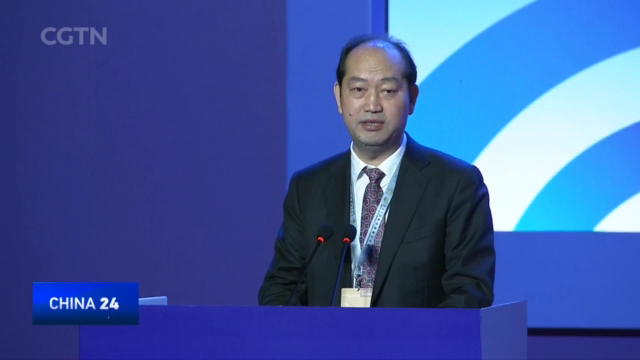
Ports are a country's links to the rest of the world. Yet many of the world's ports face issues with sustainable development, energy consumption reduction and emissions problems. These and other issues are all on the agenda at the 31st International Ports Conference in Guangzhou. CGTN's Li Jianhua takes us there.
Guangzhou, known as China's flower city, is now enjoying the spotlight as a port city. A key trading harbor in China, Guangzhou is hosting the 31st International Ports Conference with the theme of "Collaborate Now, Create Future."
Known as "the Olympics of the port industry", the International Association of Ports and Harbors - a non-governmental organization - represents some 180 ports in more than 90 countries.
SANTIAGO GARCIA MILA PRESIDENT, INTERNATIONAL ASSOCIATION OF PORTS AND HARBORS "During the next two days, we will address cooperation from different angles – cooperation between ports, cooperation between logistics partners, cooperation with cities, and local stakeholders, cooperation with governments – all with one goal, to create a sustainable future for our ports and the communities they serve."
Organization members together handle over 60 percent of the world's maritime trade and nearly 80 percent of the world's container traffic.
China, in terms of its port capacity, is among the top globally with nearly 24-thousand production berths, and over 2,000 berths with a 10-thousand ton capacity.
LI TIANBI CHIEF SAFETY SUPERVISOR, CHINESE MINISTRY OF TRANSPORT "China today can be called a port power. The scale of Chinese ports is the world's largest. The services provided by the ports are improving, and China has so far developed five big coastal ports and a batch of professional and modern ports of some certain scale."
Chinese President Xi Jinping at the Belt and Road Forum in Beijing last month called on Belt and Road countries to strengthen interconnectivity. The China-proposed initiative is believed to be prompting the port industry's development.
Sustainable port development and reducing energy consumption are both in line with the United Nations' development strategy for 2030.
LI JIANHUA GUANGZHOU "Guangzhou used to be one of the few ports connecting China with the rest of the world. Now the country has become the world's largest port power. Under its Belt and Road initiative, China – traditionally not considered a maritime power – is now expanding its connections with the world by sea. LJH, CGTN, GUANGZHOU."